

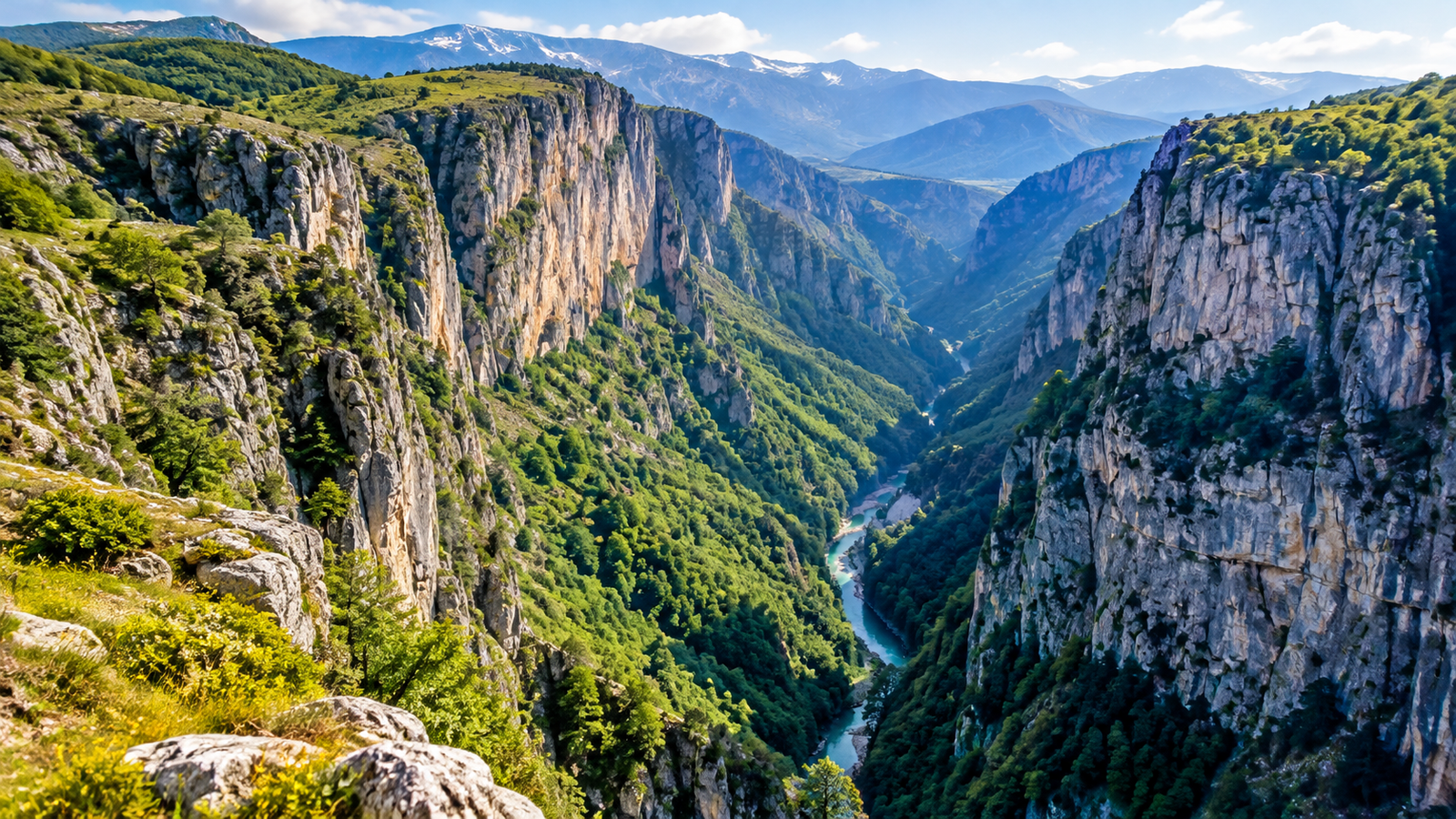
Vikos Gorge
Introduction
In the rugged mountains of northwestern Greece, where ancient stone villages cling to forested slopes and rivers carve through towering limestone walls, lies one of Europe's most extraordinary natural landscapes. Vikos Gorge is a dramatic canyon in the Epirus region, renowned for its immense depth, remarkable biodiversity and spectacular hiking trails. Far from the crowded beaches and whitewashed island towns for which Greece is famous, this mountainous wilderness reveals a quieter, greener and more adventurous side of the country.
Stretching for approximately 12 kilometres through the Pindus Mountains, Vikos Gorge forms part of Vikos-Aoos National Park. Its cliffs rise dramatically above the river valley, while forests, rocky ledges and narrow paths create an environment that feels almost untouched. The gorge is internationally celebrated for its exceptional depth relative to its width, a distinction that has helped establish its reputation as one of the world's most impressive canyons. <Cite refs={["turn510481search0","turn510481search7"]}/>
Yet Vikos is more than a geological spectacle. It belongs to the wider Zagori region, a landscape of traditional stone villages, arched bridges, historic monasteries and mountain trails. The combination of natural grandeur and cultural heritage makes this destination particularly rewarding for travelers who enjoy hiking, photography, rural traditions and discovering places beyond Greece's familiar tourist routes.
Whether viewed from a dramatic cliff-top lookout or explored on foot along the gorge floor, Vikos Gorge offers a powerful reminder that Greece's beauty extends far beyond its islands and coastlines.
Geographical and Environmental Significance
Vikos Gorge is located in the Epirus region of northwestern Greece, within the Pindus mountain range. It forms a central feature of Vikos-Aoos National Park and the UNESCO Global Geopark of Vikos-Aoos, an area recognized for its geological heritage, diverse ecosystems and close relationship between nature and traditional settlement. <Cite refs={["turn510481search5","turn510481search8"]}/>
The gorge was formed over millions of years as water and geological processes gradually shaped the limestone landscape. Its steep walls, exposed rock formations and narrow valley reveal the complex history of the region. The surrounding mountains contain evidence of folding, erosion and karst processes, creating a landscape that is both visually dramatic and scientifically significant. <Cite refs={["turn510481search5","turn510481search9"]}/>
The canyon's dimensions are particularly impressive. Its depth exceeds 900 metres in some areas, while its width varies considerably along its length. It is frequently described as the world's deepest gorge relative to its width, a distinction that has helped make it internationally famous. Its exact measurements depend on the section and the method used, but the immense scale is immediately apparent from the viewpoints above the canyon. <Cite refs={["turn510481search7","turn510481search9"]}/>
The Voidomatis River is an important part of this environment. Its clear, cold water flows through the wider gorge system, nourishing riverside vegetation and supporting aquatic life. The river's springs, especially around the Vikos settlement, are among the region's notable natural features. Its clarity and cold temperatures also make it a highlight of outdoor activities in the surrounding area.
Vegetation changes with elevation and exposure. Oak forests, shrubs, woodland plants and mountain vegetation cover much of the surrounding landscape, while rocky cliffs provide habitats for specialized plants adapted to thin soils and exposed conditions. The wider region supports an impressive variety of flora and fauna, including birds of prey and mammals associated with the Pindus Mountains. The area's documented biodiversity includes hundreds of bird species and more than a thousand plant types across the wider gorge and geopark region. <Cite refs={["turn510481search0","turn510481search9"]}/>
Seasonal changes give Vikos a different character throughout the year. Spring brings fresh vegetation and flowing streams, summer offers long days for hiking, autumn transforms the forests with warm colours, and winter can cover the surrounding mountains with snow. These changing conditions make the gorge a destination with year-round visual appeal, although some outdoor activities are more suitable in specific seasons.
Landscapes or Heritage
The landscapes of Vikos Gorge are best appreciated from both above and below. From the surrounding viewpoints, visitors can see the canyon extending between steep limestone cliffs, with dense green vegetation covering the slopes and the river appearing as a narrow ribbon far beneath them. From the gorge floor, the scale feels even more dramatic as the rock walls rise overhead and the surrounding forest creates a secluded atmosphere.
One of the best-known viewpoints is Oxya, near Monodendri. The lookout provides a sweeping panorama over the canyon and its immense rock formations. It is particularly popular with photographers because the perspective reveals the depth and shape of the gorge without requiring a demanding descent.
Another celebrated viewpoint is Beloi, accessible from the village of Vradeto by a walking route. From here, the canyon opens into a spectacular natural panorama, with steep walls and forested slopes stretching into the distance. The walk itself introduces visitors to the rugged beauty of the Zagori countryside. <Cite refs={["turn510481search0","turn510481search2"]}/>
For more adventurous travelers, hiking through the gorge offers a completely different experience. The classic crossing connects Monodendri with the Vikos settlement and usually takes around six to eight hours, depending on conditions and pace. The trail descends into the canyon, follows rugged terrain through forest and rocky sections, and eventually climbs toward the opposite side. It requires proper footwear, sufficient water, suitable fitness and careful planning. <Cite refs={["turn510481search0","turn510481search4"]}/>
The surrounding Zagori villages are just as memorable as the canyon itself. Megalo Papigo, Mikro Papigo, Monodendri, Vitsa and Aristi are known for their stone-built houses, narrow lanes and traditional architecture. Many buildings feature slate roofs and local stonework that blend naturally into the mountainous landscape. Their appearance reflects centuries of adaptation to the region's climate, materials and terrain.
The traditional stone bridges are another important part of Zagori's heritage. Built to connect villages across rivers and ravines, these arched structures demonstrate the engineering skills of local craftsmen. They are now among the most recognizable features of the region, providing beautiful subjects for photography and reminders of a time when footpaths and pack animals connected isolated mountain settlements.
Visitors can also explore historic religious sites, including the Monastery of Agia Paraskevi near Monodendri. Perched close to the gorge, it combines spiritual history with remarkable views of the surrounding cliffs. Nearby trails lead through rocky formations and woodland, creating opportunities to combine cultural exploration with short hikes. <Cite refs={["turn510481search2","turn510481search9"]}/>
Together, these landscapes make Vikos Gorge much more than a single natural attraction. It is the centrepiece of a broader mountain region where geology, architecture, history and rural life remain closely connected.
Culture
The culture of Vikos Gorge is inseparable from the history of Zagori, a region traditionally organized around small mountain villages. For centuries, communities here adapted to steep terrain, cold winters and relative isolation by developing distinctive architectural styles, local crafts and strong village identities.
Stone construction is one of the most recognizable features of Zagorian culture. Houses, churches, bridges and public buildings were built using locally available stone, allowing structures to withstand the mountain climate while blending into their surroundings. Slate roofs and carefully fitted masonry give the villages their characteristic appearance.
Historically, many Zagori communities developed through livestock farming, agriculture, trade and skilled craftsmanship. Some residents travelled beyond the region for commerce and education before returning with resources that helped build impressive mansions, schools and churches. This history is reflected in the architecture and public spaces found throughout the villages.
Traditional bridges were essential to everyday life. Before modern roads connected settlements, these structures enabled residents to cross rivers, transport goods and maintain relationships between neighbouring communities. Today, they remain important cultural landmarks and form part of the region's network of walking routes.
Local customs and celebrations also preserve a sense of community. Religious festivals, village gatherings, traditional music and regional food continue to play a role in local life, particularly during warmer months when visitors and returning families bring renewed activity to the settlements.
The region's heritage is also reflected in its traditional knowledge of medicinal plants and mountain herbs. For generations, local practitioners known as Vikogiatroi developed a reputation for using regional plants in traditional remedies. Their history illustrates how closely the communities' knowledge was connected to the surrounding natural environment. <Cite refs={["turn510481search7","turn510481search9"]}/>
For travelers, the best way to appreciate this cultural heritage is to spend time in the villages rather than treating them merely as starting points for hiking. Walking through the lanes, visiting small churches, learning about local building traditions and speaking with residents can reveal a more personal side of this extraordinary region.
Cuisine
The cuisine of Zagori reflects the mountain environment of Epirus, where hearty dishes, seasonal ingredients and traditional preparation methods have long been central to everyday life. After a long hike through Vikos Gorge, local food offers a welcome opportunity to experience the region through its flavours.
One of the most characteristic foods is the traditional Greek pie. Known broadly as pita, these dishes can contain cheese, wild greens, herbs, pumpkin or meat wrapped in layers of pastry. Epirus is particularly associated with savoury pies, many of which use locally gathered greens and regional cheeses.
Wild mushrooms are another seasonal specialty. Depending on the time of year, they may appear in soups, stews or simple dishes that emphasize their earthy flavours. Mountain herbs, including oregano and thyme, are commonly used to season food and reflect the aromatic vegetation of the surrounding countryside.
Cheese is important to the local food culture. Sheep's milk and goat's milk products are used in pies and other traditional dishes, while yogurt and regional dairy products often accompany meals. Slow-cooked lamb and goat are also common choices, especially in village tavernas serving traditional mountain cuisine. <Cite refs={["turn510481search3","turn510481search8"]}/>
Beans, lentils, vegetables and seasonal produce provide the foundation for many comforting dishes. In colder months, soups and stews are particularly appealing, while summer menus may feature grilled meats, salads and fresh local ingredients.
Visitors should also look for local sweets and pastries, often served with coffee after a meal. Honey, nuts and fruit may feature in traditional desserts, while small village cafés provide a relaxed setting for sampling regional products.
Dining in Zagori is usually an unhurried experience. Family-run tavernas emphasize generous portions, traditional recipes and ingredients associated with the surrounding countryside. Rather than seeking elaborate fine dining, travelers can enjoy the simple pleasure of a warm meal after exploring one of Greece's most dramatic landscapes.
Sustainability
Protecting Vikos Gorge requires careful management of both its natural environment and the traditional villages surrounding it. The region's appeal depends on clean rivers, healthy forests, intact wildlife habitats and cultural landscapes that have not been overwhelmed by uncontrolled development.
Vikos Gorge lies within Vikos-Aoos National Park and the wider UNESCO Global Geopark. These designations highlight the importance of conserving its geological features, biodiversity and relationship between natural and built environments. The geopark also promotes education and responsible exploration through marked trails and routes that explain the region's geological and cultural history. <Cite refs={["turn510481search5","turn510481search7"]}/>
Responsible hiking is essential. Visitors should remain on established paths, avoid disturbing wildlife and carry their rubbish out of the gorge. The limestone surfaces can become slippery after rain, while the steep terrain makes shortcuts particularly dangerous. The full crossing should be attempted only by suitably prepared hikers, and using an experienced guide can improve both safety and understanding of the landscape. <Cite refs={["turn510481search0","turn510481search4"]}/>
Water conservation and river protection are equally important. The Voidomatis River is a major natural feature, and visitors should avoid polluting its water or damaging riverside vegetation. Swimming is not generally recommended within the national park, and the river's extremely cold water can present risks even during warm weather. <Cite refs={["turn510481search0","turn510481search3"]}/>
Sustainable tourism can also support the local economy. Staying in traditional guesthouses, eating at village tavernas, hiring local guides and purchasing locally made products help direct tourism income toward the communities that maintain the region's cultural heritage.
There is also value in visiting outside the busiest summer periods. Spring and autumn can offer rewarding hiking conditions while spreading tourism activity across more of the year. However, weather and trail conditions should always take priority over avoiding crowds.
Ultimately, sustainability in Vikos Gorge means protecting more than a canyon. It involves maintaining the forests, river systems, historic villages and traditional knowledge that make the entire Zagori region distinctive.
Best Time to Visit
The best time to visit Vikos Gorge depends on whether your priority is hiking, photography, village exploration or experiencing the changing mountain seasons.
Spring, from April to June, is one of the most attractive periods for nature lovers. Temperatures are generally comfortable, the forests become greener, and streams and rivers are energized by seasonal rainfall. Wildflowers add colour to meadows and trails, although rain can make rocky paths slippery.
Summer, from July to August, offers longer daylight hours and is popular for hiking and outdoor activities. The surrounding villages provide a pleasant mountain retreat from the heat of Greece's lowland cities and coastal resorts. However, exposed sections of the gorge can become hot, so hikers should start early, carry sufficient water and avoid the hottest part of the day.
Autumn, from September to November, is particularly rewarding for photographers. Forests develop rich shades of gold, orange and brown, while cooler temperatures can make strenuous walks more comfortable. September and October are often excellent choices for combining hiking with village exploration, although rainfall generally becomes more frequent later in autumn.
Winter, from December to March, brings a quieter atmosphere, with cold temperatures, possible snowfall and dramatic cloud formations over the mountains. The villages can look beautiful during this season, but hiking conditions may be difficult or unsafe. Some trails can become icy, and weather may restrict access.
For the classic Vikos Gorge crossing, April to November is generally the main recommended period, subject to current weather and trail conditions. Spring and autumn are especially attractive for travelers seeking comfortable temperatures and spectacular scenery. <Cite refs={["turn510481search0","turn510481search2"]}/>
Before setting out, visitors should check local forecasts and ask accommodation providers or guides about current trail conditions. A viewpoint visit can be a rewarding alternative when rain or poor visibility makes a full hike unsuitable.
Transport
Reaching Vikos Gorge usually begins in Ioannina, the principal city of Epirus and the most convenient regional base for exploring the surrounding mountains. Ioannina has road connections with major Greek cities and a domestic airport serving selected routes.
From Athens, travelers can reach Ioannina by car or long-distance bus. The road journey takes several hours, depending on traffic and route conditions. Connections are also available from Thessaloniki. From Ioannina, the journey continues into Zagori by road, with travel times varying according to the destination village. <Cite refs={["turn510481search0","turn510481search1"]}/>
The villages around the gorge are spread across a mountainous area, so choosing accommodation carefully can reduce travel time. Monodendri is a convenient base for Oxya viewpoint and access to the classic gorge trail. Vikos village offers access to viewpoints above the Voidomatis springs, while Megalo Papigo and Mikro Papigo provide gateways to other mountain walks and the Astrakas area.
Local buses connect Ioannina with some Zagori settlements, but schedules and services can be limited. Travelers planning to visit multiple villages, viewpoints and trailheads may find a rental car or organized excursion more convenient. In some cases, taxis or pre-arranged transfers are necessary.
For hikers crossing the gorge from Monodendri toward Vikos, transport needs particular attention. The route is a point-to-point hike rather than a simple circular walk, so travelers should arrange a pickup at the finish or organize transport in advance. <Cite refs={["turn510481search0","turn510481search4"]}/>
Once in Zagori, walking is the best way to explore the traditional villages and historic bridges. Marked trails connect many settlements, allowing visitors to experience the countryside at a slower pace.
Because mountain weather can change quickly, travelers should avoid relying entirely on mobile navigation or assuming every road and trail will remain accessible. Planning transfers, checking conditions and allowing extra time can make the journey considerably more enjoyable.
Why Visit
Vikos Gorge deserves a place on the itinerary of anyone seeking a different side of Greece. Instead of island beaches and crowded archaeological sites, it offers immense limestone cliffs, clear mountain rivers, green forests and villages that preserve centuries of architectural tradition.
Its extraordinary depth and dramatic shape provide a compelling reason to visit, but the wider Zagori region makes the experience far richer. Travelers can hike through the canyon, photograph the landscape from Oxya and Beloi viewpoints, explore stone-built villages and cross historic bridges surrounded by woodland.
The destination also suits a variety of travel styles. Experienced hikers can tackle the demanding gorge crossing, while visitors seeking a gentler experience can enjoy shorter walks, scenic viewpoints and leisurely village visits. Food lovers can discover the traditional cuisine of Epirus, and photographers can find striking scenery in every season.
Vikos Gorge is particularly appealing for travelers who appreciate destinations where nature and culture remain closely connected. The mountains shaped the villages, the rivers determined historic routes, and local traditions developed in response to the surrounding landscape. This connection gives the region a character that cannot be captured by a viewpoint photograph alone.
For those building a travel collection focused on unique places to visit in Greece, Vikos Gorge stands out as one of the country's most memorable natural destinations. It combines geological grandeur, biodiversity, cultural heritage and outdoor adventure in a region that remains less familiar to many international visitors than Greece's famous islands.
Conclusion
Vikos Gorge is a spectacular expression of the wild beauty of northwestern Greece. Its towering limestone walls, forested slopes and clear mountain waters create a landscape of extraordinary scale, while the surrounding Zagori villages reveal a cultural heritage shaped by generations of mountain life.
The gorge's reputation as one of the world's deepest canyons relative to its width has made it internationally famous, but its true appeal lies in the complete experience. Hiking its rugged trails, admiring the canyon from its viewpoints, exploring traditional stone settlements and tasting the cuisine of Epirus all reveal different dimensions of the region.
Visiting requires some preparation, especially for those planning the full gorge crossing. Yet travelers do not need to be expert hikers to appreciate its beauty. Even a short visit to a scenic lookout or a quiet walk through a village can leave a lasting impression.
In a country celebrated for its islands and ancient monuments, Vikos Gorge reminds visitors that Greece also possesses a remarkable mountain wilderness. Here, nature, history and everyday life coexist in a landscape that feels both timeless and alive, making it one of the most rewarding destinations for travelers looking beyond the familiar.
00 Comments
No comments yet.
Leave a Comment