

Tabernas Desert
Introduction
Few landscapes in Europe look as unexpected as the Tabernas Desert in Spain. Located in the province of Almería in southeastern Andalusia, this extraordinary region is a world of rugged hills, deep ravines, dry riverbeds and dramatic rock formations. Under the intense Mediterranean sun, the landscape can look remarkably similar to the deserts of Arizona, Nevada or Mexico.
The Tabernas Desert is famous not only for its natural scenery but also for its remarkable connection with cinema. During the golden age of western films, filmmakers discovered that the dry valleys and rocky landscapes of Almería could convincingly recreate the American Wild West. The region became one of Europe's most important film locations, particularly for the spaghetti western genre. The famous Dollars Trilogy, including The Good, the Bad and the Ugly, helped make this landscape internationally recognisable.
But there is much more to Tabernas than its movie history.
The desert is a fascinating geological environment shaped over millions of years by ancient seas, sedimentation, erosion and changing climates. The exposed landscape provides a remarkable natural record of geological processes, while the harsh environment supports plants and animals adapted to limited rainfall and extreme conditions. The protected area covers around 11,448 hectares and is recognised within the Natura 2000 network.
Today, Tabernas attracts travelers interested in nature, hiking, photography, geology, adventure and film history. Visitors can explore desert trails, discover spectacular viewpoints, visit historic film sets and experience the atmosphere of the Wild West in the heart of Andalusia.
For anyone looking for unique places to visit in Spain, the Tabernas Desert offers an unforgettable combination of natural beauty, cinematic heritage and Andalusian culture.
Geographical and Environmental Significance
The Tabernas Desert lies in southeastern Spain, north of the city of Almería. The desert is surrounded by mountain ranges that help create its exceptionally dry conditions. Its geographical setting, combined with limited rainfall and high temperatures, has produced one of the most distinctive arid landscapes in Europe.
The area's geological history is particularly fascinating. Millions of years ago, much of the region was covered by the sea. Around eight million years ago, underwater sediment flows deposited extensive layers of sand and marl across the ancient marine basin. These deposits eventually became exposed as geological changes transformed the region.
Later, the retreat of the sea left these sediments exposed to weathering and erosion. Over millions of years, rainfall and runoff carved the soft materials into the intricate landscape visible today.
This process created the badlands of Tabernas.
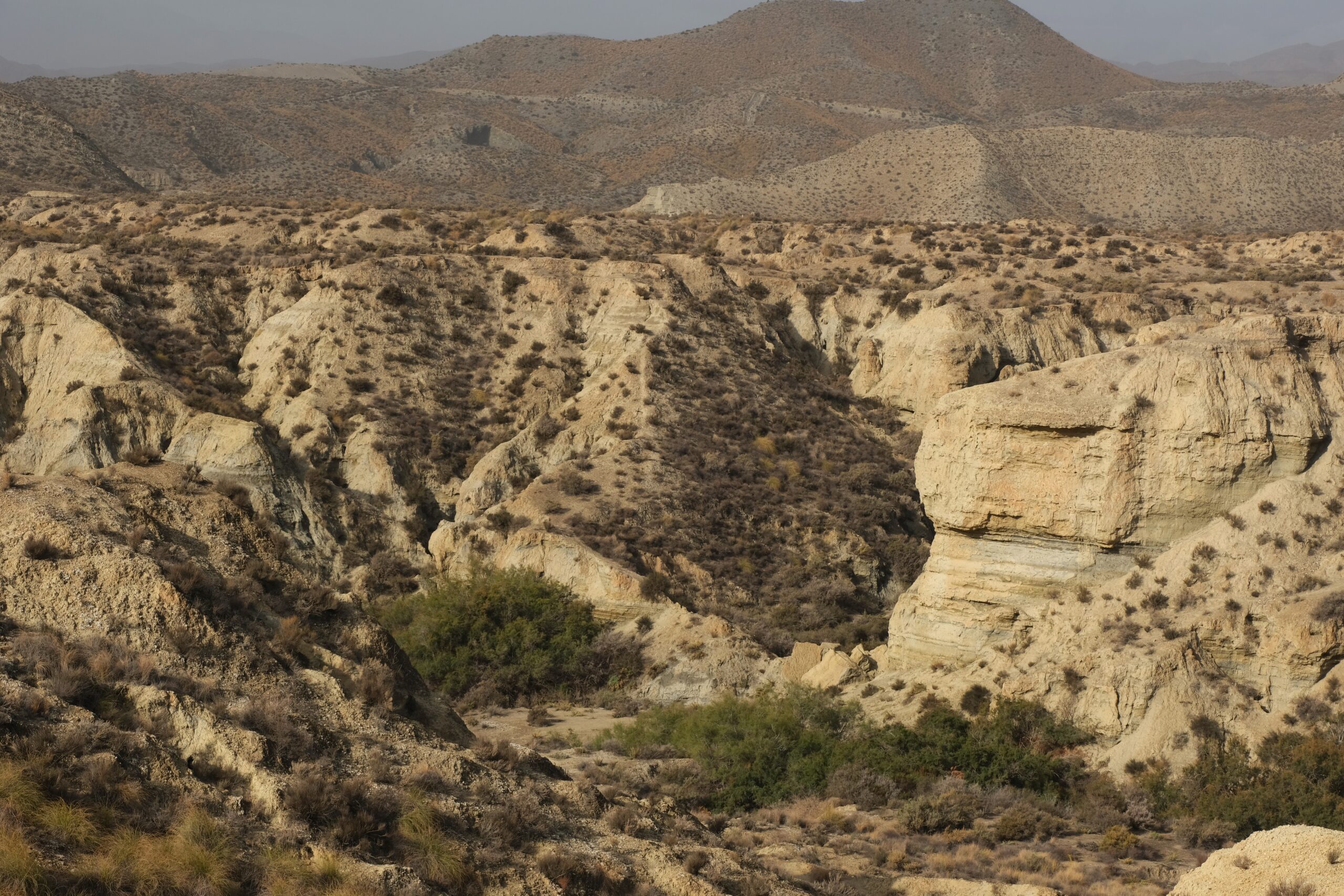
Badlands are landscapes where erosion has created a complex network of gullies, ridges, channels and steep-sided valleys. Tabernas is particularly valuable for studying these processes because its exposed terrain reveals geological structures on a remarkable scale. Andalusia's environmental authorities describe the area as a natural geological museum, with features including gullies, erosion channels, fairy chimneys and piping formations.
One of the most fascinating aspects of the desert is the contrast between its apparently barren appearance and its ecological importance. The landscape supports vegetation specially adapted to drought and provides habitats for birds, reptiles and mammals.
The protected status of Tabernas reflects its importance. It was declared a Paraje Natural in 1989 and designated as a Special Protection Area for Birds. In 2016, it was also declared a Zona Especial de Conservación, becoming part of the European Natura 2000 network.
This combination of geology, climate and biodiversity makes the Tabernas Desert an important natural destination as well as a spectacular travel attraction.
Landscapes or Heritage
The most impressive feature of Tabernas is its extraordinary landscape.
Unlike the enormous sand dunes associated with the Sahara or Arabian deserts, Tabernas is dominated by exposed rock, sedimentary hills and deeply eroded valleys. Its terrain is sometimes described as a landscape of badlands, where rainwater has carved countless channels into the soft geological layers.
The result is a maze of ridges, ravines and dry riverbeds.
Among the desert's geological features are small fairy chimneys, deep gullies, erosion channels and unusual formations created by underground water movement. The area also contains evidence of ancient marine environments, including fossil reefs and sedimentary formations created when the region was covered by the sea.
The landscape changes dramatically depending on the time of day. At sunrise, the low sunlight creates long shadows across the valleys. During the afternoon, the exposed rocks appear golden and orange, while sunset can transform the entire desert into a dramatic landscape of warm colours.
This natural scenery also became one of the greatest cinematic landscapes in Europe.
During the 20th century, filmmakers began using Almería's dry environment as a substitute for the American Southwest and other desert regions. The Tabernas Desert became particularly famous for European westerns, often called spaghetti westerns.
The landscapes were used extensively for films associated with Sergio Leone and Clint Eastwood. The Good, the Bad and the Ugly remains one of the most famous productions connected with the region.
The cinematic history continued beyond westerns. The wider Almería region has been used for productions from different genres, and Tabernas has even appeared in modern fantasy television. Spain's official tourism site highlights the desert as one of the locations used for Game of Thrones, including scenes representing Vaes Dothrak.
Today, historic film sets and western-style attractions allow visitors to experience this unusual chapter of European film history.
Culture
The cultural identity of the Tabernas Desert is strongly connected with the traditions of Andalusia.
Nearby towns and villages preserve the architectural and cultural character of southeastern Spain, with whitewashed buildings, narrow streets, traditional churches, local markets and small plazas. The desert provides a dramatic natural setting around these communities.
The town of Tabernas itself is closely associated with the film industry. For decades, filmmakers, actors, directors and production crews arrived in the area to create westerns and other international productions.
This history has become an important part of the region's cultural identity.
Visitors can explore western film sets featuring frontier-style streets, saloons, wooden buildings and other structures created for movies. Some attractions also organise live performances and horseback experiences that recreate the atmosphere of the Wild West.
The region's cinematic heritage is celebrated through events such as the Almería Western Film Festival, which brings filmmakers and western cinema enthusiasts to Tabernas.
However, the culture of the region extends far beyond its film history.
Traditional Andalusian customs remain an important part of everyday life. Local festivals, religious celebrations, music, food and village traditions provide a more authentic understanding of the area.
For travelers, one of the best experiences is to combine the desert with visits to nearby towns. This creates a richer journey that moves beyond the image of the Wild West and reveals the real culture of southeastern Spain.
Cuisine
A journey through the Tabernas Desert is incomplete without experiencing the cuisine of Almería and Andalusia.
The region's food reflects its Mediterranean climate and agricultural traditions. Olive oil, vegetables, bread, almonds, seafood and locally produced ingredients form an important part of the local culinary identity.
One traditional dish associated with Almería is gurullos, a rustic preparation made with small pieces of handmade pasta. It can be combined with vegetables, meat or other regional ingredients to create a hearty meal.
Another traditional dish is migas, a simple but filling preparation made from breadcrumbs or flour. Depending on the recipe, migas can be served with peppers, garlic, sausage and other local ingredients.
Visitors can also try ajo colorao, a traditional Almerian dish based around potatoes, peppers, garlic and seasoning.
Although Tabernas is an inland desert environment, the Mediterranean coast is relatively close. Seafood therefore plays an important role in the wider cuisine of Almería. Fresh fish and other seafood are common in restaurants throughout the province.
Tapas are another excellent way to experience Andalusian food. Instead of ordering one large meal, travelers can sample several small dishes and discover different regional flavours.
Local olive oil is also an important part of the culinary experience. Olive cultivation has played a major role in Andalusian agriculture for centuries, and high-quality olive oil is used throughout traditional cooking.
After spending several hours exploring the desert, enjoying a traditional meal in a nearby Andalusian town provides a pleasant contrast to the dry and rugged landscape.
Sustainability
The apparent emptiness of the Tabernas Desert can be misleading. Beneath its barren appearance is a fragile ecosystem that requires careful protection.
The desert contains specialised vegetation capable of surviving extreme heat and limited rainfall. Its rocky terrain also provides habitat for birds, reptiles and small mammals that have adapted to the dry Mediterranean environment.
The geological landscape is equally sensitive.
The gullies, sedimentary formations and erosion features that make Tabernas so attractive are naturally fragile. Human activity can accelerate erosion and damage areas that have taken thousands or millions of years to develop.
This is one reason the desert has received strong environmental protection. The Tabernas Desert was declared a Paraje Natural in 1989 and is now also recognised as a Natura 2000 conservation area. The protected Natura 2000 site covers approximately 11,448 hectares.
Responsible tourism is therefore essential.
Visitors should remain on appropriate routes, avoid disturbing wildlife and vegetation, take rubbish with them and avoid damaging geological formations. Off-road driving should only take place where it is specifically permitted, as vehicle activity can damage fragile soils and vegetation.
Water conservation is also important in such an arid environment. Travelers should carry enough drinking water for outdoor activities while using resources responsibly.
Supporting local guides, accommodation providers, restaurants and tourism businesses can also help ensure that tourism contributes to the local economy.
The future of Tabernas depends on maintaining a balance between tourism, conservation, film production and the needs of local communities.
Best Time to Visit
The best time to visit the Tabernas Desert is generally spring or autumn, when temperatures are more comfortable for exploring the landscape.
Spring, particularly from March to May, is an excellent period for hiking and photography. Temperatures are generally more manageable than during the peak summer months, making it easier to spend several hours outdoors.
Spring can also bring subtle signs of seasonal vegetation to the desert, creating an interesting contrast between the dry landscape and the temporary appearance of plants.
Summer can be extremely hot. June, July and August are best suited to travelers who are prepared for intense heat. If visiting during summer, early morning and late afternoon are preferable for outdoor activities. Carry plenty of water, wear protective clothing and use sunscreen.
Autumn is another excellent season. From September through November, temperatures gradually become more comfortable, while the landscape continues to offer spectacular colours for photography.
Winter can also be enjoyable, particularly for travelers who prefer cooler daytime temperatures. However, desert nights can become surprisingly cold, so visitors should bring appropriate layers.
For hiking, sightseeing and photography, spring and autumn are generally the most comfortable seasons.
Transport
The main gateway to the Tabernas Desert is Almería, which is connected with other parts of Spain by road, rail and air.
From Almería, travelers can reach the desert by road, making a rental car one of the most convenient options for exploring the area. Having a car also makes it easier to combine Tabernas with other attractions across the province.
The nearby town of Tabernas provides an excellent base for exploring the desert and its film heritage.
Travelers who do not want to drive can consider organised excursions from Almería or nearby destinations. Guided tours are particularly useful for visitors interested in geology, photography or film history because local guides can explain the landscape and take visitors to notable locations.
A road trip through southeastern Spain is another excellent way to experience Tabernas. The desert can be combined with Almería, the Mediterranean coast, Cabo de Gata and other destinations in Andalusia.
When exploring independently, travelers should prepare carefully. Remote parts of the desert may have limited services, and summer temperatures can rise rapidly.
Carry sufficient water, protect yourself from the sun and check local conditions before setting out on longer walks.
Why Visit
The Tabernas Desert offers a combination of experiences that few destinations in Europe can match.
A Unique European Landscape: The desert's badlands, rocky hills and deep ravines create scenery that looks more like the American Southwest than traditional Spain.
A Geological Wonder: Millions of years of geological history can be seen in the exposed sedimentary layers and spectacular erosion formations. The area is particularly valuable for understanding erosion and desertification processes.
Film History: Movie lovers can explore landscapes connected with famous westerns and other international productions. The Tabernas Desert remains one of the most important cinematic landscapes in Spain.
Wild West Experiences: Historic film sets and western-themed attractions allow visitors to experience the atmosphere that once attracted filmmakers from around the world.
Photography: The dramatic combination of cliffs, ravines, dry valleys and changing sunlight makes Tabernas an exceptional destination for landscape photography.
Outdoor Adventure: Hiking, guided desert tours and horseback experiences provide different ways to discover the landscape.
A Different Side of Spain: Tabernas reveals a side of Spain that many international travelers never expect. Beyond the beaches, historic cities and green mountain landscapes lies an arid world unlike almost anywhere else in Europe.
For travelers searching for unique places to visit in Spain, the Tabernas Desert offers an experience that combines adventure, nature, culture and cinema.
Conclusion
The Tabernas Desert in Spain is one of Europe's most fascinating and unexpected landscapes. Its dramatic badlands, dry valleys and unusual geological formations create a desert environment that seems almost impossible to find in the heart of Europe.
Its importance goes far beyond its appearance. Millions of years of geological history are preserved in the exposed sediments and erosion formations, making the region an exceptional natural laboratory. The protected area also provides valuable habitat for plants and wildlife adapted to the harsh Mediterranean environment.
At the same time, Tabernas has become an extraordinary part of European cultural history. Its landscape helped create the visual identity of the spaghetti western and attracted famous filmmakers from around the world. Today, historic film locations continue to connect visitors with that remarkable cinematic past.
Yet perhaps the greatest appeal of Tabernas is its ability to surprise.
A traveler can begin the day surrounded by the whitewashed villages and Mediterranean culture of Andalusia and soon find themselves walking through a landscape that resembles the American Wild West.
For photographers, hikers, nature lovers, geology enthusiasts and film fans, the desert offers something memorable at every turn.
The Tabernas Desert, Spain, is therefore much more than a dry landscape. It is a geological wonder, a protected natural environment, a cinematic icon and one of the most unusual travel destinations in Andalusia.
For anyone looking to discover unique places in Spain, Tabernas is a destination where the landscape tells a story millions of years old while the surrounding film heritage tells another that began only a few decades ago.
00 Comments
No comments yet.
Leave a Comment