

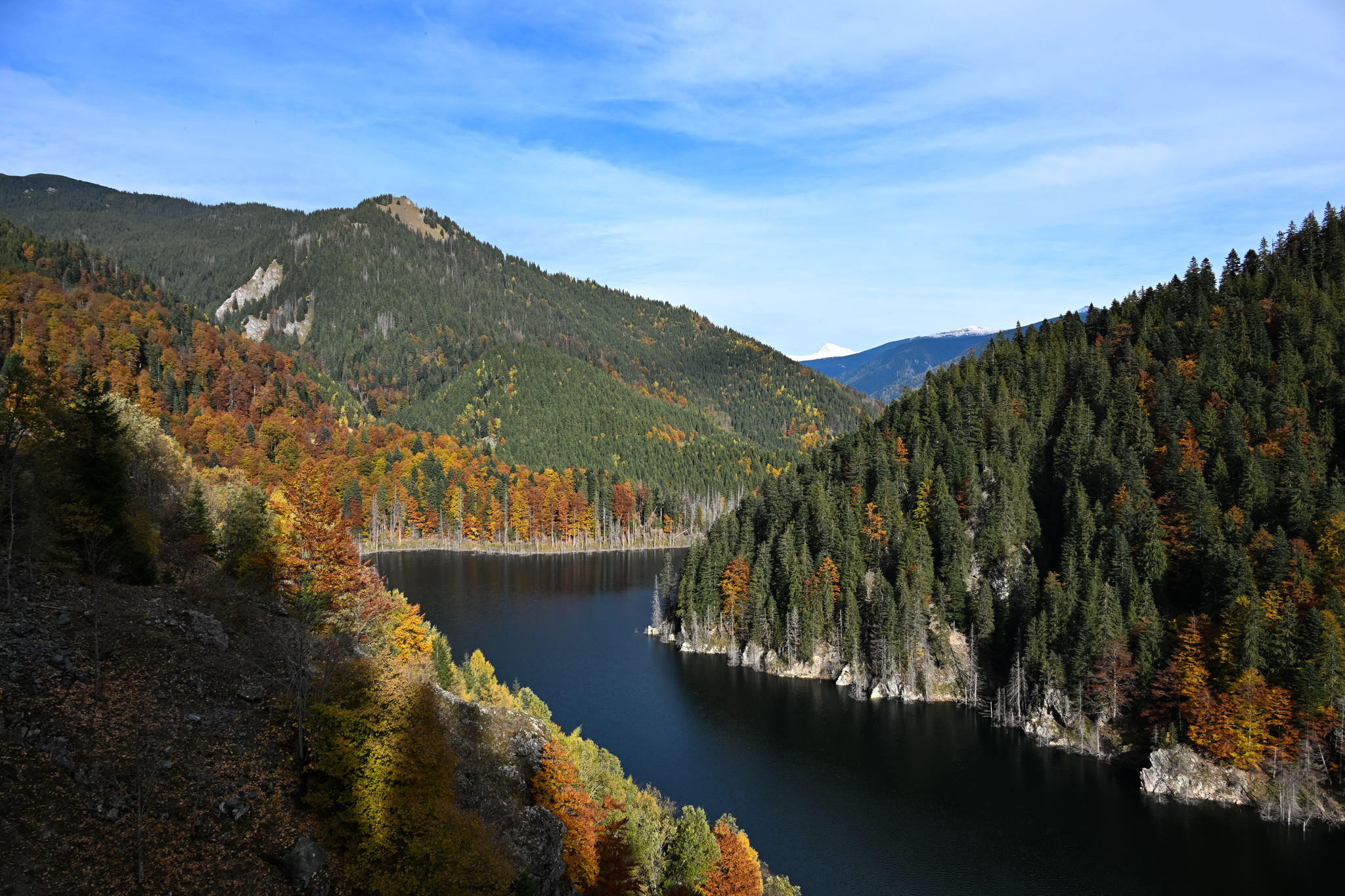
Retezat National Park
Introduction
High in the Southern Carpathians of Romania lies a spectacular mountain wilderness where sharp alpine peaks, ancient forests, wildflower meadows and crystal-clear glacial lakes create one of Eastern Europe's most beautiful natural landscapes. This is Retezat National Park, a destination that feels wonderfully remote despite being within one of Romania's most accessible mountain regions.
Established in 1935, Retezat was Romania's first national park. Today, the protected area covers approximately 38,316 hectares, with most of the park located in Hunedoara County. It contains an extraordinary concentration of mountain landscapes, including 50 peaks rising above 2,000 metres. The highest is Peleaga Peak at 2,509 metres, followed closely by Păpușa at 2,508 metres.
The park is especially famous for its glacial lakes. Retezat is often called the "Land of Blue Eyes" because of the remarkable number of mountain lakes scattered across its high valleys and glacial cirques. There are more than 80 lakes in the massif, including 54 permanent glacial lakes. Among them, Bucura is the largest glacial lake in Romania, while Zănoaga is the country's deepest glacial lake.
For hikers and nature lovers, Retezat offers an exceptional combination of challenging mountain trails, peaceful forests, alpine scenery and extraordinary biodiversity. It is a place where a single day's walk can take you from spruce forests to open mountain meadows and finally to a high glacial basin surrounded by rocky peaks.
Whether you are searching for beautiful places to visit in Romania, spectacular hiking destinations in Europe or an authentic Carpathian wilderness experience, Retezat National Park deserves a place on your travel list.
Geographical and Environmental Significance
Retezat National Park is situated in the Southern Carpathian Mountains of Romania, primarily within Hunedoara County, with smaller portions extending into Caraș-Severin and Gorj counties. Its landscape is shaped by two very different geological environments, creating an impressive variety of mountain terrain.
The northern part of the massif is largely formed from crystalline and siliceous rocks, producing dramatic alpine peaks and rugged ridges. In the southern and southwestern sections, limestone geology has encouraged the development of karst landscapes, including caves, gorges and other underground and surface formations.
However, the defining feature of Retezat's high mountains is its glacial landscape.
During the last Ice Age, glaciers carved deep valleys and mountain cirques throughout the massif. When the glaciers disappeared, they left behind basins that later filled with water, creating the numerous glacial lakes that have become the symbol of Retezat.
The park contains 54 permanent glacial lakes, representing approximately 38 percent of Romania's permanent glacial lakes. Their concentration within a single mountain massif gives Retezat an exceptional landscape character.
Bucura Lake is the largest glacial lake in Romania, covering approximately 8.9 hectares. At the other end of the scale, Zănoaga Lake reaches a depth of about 29 metres, making it the deepest glacial lake in the country. Meanwhile, Tăul Porții, situated at approximately 2,260 metres, is the highest glacial lake in the Retezat Mountains.
The park's ecological importance extends beyond its lakes and mountains. Its forests, alpine grasslands, wetlands, rocky habitats and valleys support a rich collection of plants and animals.
Large areas of forest provide habitat for species associated with the Carpathians, while the high alpine zone supports specialised plants capable of surviving cold temperatures, strong winds and short growing seasons.
Retezat's protected status has been strengthened over the decades. In addition to the national park, the wider protected landscape includes Natura 2000 sites designed to conserve habitats and species of European importance.
This combination of mountains, forests, glaciers, lakes, geology and biodiversity makes Retezat one of Romania's most significant natural areas.
Landscapes or Heritage
The landscapes of Retezat are exceptionally diverse, and the scenery changes dramatically as hikers gain altitude.
Lower elevations are dominated by forests, streams and shaded valleys. Higher routes eventually emerge into open alpine terrain, where the landscape becomes a mixture of grasslands, rocky ridges and glacial cirques.
Among the most spectacular locations is the Bucura glacial basin.
Bucura Lake sits in an amphitheatre of mountains and is one of the defining sights of Retezat. The blue-green water, surrounding peaks and open alpine landscape make it one of the most memorable locations in the park.
From Bucura, hikers can continue toward several major peaks and mountain passes. Peleaga Peak, the highest point in Retezat at 2,509 metres, offers impressive panoramic views across the surrounding mountains.
The distinctive Retezat Peak, at 2,482 metres, is another iconic landmark. Its unusual flat or "cut" appearance makes it one of the most recognisable peaks in the massif and gives the mountain range much of its visual identity.
Another beautiful location is Zănoaga Lake, situated in a spectacular mountain basin. Its depth and remote setting make it one of the park's most impressive glacial features.
Retezat is also home to numerous smaller lakes. Tăul Țapului is particularly picturesque because of its tiny vegetation-covered island, while the group of lakes around the Bucura basin creates a remarkable chain of blue pools among the mountains.
The cultural heritage of the region is equally interesting.
The history of Retezat's protection dates back to the early 20th century. The park was established in 1935 through the efforts of botanist Alexandru Borza and biologist Emil Racoviță, making it Romania's first national park.
Before formal protection, the mountains had been used for forestry, grazing and hunting. The history of these activities provides an important reminder that the Retezat landscape has long been connected with local communities and traditional mountain livelihoods.
Today, that history is preserved alongside the park's primary mission of protecting its natural environment.
Culture
Retezat National Park is surrounded by the traditional landscapes and communities of Hunedoara County and the wider Transylvanian and Carpathian region.
Local mountain culture has historically been shaped by forestry, livestock grazing and life in remote valleys. Traditional pastoral practices remain an important part of the cultural identity of the wider region, while villages around the mountains provide a glimpse into rural Romanian life.
One of the most interesting aspects of Retezat is the relationship between people and the mountains.
For centuries, communities have used highland meadows as seasonal grazing areas. Shepherds traditionally moved livestock between lower settlements and mountain pastures during the warmer months, creating a form of pastoral culture that remains visible in parts of the Carpathians.
The surrounding region is also rich in historical heritage. The Țara Hațegului area, south and west of the park, is known for traditional villages, historic churches and archaeological discoveries.
Nearby Hațeg provides a useful base for travelers exploring the western side of Retezat and offers access to a region famous for both natural and historical attractions.
The broader area also has connections to the ancient Dacian and Roman history of Romania. Historic fortresses and archaeological sites can be found throughout Hunedoara County, making it possible to combine a mountain adventure with cultural exploration.
For visitors, this combination is one of Retezat's greatest strengths. The national park offers wilderness, while the surrounding communities reveal the history and traditions that developed around the Carpathian landscape.
Cuisine
Exploring Retezat National Park can build up a serious appetite, and the surrounding region offers hearty Romanian cuisine designed for mountain environments and long days outdoors.
Traditional Romanian cooking makes extensive use of potatoes, vegetables, dairy products, pork, chicken, cornmeal and locally produced ingredients.
One of the country's best-known dishes is mămăligă, a cornmeal-based staple often served with cheese, sour cream or meat. It is particularly satisfying after a day of hiking in the mountains.
Sarmale, cabbage leaves filled with seasoned meat and rice, are another classic Romanian dish. They are commonly served with mămăligă and sour cream.
Travelers can also try ciorbă, the traditional Romanian family of sour soups. Different versions may contain vegetables, meat, beans or other local ingredients.
Cheese is another important part of mountain cuisine. Local dairy products reflect the pastoral traditions of the Carpathians, where sheep and cattle have historically been raised in mountain meadows.
In rural guesthouses around Retezat, visitors may find homemade bread, jams, cheeses, smoked meats and seasonal vegetables.
Romanian mountain cuisine tends to be simple, filling and rich in flavour. After a long hike through the Retezat wilderness, a traditional meal in a family-run guesthouse can become one of the highlights of the journey.
Sustainability
The protection of Retezat's natural environment has been central to its identity since the park was created in 1935.
Today, the national park's administration manages more than 38,000 hectares of protected landscape, alongside overlapping Natura 2000 conservation areas. The management system is designed to protect biodiversity while allowing appropriate recreational activities.
The park's lakes, alpine meadows, forests and wildlife are particularly sensitive to uncontrolled tourism.
Hiking therefore plays an important role in Retezat's sustainable tourism strategy. The park administration currently emphasises that visitors should travel on marked tourist trails.
This is especially important in alpine areas, where vegetation can be fragile and slow-growing.
Visitors should avoid picking wildflowers, disturbing wildlife or leaving established trails unnecessarily. Camping should be undertaken only in permitted locations, and all rubbish should be carried out.
The park also contains protected areas with stricter conservation requirements. The Gemenele Scientific Reserve, for example, forms part of the protected landscape managed by the park administration.
Wildlife conservation is another important priority. Retezat provides habitat for many species associated with the Carpathians, including large mammals and numerous bird species.
Travelers can support conservation by choosing local accommodation, guides and tourism services, following park regulations and avoiding activities that place unnecessary pressure on sensitive habitats.
The principle is simple: leave the mountains as you found them.
Retezat's beauty depends on its wild character, and responsible tourism is essential for ensuring that future generations can experience the same landscapes.
Best Time to Visit
The best time to visit Retezat National Park is generally from late spring through early autumn, although the ideal season depends on the type of experience you want.
Late spring and early summer bring melting snow, flowing mountain streams and fresh vegetation. Alpine flowers begin to appear as temperatures rise, creating beautiful conditions for photography and nature observation.
However, snow can remain at higher elevations well into the season, so hikers should check current mountain conditions before attempting high-altitude routes.
Summer, particularly July and August, is the most popular period for hiking. Most high-altitude trails are more accessible, and the longer daylight hours provide plenty of time for mountain excursions.
This is the best season for travelers who want to explore Bucura Lake, climb Peleaga or complete longer hiking routes.
The downside is that popular areas can become busier during summer weekends.
September and early October can be particularly beautiful. The weather is often cooler, the trails may be quieter and autumn colours begin transforming the forests.
For photographers, autumn can provide a spectacular combination of golden forests, blue lakes and rugged peaks.
Winter creates a completely different Retezat. Heavy snow can transform the park into a remote alpine wilderness, but many routes become significantly more difficult or inaccessible. The park's official information notes that some routes are inaccessible during winter, and access conditions can depend on roads and weather.
For most travelers, June through September is the best overall period for hiking, while late September and early October are excellent for autumn scenery.
Transport
Reaching Retezat National Park requires some planning because the park covers a large mountainous area with several access points.
One of the main gateways is Hațeg, a town in Hunedoara County. From Hațeg, travelers can continue toward settlements and mountain access points on the northern and eastern sides of the park.
Another important access route leads toward Gura Apelor and Gura Bucurii, providing access to some of the park's most famous high-altitude landscapes.
The park administration notes that the forest road between Gura Apelor and Gura Bucurii is approximately 20 kilometres long and is suitable for vehicles with higher ground clearance. Access depends on weather and is generally possible from around mid-May to mid-November.
Travelers without a car can combine trains or buses with local transfers or organised hiking tours. Because trailheads can be remote, private vehicles or arranged transportation are often the most convenient options.
Accommodation is available around several entry areas. Râușor, for example, is a mountain resort located at approximately 1,400 metres and around 30 kilometres from Hațeg.
Inside the park, hikers can also find mountain refuges. The Bucura refuge is located beside Bucura Lake at approximately 2,041 metres, while other refuges are available around Poiana Pelegii and Zănoaga.
Travelers should check current road conditions, trail information and access restrictions before departure. The park administration regularly publishes updates, and conditions in the mountains can change quickly.
Why Visit
Retezat National Park offers one of the most rewarding mountain experiences in Romania.
1. Explore the Land of Blue Eyes
The concentration of glacial lakes is the park's defining feature. Bucura, Zănoaga, Tăul Țapului, Galeșu and numerous smaller lakes create spectacular scenery unlike almost anywhere else in Romania.
2. Climb Romania's High Carpathian Peaks
With 50 peaks above 2,000 metres, Retezat provides excellent opportunities for experienced mountain hikers. Peleaga, Păpușa and Retezat are among the most famous summits.
3. Experience Genuine Wilderness
Despite its popularity among Romanian hikers, large parts of the park retain a remote and wild character. Forests, alpine meadows and rugged peaks create a strong sense of wilderness.
4. Discover Glacial Landscapes
The valleys and cirques carved by ancient glaciers are among the most impressive geographical features of the Southern Carpathians.
5. Enjoy Exceptional Photography
Few mountain landscapes combine turquoise lakes, rugged peaks, forests and open alpine meadows so effectively. Sunrise and sunset around the high lakes can be particularly spectacular.
6. Discover Romanian Mountain Culture
The surrounding villages, pastoral traditions and regional cuisine provide an opportunity to experience the cultural landscape of the Carpathians.
7. Explore Romania Beyond the Famous Destinations
For travelers who have already visited Bucharest, Brașov, Bran Castle or Transylvania's better-known attractions, Retezat provides an opportunity to discover a quieter and more adventurous side of Romania.
The combination of dramatic scenery, hiking opportunities, biodiversity and cultural heritage makes Retezat one of the country's most rewarding destinations for nature lovers.
Conclusion
Retezat National Park, Romania, is a remarkable mountain destination where glacial landscapes, alpine peaks, ancient forests and crystal-clear lakes create an unforgettable wilderness experience.
As Romania's first national park, established in 1935, Retezat has a long history of nature conservation. Today, its extensive protected area safeguards some of the most valuable mountain ecosystems in the Southern Carpathians.
The park's greatest treasure is perhaps its extraordinary collection of glacial lakes. With 54 permanent glacial lakes and more than 80 lakes across the massif, Retezat has earned its poetic nickname, the Land of Blue Eyes. Bucura's broad blue waters, Zănoaga's remarkable depth and the smaller lakes scattered across the high mountain basins create landscapes that remain etched in the memory long after a journey ends.
But the lakes are only part of the story.
Retezat also offers challenging peaks, beautiful forests, alpine meadows, rich biodiversity and a strong connection with traditional Carpathian culture. The surrounding region adds historic villages, traditional cuisine and important Romanian heritage sites to the experience.
For hikers, photographers, wildlife enthusiasts and travelers searching for unique places to visit in Romania, Retezat National Park offers an ideal combination of adventure and tranquillity.
It is a place where the mountains still feel wild, the lakes reflect the sky like blue mirrors and every trail reveals another side of the Carpathian landscape.
Retezat is not simply a national park to visit. It is a mountain world to experience.
00 Comments
No comments yet.
Leave a Comment