

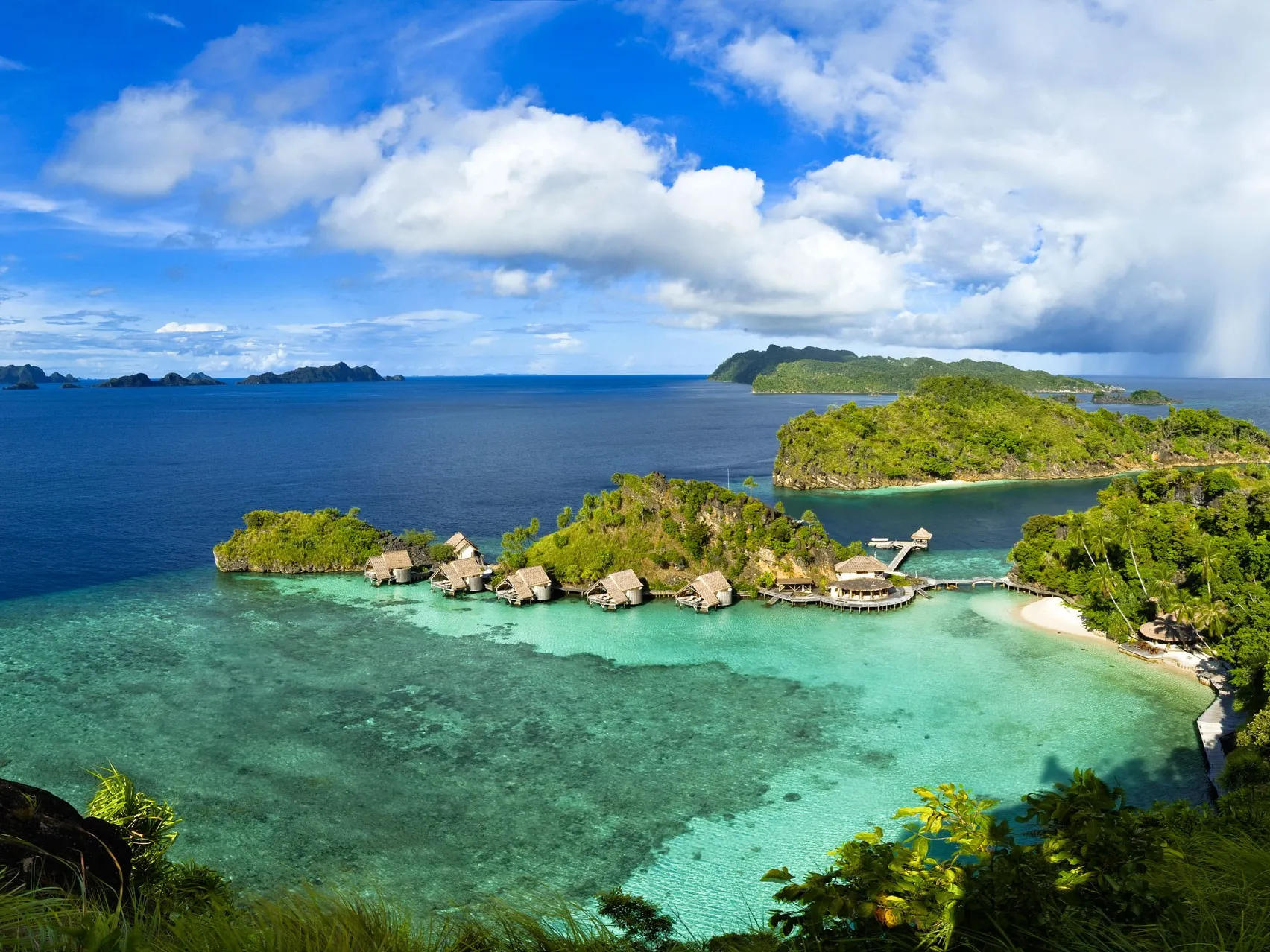
Raja Ampat
Introduction
Scattered like emerald jewels across the turquoise waters of Indonesia lies one of the most biodiverse marine regions on Earth—Raja Ampat. Known as the “World’s Richest Marine Paradise,” this remote archipelago offers an unparalleled combination of pristine coral reefs, crystal-clear waters, and untouched island landscapes.
Located in eastern Indonesia, Raja Ampat consists of over 1,500 small islands, cays, and shoals. Its name, meaning “Four Kings,” refers to the four main islands—Waigeo, Misool, Salawati, and Batanta.
For travelers, divers, and nature enthusiasts, Raja Ampat represents one of the last true paradises on Earth—a destination where marine life thrives in extraordinary abundance.
Geography and Environment
Raja Ampat is situated off the northwest tip of West Papua, within the Coral Triangle—an area recognized as the global center of marine biodiversity.
The region features a stunning mix of limestone islands, hidden lagoons, dense tropical forests, and shallow coral reefs. Its warm, tropical climate ensures year-round marine activity, while nutrient-rich ocean currents support an incredibly diverse ecosystem.
The iconic karst islands rise dramatically from the sea, creating a breathtaking seascape of jagged green peaks surrounded by bright blue waters.
One of the most famous viewpoints is Piaynemo Viewpoint, offering panoramic views of the island clusters that define Raja Ampat’s beauty.
Coral Reefs and Marine Biodiversity
Raja Ampat is often described as the most biodiverse marine ecosystem on the planet. Scientists have recorded over 600 species of coral and more than 1,500 species of fish in the region.
This makes it the richest marine habitat within the Coral Triangle, surpassing many other प्रसिद्ध diving destinations worldwide.
The coral reefs are vibrant and स्वस्थ, featuring a kaleidoscope of colors and intricate formations. These reefs support an incredible range of marine life, from tiny reef fish to large pelagic species.
Diving in Raja Ampat is considered one of the best experiences in the world, offering encounters with rare and exotic underwater creatures.
Marine Life and Wildlife
The waters of Raja Ampat are home to an astonishing variety of marine animals. Divers and snorkelers can encounter manta rays, reef sharks, sea turtles, and schools of colorful fish.
One of the highlights is visiting Manta Sandy, a cleaning station where manta rays gather, offering unforgettable close-up experiences.
The region is also known for its unique species, including pygmy seahorses and walking sharks found nowhere else on Earth.
On land, the islands host tropical birds such as birds-of-paradise, along with lush जंगल ecosystems that complement the marine environment.
This extraordinary biodiversity makes Raja Ampat a true природal treasure.
Culture and Local Communities
Raja Ampat is home to indigenous Papuan communities who have lived in harmony with nature for generations.
Local villages are spread across the islands, where residents rely on fishing, small-scale agriculture, and eco-tourism.
Traditional customs, music, and crafts reflect a deep connection to the sea and environment.
Visitors can experience local hospitality, learn about traditional lifestyles, and participate in cultural exchanges that enrich their यात्रा.
This cultural authenticity adds depth to the natural beauty of Raja Ampat.
Adventure and Exploration
Raja Ampat offers a wide range of activities for travelers seeking adventure and relaxation.
Diving and snorkeling are the main attractions, providing access to some of the most pristine coral reefs in the world.
Island hopping allows visitors to explore hidden beaches, lagoons, and scenic viewpoints.
Kayaking through limestone formations and शांत waters offers a more intimate way to experience the landscape.
Birdwatching, hiking, and cultural tours add further variety to the experience.
Whether above or below the water, every moment in Raja Ampat feels like an exploration of untouched paradise.
Sustainability and Conservation
Raja Ampat is a global leader in marine conservation. Efforts are in place to protect its fragile ecosystems and ensure sustainable tourism.
Marine protected areas regulate fishing and tourism गतिविधियाँ, helping preserve coral reefs and marine life.
Local communities play an active role in conservation, benefiting from eco-tourism initiatives that support sustainable livelihoods.
Visitors are encouraged to follow responsible practices, such as avoiding contact with coral and reducing plastic waste.
These efforts help maintain Raja Ampat’s status as one of the world’s most pristine marine environments.
Best Time to Visit Raja Ampat
The best time to visit Raja Ampat is between October and April, when sea conditions are calm and visibility is ideal for diving and snorkeling.
During these months, the weather is generally pleasant, with less wind and clearer waters.
However, Raja Ampat can be visited year-round, as its tropical climate supports marine life in all seasons.
Each period offers slightly different conditions, but the region’s beauty remains constant.
Transport and Accessibility
Reaching Raja Ampat requires some effort, adding to its exclusivity and untouched appeal.
Travelers typically fly to Sorong, the main entry point to the region.
From Sorong, ferries or speedboats take visitors to the islands.
Due to its remote location, most visitors stay in eco-resorts or liveaboard boats, allowing them to fully experience the archipelago.
Despite the journey, the reward is access to one of the most pristine destinations on Earth.
Why Visit Raja Ampat?
Raja Ampat offers an unmatched природal experience. Its невероят biodiversity, crystal-clear waters, and untouched landscapes create a destination that feels like a true paradise.
Visitors can explore vibrant coral reefs, encounter rare marine species, and enjoy the tranquility of remote islands.
For divers, nature lovers, and путешественники seeking something extraordinary, Raja Ampat stands as one of the world’s ultimate destinations.
Conclusion
Raja Ampat is more than just a travel destination—it is a living masterpiece of nature. From its colorful coral reefs to its lush islands and rich cultural heritage, it represents the very best of Earth’s marine environments.
In a world where many natural क्षेत्रों face challenges, Raja Ampat remains a shining example of conservation and sustainability.
For those seeking beauty, adventure, and a deeper connection with nature, Raja Ampat offers an unforgettable journey into the world’s richest marine paradise—a place where life beneath the waves flourishes in its most spectacular form.
00 Comments
No comments yet.
Leave a Comment