

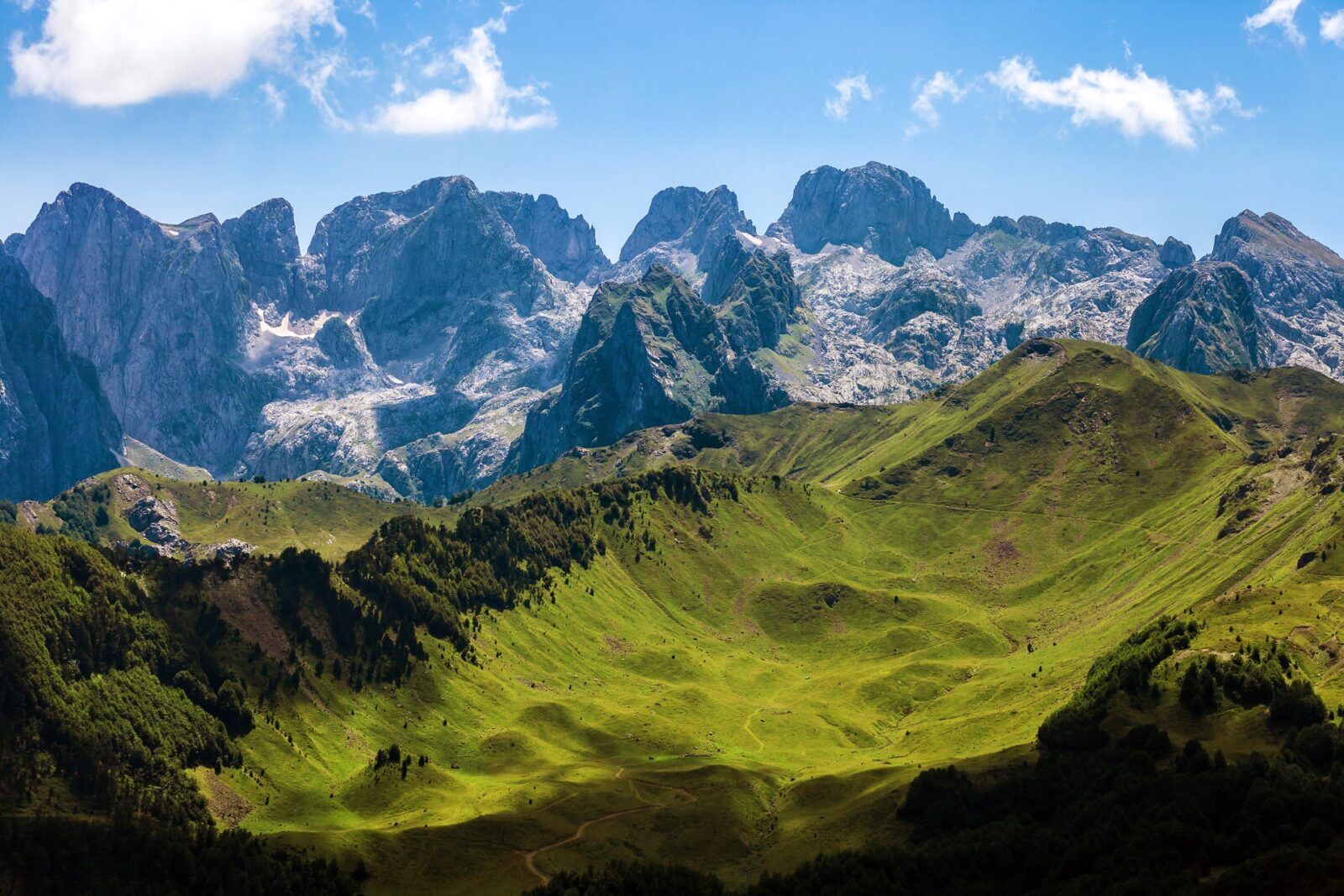
Prokletije Mountains
Introduction
Hidden along the rugged borderlands of Montenegro, Albania, and Kosovo, the Prokletije Mountains form one of the most spectacular and least explored mountain regions in the Balkans. Known locally as the Accursed Mountains, this dramatic range is characterized by sharp limestone peaks, deep valleys, glacial lakes, dense forests, remote villages, and some of the most breathtaking hiking landscapes in southeastern Europe.
The Montenegrin side of the range is protected within Prokletije National Park, a vast wilderness surrounding some of the country's most dramatic alpine scenery. Established in 2009, the park protects approximately 16,630 hectares of mountains, forests, lakes, rivers, and high-altitude habitats.
Despite their dramatic beauty, the Prokletije Mountains remain considerably quieter than Europe's famous Alpine destinations. Travelers who venture here discover a landscape where rugged peaks rise directly from green valleys, shepherds still use traditional mountain pastures, and crystal-clear lakes reflect towering limestone walls.
The region is especially famous for destinations such as Grebaje Valley, Hridsko Lake, Visitor Mountain, and the spectacular peaks surrounding Plav and Gusinje.
For travelers searching for unique places to visit in Montenegro, this Prokletije Mountains travel guide explores the geography, landscapes, hiking trails, wildlife, local culture, cuisine, best time to visit, transportation, sustainability, and why this remarkable mountain range deserves its reputation as Europe's Accursed Mountain Wilderness.
Where Are the Prokletije Mountains?
The Prokletije Mountains occupy the southeastern corner of Montenegro and continue across neighboring Albania and Kosovo.
In Montenegro, the range is concentrated around the towns of Plav and Gusinje, which serve as important gateways to the mountain landscapes.
The region is characterized by:
- Sharp limestone peaks
- Deep glacial valleys
- Alpine lakes
- Dense forests
- Mountain pastures
- Rocky cliffs
- Waterfalls
- High-altitude meadows
- Traditional villages
The highest mountain in Montenegro, Zla Kolata, rises to approximately 2,534 meters and is located within the Prokletije range.
The combination of dramatic elevation and rugged geology gives the mountains a distinctly alpine appearance.
Why Are the Prokletije Mountains Famous?
The Prokletije Mountains are famous for their wild scenery and relatively undiscovered character.
The region is known for:
- Rugged limestone peaks
- Prokletije National Park
- Grebaje Valley
- Plav Lake
- Hridsko Lake
- Gusinje
- Zla Kolata
- Mountain hiking
- Alpine landscapes
- Traditional villages
- Rich biodiversity
- Balkan wilderness
The mountains are sometimes compared with the Alps because of their sharp peaks and deep valleys, but their remote character gives them a much wilder atmosphere.
Why Are They Called the Accursed Mountains?
The name Prokletije translates roughly as "Accursed Mountains."
The origin of the name is surrounded by legends and different interpretations.
One popular explanation is that the mountains were considered so rugged and difficult to cross that travelers described them as cursed.
Other local legends connect the name to stories of people escaping through the mountains and the harsh conditions they encountered.
Whatever the historical origin, the name perfectly reflects the range's dramatic appearance.
The peaks rise sharply from narrow valleys, creating an almost fortress-like landscape.
Prokletije National Park
The Montenegrin section of the range is protected by Prokletije National Park, established in 2009.
The park contains an extraordinary mixture of:
- Alpine mountains
- Glacial lakes
- Forests
- Rivers
- Canyons
- Meadows
- Endemic plants
- Wildlife habitats
Its location at the meeting point of different geographical and climatic influences contributes to its exceptional biodiversity.
The park is an important destination for hiking and nature tourism while also protecting fragile mountain ecosystems.
Grebaje Valley - The Dramatic Heart of Prokletije
One of the most spectacular places in the Montenegrin Prokletije is Grebaje Valley.
The valley is surrounded by enormous limestone walls and sharp mountain peaks that rise dramatically from the green floor.
The contrast between the valley's lush vegetation and the pale gray rock creates an unforgettable landscape.
Grebaje is a popular base for:
- Hiking
- Mountain photography
- Rock climbing
- Camping
- Nature walks
- Scenic exploration
For photographers, early morning light can be particularly impressive when the first rays illuminate the surrounding peaks.
Karanfili - The Rugged Peaks of Grebaje
The mountains surrounding Grebaje include the spectacular Karanfili group.
Their sharp limestone formations create some of the most dramatic mountain scenery in Montenegro.
The cliffs are especially popular among experienced climbers, while hikers can enjoy views of the peaks from trails through the valley.
The combination of vertical rock faces, green meadows, forests, and clouds moving through the mountains gives Karanfili an almost cinematic appearance.
Hridsko Lake - The Hidden Alpine Lake
Deep within the mountains lies Hridsko Lake, one of the most beautiful natural lakes in Prokletije.
Surrounded by forests and high mountain terrain, the lake has an isolated and peaceful atmosphere.
The journey to Hridsko Lake is part of the experience.
Hikers travel through forested landscapes and mountain terrain before reaching the clear water surrounded by peaks.
The lake is sometimes associated with local legends and is considered one of the region's most atmospheric natural landmarks.
For travelers who prefer quiet mountain landscapes over crowded tourist attractions, Hridsko Lake is an excellent destination.
Plav Lake - Gateway to the Mountains
Plav Lake is one of the largest natural mountain lakes in Montenegro and an important geographical feature of the Prokletije region.
The town of Plav sits beside the lake and provides accommodation, restaurants, and access to surrounding mountain trails.
The lake offers opportunities for:
- Kayaking
- Boating
- Fishing where permitted
- Photography
- Scenic walks
The combination of blue water and rugged mountains makes Plav Lake one of the most beautiful landscapes in northeastern Montenegro.
Gusinje - A Historic Mountain Gateway
The small town of Gusinje is another important gateway to Prokletije National Park.
Surrounded by dramatic mountains, Gusinje has a long history as a crossroads between different Balkan communities and trade routes.
The town's cultural landscape reflects influences from:
- Ottoman history
- Albanian traditions
- Slavic traditions
- Islamic heritage
- Balkan mountain culture
Gusinje is an excellent base for exploring Grebaje Valley and nearby mountain trails.
Ali Pasha's Springs
Near Gusinje lies Ali Pasha's Springs, one of the region's most interesting natural attractions.
These powerful freshwater springs emerge from the mountain landscape and form clear streams and pools.
The springs are associated with local history and legends connected with Ali Pasha of Gusinje.
The surrounding landscape is particularly attractive in spring and summer when the vegetation is lush and the water flows strongly.
Waterfalls of Prokletije
The mountains contain numerous waterfalls, springs, and streams created by the region's rugged terrain and abundant precipitation.
One of the best-known nearby attractions is the Grlja Waterfall, located close to Gusinje.
Water plunges into a deep rocky gorge, creating a dramatic natural spectacle.
The waterfall can be combined with visits to nearby springs and mountain landscapes, making the Gusinje area a convenient base for exploring several natural attractions in one day.
Hiking in the Prokletije Mountains
Hiking is the best way to experience Prokletije.
The region contains trails ranging from relatively easy valley walks to demanding high-altitude mountain routes.
Popular hiking experiences include:
- Grebaje Valley trails
- Hridsko Lake
- Zla Kolata
- Visitor Mountain
- Mountain passes
- Alpine viewpoints
- Cross-border trekking routes
The terrain can be challenging because of steep slopes, rocky surfaces, limited signage in remote areas, and rapidly changing mountain weather.
Experienced hikers can explore deeper into the range, while casual travelers can enjoy shorter valley routes.
Zla Kolata - Montenegro's Highest Mountain
One of the biggest challenges for mountain adventurers is Zla Kolata, Montenegro's highest peak at approximately 2,534 meters.
The summit lies in the Prokletije range close to the Albanian border.
The climb provides spectacular views across the surrounding mountains and valleys.
However, this is a serious mountain hike rather than a casual walk.
Proper preparation, good weather, suitable equipment, and knowledge of mountain conditions are essential.
For experienced hikers, reaching the summit provides one of the most rewarding experiences in Montenegro.
Visitor Mountain
Another fascinating area is Visitor Mountain, located near Plav Lake.
The mountain provides extensive views across the surrounding landscapes and is known for its forests, meadows, and alpine scenery.
Compared with some of the more dramatic peaks of Prokletije, Visitor offers a gentler hiking experience while still providing impressive views.
It is particularly attractive during summer when mountain meadows are covered with wildflowers.
Wildlife in Prokletije
The Prokletije Mountains provide important habitats for Balkan wildlife.
Species found in the wider region include:
- Brown bears
- Wolves
- Eurasian lynx
- Chamois
- Wild boar
- Golden eagles
- Griffon vultures
- Falcons
- Owls
- Woodpeckers
- Numerous butterflies
Large predators are rarely seen because they avoid humans and inhabit remote areas.
The mountains are particularly important for birds of prey and other species dependent on large, relatively undisturbed habitats.
Alpine Plants and Biodiversity
Prokletije is one of the most biologically diverse mountain regions in the Balkans.
The range contains:
- Alpine meadows
- Beech forests
- Conifer forests
- Rocky habitats
- Wetlands
- Glacial environments
Its complex geology and varied elevations support numerous plant species.
During spring and summer, mountain meadows can become covered with colorful wildflowers.
Botanists and nature photographers are particularly attracted to the area's rare and endemic plants.
Local Culture and Mountain Traditions
The Prokletije region is culturally diverse.
Communities around Plav and Gusinje have been influenced by different Balkan cultures over centuries.
Traditional mountain life remains visible through:
- Shepherding
- Livestock farming
- Seasonal migration
- Mountain pastures
- Traditional houses
- Local handicrafts
- Religious heritage
- Oral traditions
In summer, shepherds may still take livestock into high mountain pastures, continuing a tradition that has shaped the landscape for generations.
This cultural connection makes Prokletije more than a wilderness destination.
Montenegro's Mountain Cuisine
Food is an important part of experiencing the Prokletije region.
Local cuisine reflects a mixture of Balkan, Mediterranean, and Ottoman influences.
Visitors can try dishes such as:
- Kačamak
- Lamb
- Grilled meat
- Fresh trout
- Homemade bread
- Local cheeses
- Yogurt
- Beans
- Seasonal vegetables
- Mountain honey
- Baklava
Kačamak, a hearty dish made from cornmeal and served with dairy products, is particularly associated with traditional mountain cuisine.
Fresh trout from the region's rivers and lakes is another popular choice.
Best Things to Do in Prokletije Mountains
The mountains offer activities for adventurous travelers and nature lovers.
Popular experiences include:
- Hiking
- Mountain climbing
- Rock climbing
- Camping
- Kayaking
- Fishing where permitted
- Wildlife watching
- Birdwatching
- Landscape photography
- Visiting traditional villages
- Exploring mountain lakes
- Scenic road trips
Travelers can create anything from a relaxed weekend around Plav to a challenging multi-day trekking adventure.
Sustainable Tourism and Conservation
Prokletije is a fragile mountain environment, and responsible tourism is essential.
Visitors should:
- Stay on established trails
- Avoid disturbing wildlife
- Carry all rubbish out
- Avoid picking wildflowers
- Respect local communities
- Use designated camping areas
- Follow national park regulations
- Avoid damaging vegetation
- Keep dogs under control where required
- Use local guides for difficult routes
The growing popularity of hiking in the Balkans creates both opportunities and challenges.
Supporting local guesthouses, guides, restaurants, and tourism businesses can help ensure that tourism provides economic benefits to mountain communities while encouraging long-term conservation.
Best Time to Visit Prokletije Mountains
The best time to explore the Prokletije Mountains depends on the activity.
May to June - Spring
Spring brings green valleys, flowing waterfalls, and colorful wildflowers.
Some higher trails may still contain snow.
July and August - Summer
Summer is generally the best period for hiking and high-altitude trekking.
Longer daylight hours allow visitors to spend more time exploring the mountains.
September to October - Autumn
Autumn brings beautiful colors to the forests and cooler hiking conditions.
This is an excellent period for photography and peaceful mountain walks.
November to April - Winter
Snow transforms Prokletije into a dramatic winter landscape.
However, winter hiking and mountaineering require specialist equipment and experience.
For most travelers, July through September offers the best balance of accessibility and mountain conditions.
How to Get to the Prokletije Mountains
The main gateways on the Montenegrin side are Plav and Gusinje.
Travelers can reach the region by road from other parts of Montenegro.
The nearest major tourist centers include:
- Podgorica
- Kolašin
- Žabljak
- Plav
- Gusinje
A rental car provides the greatest flexibility for exploring remote valleys and trailheads.
The journey itself can be spectacular, with winding mountain roads passing through forests, valleys, and traditional villages.
Travelers should allow extra time because mountain roads can be narrow and slow.
Essential Travel Tips for Visiting Prokletije
The Prokletije Mountains are much more remote than many European hiking destinations.
Before hiking:
- Check the weather forecast.
- Carry enough water and food.
- Wear sturdy hiking boots.
- Bring waterproof clothing.
- Carry an offline map.
- Do not rely completely on mobile coverage.
- Start long hikes early.
- Tell someone your planned route.
- Consider hiring a local mountain guide.
- Be prepared for sudden weather changes.
If hiking toward high peaks such as Zla Kolata, additional mountain equipment and experience may be necessary.
Why Visit the Prokletije Mountains?
The Prokletije Mountains offer one of Europe's most rewarding combinations of wilderness, culture, and adventure.
The region feels remote without being completely inaccessible.
A traveler can spend the morning walking beside a peaceful alpine lake, the afternoon exploring a mountain village, and the evening enjoying traditional Balkan food in a local guesthouse.
The scenery is equally remarkable.
Sharp limestone peaks rise above green valleys, waterfalls cut through forests, and glacial lakes reflect mountains that seem almost impossibly steep.
For photographers, hikers, climbers, wildlife enthusiasts, and travelers looking for hidden gems in Montenegro, Prokletije offers a genuine sense of discovery.
Conclusion
The Prokletije Mountains are far more than another Balkan mountain range - they are one of Europe's most dramatic remaining wilderness landscapes.
From the towering peaks of Karanfili and Zla Kolata to the peaceful waters of Hridsko Lake and Plav Lake, the mountains offer extraordinary scenery at almost every turn.
The region's natural beauty is matched by its cultural richness. Traditional villages, shepherding communities, historic settlements, and diverse Balkan traditions create a landscape where nature and human heritage remain closely connected.
For travelers searching for unique places to visit in Montenegro, spectacular mountain hiking, untouched Balkan landscapes, alpine lakes, rich wildlife, and authentic cultural experiences, the Prokletije Mountains truly deserve their reputation as Europe's Accursed Mountain Wilderness.
00 Comments
No comments yet.
Leave a Comment