

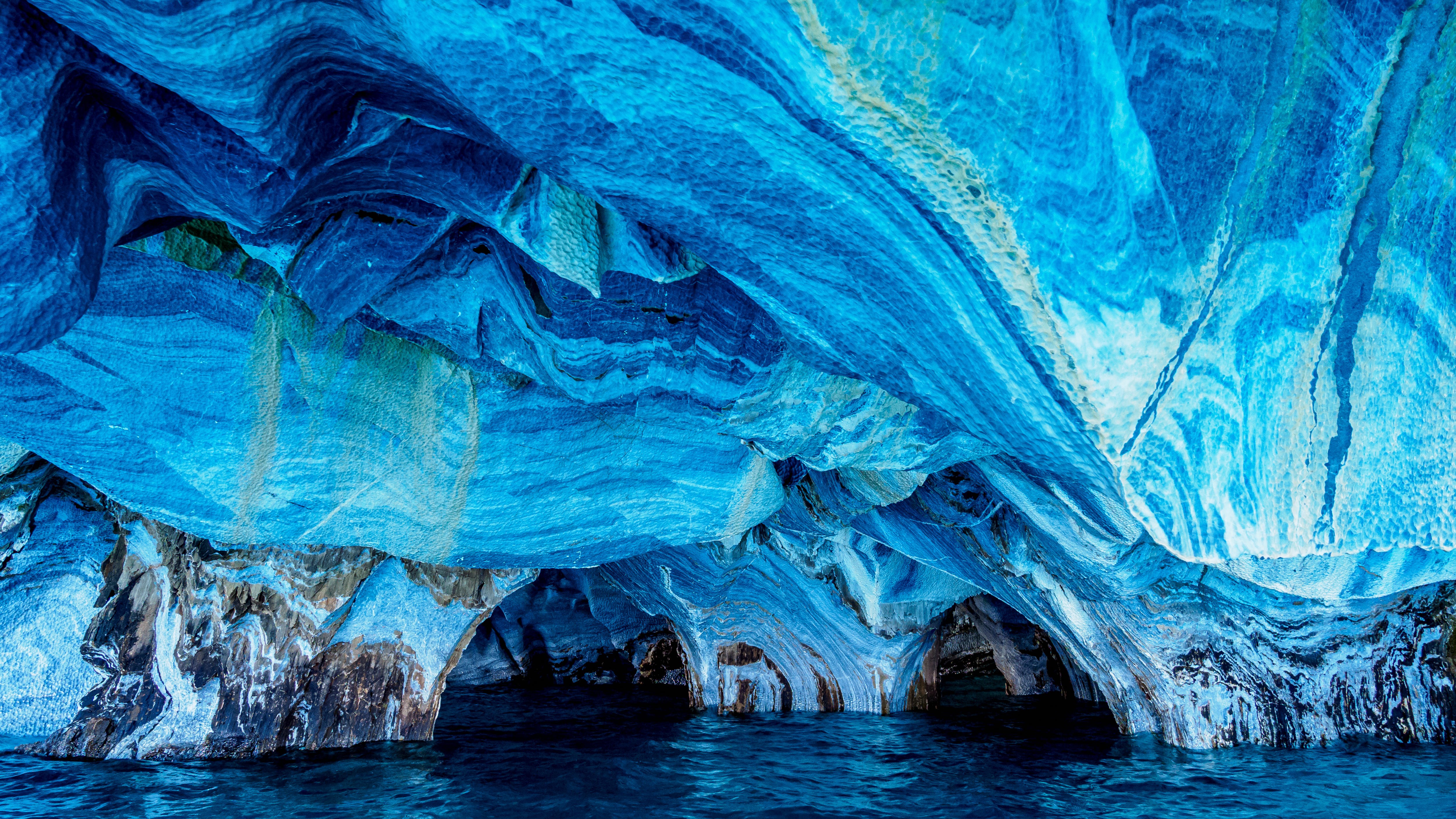
Marble Cave
Introduction
Hidden within the crystal-clear turquoise waters of General Carrera Lake, the Marble Caves are one of South America's most breathtaking natural wonders. Known as Nature's Blue Cathedral, these spectacular marble formations feature swirling blue, white, and gray patterns sculpted by thousands of years of wave erosion, creating one of the most photogenic destinations in the world.
Located deep in the heart of Patagonia, the Marble Caves are a geological masterpiece that attracts photographers, kayakers, nature lovers, and adventure travelers from around the globe. The constantly changing colors of the water, influenced by sunlight, glacier melt, and weather conditions, transform the caves into a living work of art where every visit offers a different visual experience.
Unlike traditional caves formed underground, the Marble Caves rise directly from the lake, allowing visitors to explore them by kayak or small boat. Towering arches, smooth marble walls, hidden tunnels, and shimmering reflections create an almost magical atmosphere that feels like stepping inside a natural cathedral carved entirely by nature.
Whether you're an outdoor enthusiast, landscape photographer, or traveler searching for one of Chile's most extraordinary hidden gems, this Marble Caves travel guide explains why Nature's Blue Cathedral deserves a place on every Patagonia itinerary.
Where Are the Marble Caves? Geography and Natural Landscape
The Marble Caves are located on the western shore of General Carrera Lake in the Aysén Region, approximately 220 kilometers south of Coyhaique.
General Carrera Lake is the largest lake in Chile and the second-largest in South America, fed by glaciers flowing from the nearby Northern Patagonian Ice Field.
The Marble Caves are formed from solid calcium carbonate marble estimated to be over 6,000 years old, with continuous wave action gradually sculpting intricate caves, tunnels, pillars, and arches.
The striking combination of turquoise glacial water and polished marble walls creates one of the world's most unique geological landscapes.
Why Are the Marble Caves Famous?
The Marble Caves are internationally recognized as one of Chile's most iconic natural attractions.
The caves are famous for:
- Stunning blue marble formations
- Crystal-clear glacial waters
- Natural marble cathedrals and tunnels
- Kayaking through marble caves
- Patagonia's most photographed destination
- Ever-changing reflections and colors
- Unique geological formations
- Scenic boat tours
- Exceptional landscape photography
- One of South America's natural wonders
Their remarkable beauty makes the Marble Caves one of the most unforgettable destinations in Patagonia.
History and Natural Significance
The Marble Caves were formed over thousands of years as the waves of General Carrera Lake slowly eroded massive deposits of solid marble.
Unlike limestone caves created by underground rivers, these formations have been sculpted entirely by surface water, producing smooth curves, elegant pillars, and intricate cave systems.
The marble itself originated millions of years ago through geological processes involving heat and pressure beneath the Earth's surface.
Today, the caves continue to evolve as seasonal changes in lake levels and wave action gradually reshape their appearance.
The Marble Caves are now one of Chile's most important natural landmarks, attracting scientists, photographers, and eco-tourists while highlighting the geological diversity of Patagonia.
Top Attractions at the Marble Caves
Marble Cathedral (Catedral de Mármol)
The most famous formation is the Marble Cathedral, an enormous natural arch with soaring marble walls reflected in brilliant blue water.
The intricate patterns carved into the marble resemble stained-glass artwork, giving the cave its cathedral-like appearance.
When sunlight enters the cave, the reflections create a magical blue glow that changes throughout the day.
It is considered one of the most beautiful natural rock formations in South America.
Marble Chapel (Capilla de Mármol)
The elegant Marble Chapel is a smaller but equally impressive formation.
Its smooth marble walls display swirling patterns of white, gray, and deep blue that have been polished by centuries of wave action.
The intimate size of the chapel allows kayakers to experience its incredible beauty up close.
It is one of the highlights of every boat tour.
Marble Cavern (Cueva de Mármol)
The Marble Cavern features narrow passages, hidden chambers, and beautifully sculpted ceilings.
Visitors can paddle through the cave while admiring reflections that appear to illuminate the marble from below.
The constantly shifting light creates endless opportunities for spectacular photography.
Each visit offers a unique visual experience depending on weather and water conditions.
Kayaking Through the Marble Formations
One of the best ways to experience the Marble Caves is by kayak.
Paddling quietly through the arches and tunnels allows visitors to explore areas inaccessible to larger boats while enjoying uninterrupted views of the intricate marble formations.
The calm glacial waters provide an unforgettable adventure for nature lovers and photographers alike.
Kayaking also offers a more intimate connection with Patagonia's stunning landscapes.
General Carrera Lake
The Marble Caves are surrounded by the immense beauty of General Carrera Lake.
Its vibrant turquoise waters owe their color to fine glacial sediments suspended in the water.
Snow-capped mountains, forests, and dramatic Patagonian scenery create a breathtaking backdrop that enhances every visit.
Wildlife and Natural Environment
The Marble Caves are surrounded by Patagonia's rich natural landscapes.
Visitors may encounter:
- Andean Condor
- Black-necked Swan
- South American Gray Fox
- Native ducks
- Trout and salmon
- Patagonian songbirds
- Wildflowers during spring and summer
- Native forest vegetation
The surrounding mountains and lakes support diverse wildlife throughout the year.
Best Things to Do at the Marble Caves
The Marble Caves offer unforgettable outdoor adventures.
Popular activities include:
- Boat tours
- Kayaking through marble caves
- Landscape photography
- Drone photography (where permitted)
- Wildlife watching
- Scenic lake cruises
- Exploring Patagonia
- Hiking nearby viewpoints
- Sunrise and sunset photography
- Visiting local villages
Every visit showcases a different combination of colors, reflections, and natural beauty.
Local Culture and Traditional Cuisine
The nearby village of Puerto Río Tranquilo serves as the main gateway to the Marble Caves.
Local families have welcomed travelers for decades, offering guided tours, cozy accommodations, and authentic Patagonian hospitality.
Visitors can enjoy regional specialties such as grilled Patagonian lamb, freshwater trout, king crab, handmade empanadas, locally produced cheeses, and traditional Chilean desserts.
Supporting local tour operators and family-owned businesses helps strengthen sustainable tourism throughout the region.
Sustainable Tourism and Conservation
The Marble Caves are a fragile natural treasure that requires careful protection.
Local authorities regulate boat traffic to minimize erosion and reduce environmental impacts.
Visitors are encouraged to avoid touching the marble formations, dispose of waste responsibly, and choose eco-friendly tour operators.
Responsible tourism helps preserve the caves' extraordinary beauty while supporting local communities and protecting Patagonia's pristine environment.
Best Time to Visit the Marble Caves (Month-by-Month Guide)
The best time to visit is during the Patagonian summer from November to March.
During this period, calm weather and longer daylight hours provide ideal conditions for boating and kayaking.
Early mornings often offer the smoothest water, creating spectacular reflections inside the caves.
Water levels and sunlight vary throughout the year, giving the caves different shades of blue in every season.
Visiting on a clear day provides the most vibrant colors and best photography conditions.
How to Get to the Marble Caves
Most travelers begin their journey in Coyhaique.
From Coyhaique, visitors travel along the scenic Carretera Austral to Puerto Río Tranquilo, the main departure point for boat and kayak tours.
From Puerto Río Tranquilo, guided excursions take visitors directly to the Marble Caves across General Carrera Lake.
Because weather conditions can affect lake crossings, flexible travel plans are recommended.
Essential Travel Tips for Visiting the Marble Caves
Preparation helps ensure the best experience.
- Visit early in the morning for calmer waters.
- Wear waterproof clothing during boat or kayak tours.
- Bring a camera with a polarizing filter for vibrant colors.
- Book tours in advance during peak summer months.
- Respect conservation guidelines and avoid touching the marble.
- Wear non-slip footwear for boarding boats.
- Check weather forecasts before traveling.
Good planning ensures a safe and unforgettable adventure.
Why Visit the Marble Caves?
The Marble Caves offer one of the most visually stunning natural experiences in South America. From kayaking beneath glowing blue marble arches and photographing crystal-clear reflections to cruising across Patagonia's largest lake, every moment feels extraordinary.
Unlike many famous cave systems, the Marble Caves combine geology, glacial landscapes, and pristine waters to create a destination unlike any other on Earth.
For photographers, nature lovers, adventure travelers, and anyone exploring Patagonia, the Marble Caves are an unforgettable highlight.
Conclusion
The Marble Caves are far more than beautiful rock formations - they are one of nature's greatest masterpieces. Their dazzling blue reflections, sculpted marble walls, tranquil glacial waters, and spectacular Patagonian surroundings create an experience that captivates every visitor.
As one of Chile's most iconic natural attractions, the Marble Caves showcase the incredible power of water, time, and geology in shaping the Earth's landscapes.
For travelers seeking breathtaking scenery and unforgettable adventures, the Marble Caves truly live up to their reputation as Nature's Blue Cathedral.
00 Comments
No comments yet.
Leave a Comment