

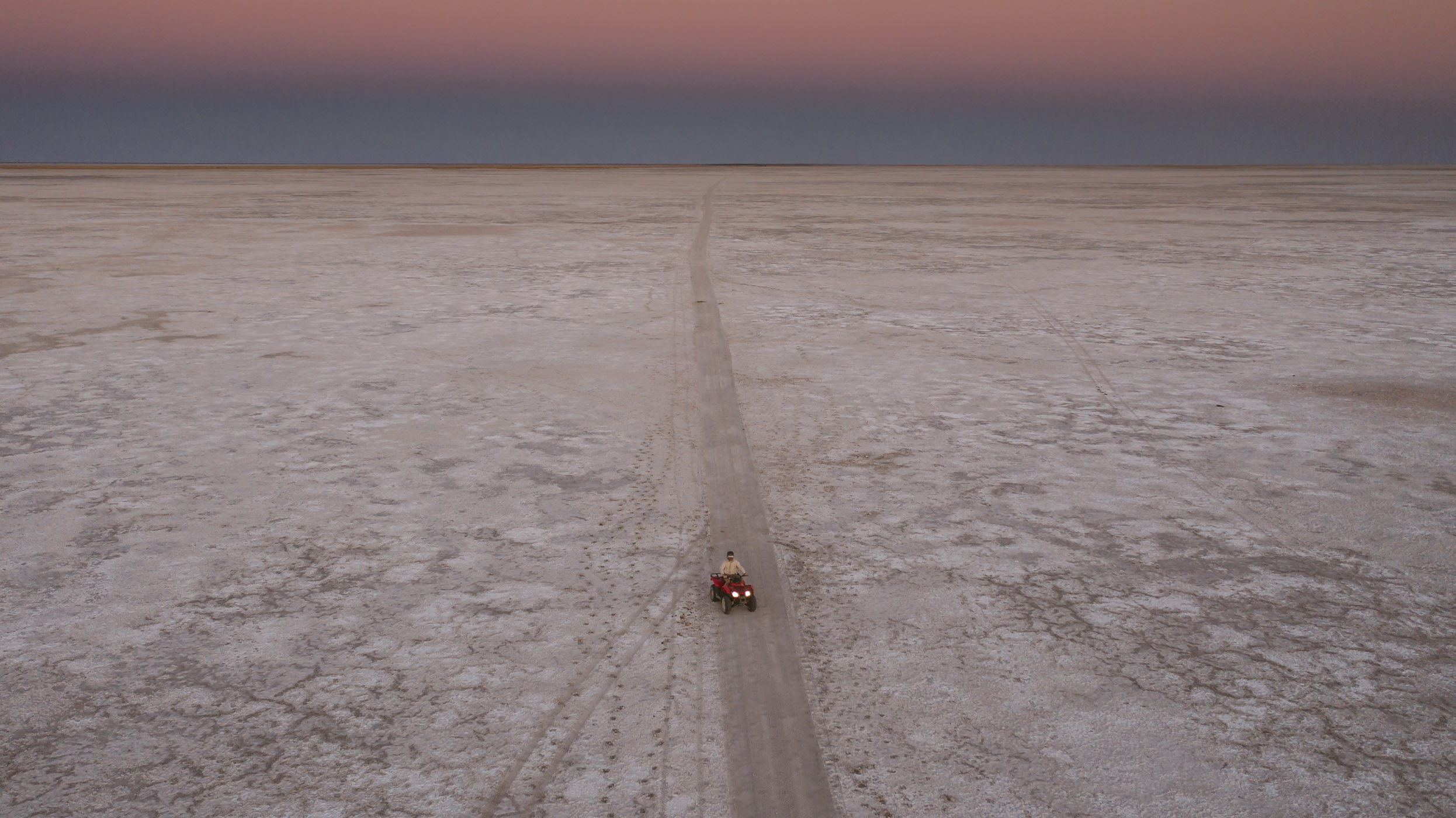
Makgadikgadi Salt Pans
Introduction
Stretching across the heart of Botswana, the Makgadikgadi Salt Pans are one of Africa's most surreal and awe-inspiring natural wonders. Known as Africa's Endless White Desert, this vast network of shimmering salt flats creates an almost extraterrestrial landscape where the horizon seems to disappear into an endless sea of white. Covering more than 16,000 square kilometers (6,200 square miles), the Makgadikgadi Salt Pans are among the largest salt flats on Earth and offer one of the continent's most unique travel experiences.
Thousands of years ago, this region was covered by one of Africa's largest inland lakes. As the ancient lake gradually dried up, it left behind enormous salt crusts that now stretch across northern Botswana. During the dry season, the landscape transforms into a dazzling white desert, while the rainy season brings shallow lakes, lush grasslands, and one of Southern Africa's most spectacular wildlife migrations.
From quad biking across the endless salt flats and sleeping beneath millions of stars to witnessing migrating zebras, playful meerkats, and thousands of flamingos, Makgadikgadi offers unforgettable adventures unlike anywhere else in Africa. Its untouched beauty, incredible biodiversity, and rich cultural heritage make it one of Botswana's most remarkable hidden gems.
Whether you're an adventure traveler, wildlife enthusiast, photographer, or someone seeking extraordinary landscapes, this Makgadikgadi Salt Pans travel guide will show you why Africa's endless white desert deserves a place on your travel bucket list.
Where Are the Makgadikgadi Salt Pans? Geography and Desert Landscape
The Makgadikgadi Salt Pans are located in northeastern Botswana, south of the famous Okavango Delta and east of Maun.
The salt pans are the remains of Lake Makgadikgadi, a prehistoric super lake that once covered much of Botswana thousands of years ago.
Today, the landscape consists of immense salt plains, seasonal wetlands, grassy islands, sandy desert, palm-fringed oases, and acacia woodlands.
The pans include several major sections, with Sua Pan and Ntwetwe Pan being the largest.
Their breathtaking emptiness and wide-open skies create one of the most photogenic landscapes in Africa.
Why Are the Makgadikgadi Salt Pans Famous?
The Makgadikgadi Salt Pans are internationally recognized for their unique landscapes and seasonal wildlife.
The region is famous for:
- One of the world's largest salt flats
- Endless white desert landscapes
- Africa's second-largest zebra migration
- Spectacular flamingo gatherings
- Ancient baobab trees
- Quad biking adventures
- Overnight camping beneath the stars
- Indigenous San Bushmen cultural experiences
- Stunning sunrise and sunset photography
- Exceptional stargazing opportunities
Its remarkable combination of desert scenery and seasonal wildlife makes Makgadikgadi one of Botswana's most extraordinary destinations.
History and Geological Significance
Thousands of years ago, the Makgadikgadi region was occupied by Lake Makgadikgadi, one of the largest inland lakes ever to exist in Africa.
Climate changes gradually caused the lake to evaporate, leaving behind enormous mineral-rich salt deposits that now form today's pans.
The region also holds great archaeological importance, with ancient stone tools and fossil discoveries providing valuable insights into early human history.
For centuries, the area has been home to the San people, whose deep knowledge of survival in this harsh environment continues to be passed down through generations.
Today, Makgadikgadi represents both an important geological landmark and a living cultural landscape.
Top Attractions in Makgadikgadi Salt Pans
Ntwetwe Pan - The Endless White Horizon
Ntwetwe Pan is one of the largest and most iconic sections of the Makgadikgadi Salt Pans.
During the dry season, its brilliant white surface stretches endlessly toward the horizon, creating breathtaking panoramic views and incredible photography opportunities.
The vast emptiness makes visitors feel as though they are standing on another planet.
It is also one of the best places for quad biking and overnight desert camping.
Kubu Island - Botswana's Sacred Granite Outcrop
Rising dramatically from the flat salt pans is Kubu Island, one of Botswana's most sacred and mysterious landmarks.
This rocky island is covered with ancient baobab trees and granite boulders that create a striking contrast against the surrounding white landscape.
Kubu Island is considered spiritually significant and offers spectacular sunrise and sunset views.
It is one of the most photographed locations in Botswana.
Sua Pan - Flamingo Paradise
During the rainy season, Sua Pan fills with shallow water, attracting thousands of Greater Flamingo and Lesser Flamingo.
The sight of countless pink birds reflected in the shallow water creates one of Africa's most beautiful wildlife spectacles.
Birdwatchers from around the world visit during this period to observe the incredible diversity of waterbirds.
Baines' Baobabs
One of Botswana's most famous natural landmarks is Baines' Baobabs.
Named after explorer Thomas Baines, these magnificent baobab trees have stood for centuries overlooking the salt pans.
Their dramatic silhouettes become especially beautiful during sunrise, sunset, and beneath star-filled night skies.
Nxai Pan National Park
Located near the salt pans, Nxai Pan National Park complements any Makgadikgadi adventure.
The park is home to lions, giraffes, elephants, cheetahs, zebras, antelope, and numerous bird species.
Its open grasslands provide excellent opportunities for wildlife photography throughout the year.
Wildlife in Makgadikgadi Salt Pans
Despite its desert appearance, Makgadikgadi supports remarkable biodiversity.
Visitors may encounter:
- Plains Zebra
- Blue Wildebeest
- African Elephant
- Lion
- Cheetah
- Brown Hyena
- Meerkat
- Flamingos
- Ostriches
- Jackals
- More than 400 bird species
The annual zebra migration is one of Africa's largest and least-known wildlife spectacles.
Best Things to Do in Makgadikgadi Salt Pans
Makgadikgadi offers unforgettable desert adventures.
Popular activities include:
- Quad biking across the salt flats
- Wildlife safaris
- Visiting Kubu Island
- Stargazing in the desert
- Camping under the stars
- Birdwatching
- Photographing surreal landscapes
- Meeting the San Bushmen
- Watching zebra migrations
- Exploring ancient baobab trees
Every season reveals a different side of this extraordinary landscape.
Local Culture and Traditional Experiences
The Makgadikgadi region is home to the Indigenous San people, whose traditional knowledge of the desert has been refined over thousands of years.
Visitors can participate in guided cultural walks to learn about traditional hunting methods, medicinal plants, survival skills, storytelling, music, and ancient tracking techniques.
These experiences provide valuable insight into one of the world's oldest surviving cultures while supporting local communities through responsible tourism.
Sustainable Tourism and Conservation
Makgadikgadi is protected through a combination of national parks, wildlife reserves, and community-based conservation initiatives.
Sustainable tourism plays an important role in protecting fragile ecosystems while creating employment opportunities for local communities.
Visitors are encouraged to remain on designated tracks, avoid disturbing wildlife, minimize waste, and support eco-friendly lodges and locally operated tours.
Responsible travel helps preserve this remarkable wilderness for future generations.
Best Time to Visit Makgadikgadi Salt Pans (Month-by-Month Guide)
The dry season (May to October) offers endless white salt flats, ideal conditions for quad biking, photography, and stargazing.
The rainy season (November to April) transforms the pans into seasonal wetlands filled with wildlife, migrating zebras, wildebeest, and thousands of flamingos.
Both seasons provide unique experiences, making Makgadikgadi an attractive year-round destination.
How to Get to Makgadikgadi Salt Pans
Most travelers begin their journey from Maun or Nata.
Maun offers domestic flights from Gaborone and regional connections from neighboring countries.
From Maun or Nata, visitors typically travel by 4x4 vehicle or guided safari tour to reach different sections of the salt pans.
Because many areas become inaccessible after rainfall, guided tours with experienced local operators are highly recommended.
Essential Travel Tips for Visiting Makgadikgadi Salt Pans
Planning ahead will ensure a memorable experience.
- Visit during the dry season for classic white desert landscapes.
- Travel during the rainy season for wildlife and flamingo viewing.
- Bring sunglasses and sunscreen to protect against the bright salt reflections.
- Carry plenty of drinking water.
- Wear lightweight clothing and sturdy footwear.
- Book guided 4x4 tours for safe access.
- Respect wildlife and Indigenous cultural traditions.
Preparation will help you enjoy one of Africa's most unique natural landscapes.
Why Visit Makgadikgadi Salt Pans?
Makgadikgadi Salt Pans offer one of the most surreal travel experiences on Earth. Whether you're driving across endless white plains, camping beneath dazzling stars, photographing ancient baobab trees, observing migrating zebras, or learning from the San people, every moment feels extraordinary.
Unlike crowded safari destinations, Makgadikgadi combines dramatic scenery, rich wildlife, cultural heritage, and peaceful solitude, creating a truly unforgettable African adventure.
For photographers, nature lovers, wildlife enthusiasts, and travelers seeking destinations beyond the ordinary, Makgadikgadi is one of Botswana's greatest hidden treasures.
Conclusion
The Makgadikgadi Salt Pans are far more than a vast white desert - they are one of Africa's most extraordinary natural landscapes. From their prehistoric origins and seasonal wildlife migrations to their ancient baobab trees, Indigenous heritage, and breathtaking night skies, every corner of this remarkable region tells a story shaped by nature and time.
Its unique combination of geological history, wildlife, adventure, and cultural experiences makes it one of Southern Africa's most unforgettable destinations.
For travelers looking to discover one of the continent's most remarkable hidden gems, Makgadikgadi Salt Pans truly live up to their reputation as Africa's Endless White Desert.
00 Comments
No comments yet.
Leave a Comment