

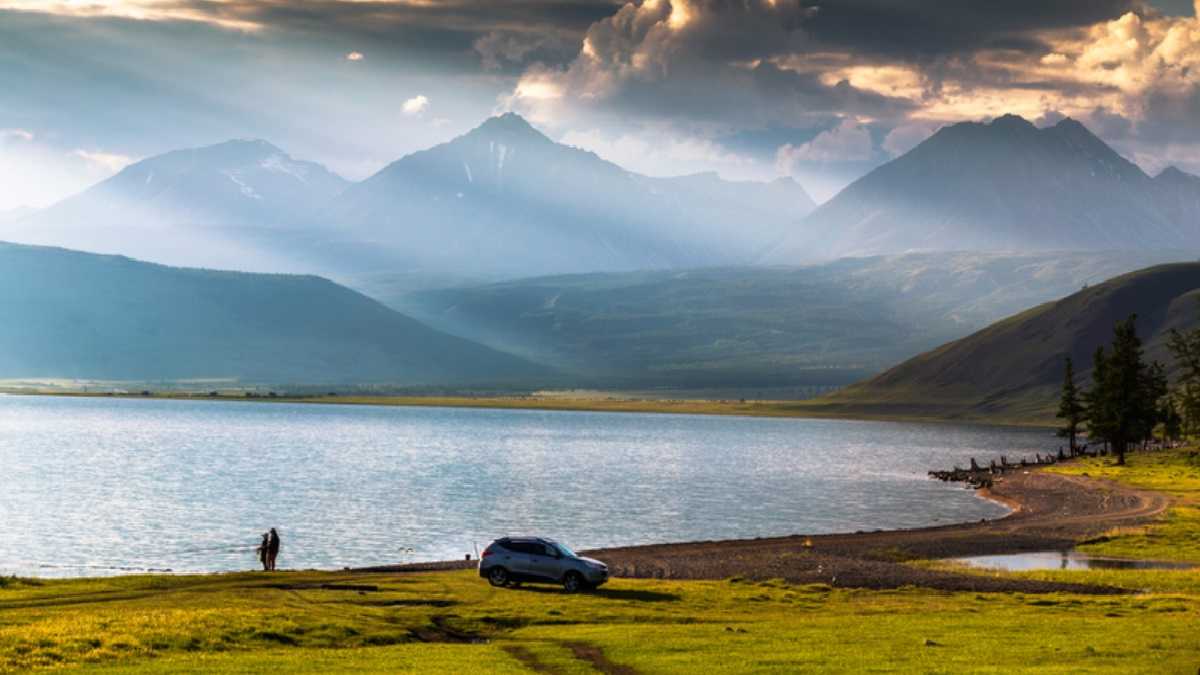
Khuvsgul Lake
Khuvsgul Lake is one of the most stunning places in Mongolia. The lake is located in the north of the country, in the Khuvsgul Province. It is the deepest and largest freshwater lake in Mongolia and is also one of the largest lakes in Asia. Khuvsgul Lake, one of the world's Seventeen old lakes, was formed more than 2 million years ago.
It is the nation's most important source of drinking water. The lake area is a large national park that is closely protected and seen as a transitional region between the Siberian Taiga and the Central Asian Steppe.
The lake is a popular tourist destination known for its clear water, beautiful scenery, and abundance of fish. The lake is a popular spot for fishing, swimming, and boating. There are several hotels and resorts in the area that cater to tourists.
If you are planning a trip to Mongolia, be sure to add Khuvsgul Lake to your itinerary. This ultimate travel guide will tell you everything you need to know about this amazing place!
Geography of the Khuvsgul Lake in Mongolia
Khuvsgul Lake is situated in Mongolia's northwest, not far from the Russian border. Its location in northern Mongolia is part of the southern boundary of the vast Siberian taiga forest, which is dominated by the renowned Siberian larch tree.
It is encircled by mountain ranges, jagged peaks, and gently sloping hills, which are enhanced by vibrant wildflowers during the summer months. The Munkh Saridag Mountain Range takes up the lake's northern coast, whereas the Khoridol Saridag and Bayan Mountain Ranges are situated at the lake's western end.
Between flat-topped mountains on the east, which are the sources of 29 of the lake's tributaries, are sloping mountain sides covered in lush woods. The Burenkhaan, also known as the Monkh Saridag, is the highest peak and is 3,492 meters high. It is situated near the lake's northern end, on the Mongolian-Russian boundary.
The lake is regarded as the nation's most picturesque location. From a geological perspective, Khuvsgul is the younger sibling of the Siberian Lake Baikal, which is situated 195 kilometers to the northeast and was generated by the same tectonic activity 23 million years earlier.
From the southern town of Khatgal, Khuvsgul Lake extends toward the Russian border. At its southernmost point, there is a town called Hatgal. The lake has four main islands: Modon Khui, Khadan Khui, Dalain Khui, and Baga Khui.
Russians began using Lake Khuvsgul for transportation in 1913 and continue to do so until today. Transport routes were set up on the lake's icy surface during the winter whenever the water freezes, providing diversions and alternatives to nearby roads. This is now prohibited to stop pollution from trucks that fall into the lake through the ice and oil spills. Over the years, over 30 to 40 vehicles have sunk in the lake.
Hydrology of the Khuvsgul Lake
Nearly 70% of the freshwater in Mongolia and 0.4% of the freshwater on Earth is found in Khuvsgul Lake. It receives water from 46 tiny tributaries and has a relatively modest basin. The lake is drained on the south by the Egiin gol River, which flows southeast and empties into the Selenga River before entering Lake Baikal. From Khuvsgul, the water travels 1000 kilometers and drops 1,169 meters before arriving at Lake Baikal.
During the winter, the lake's surface completely freezes over and forms a layer of ice that is approximately five meters thick. At the end of the fall, the ice layer begins to build and can remain frozen until June.
Flora and Fauna of the Khuvsgul Lake
The lake serves as a habitat for 44 distinct types of aquatic plants and 10 different fish species. 750 plant species can be found along its shores. Around the lake, there are 291 different species of birds, of which 258 are migratory. Some of the most well-known birds include the Baikal teal, the black stork, the bar-headed goose, and the Altai snowcock.
Here, 68 mammal species were found, 10% of which is unique. Ibex, argali, wolf, elk, wolverine, brown bear, musk deer, and Siberian moose are the main animals that show the wealth of wildlife.
Visiting Khuvsgul Lake in Mongolia
Khuvsgul Lake is a popular tourist destination for both Mongolians and foreigners. The lake is surrounded by mountains, forests, and grasslands, making it a perfect place for hiking, camping, and horseback riding.
In recent years, there has been a sharp rise in the number of visitors to the lake. Along the lakeside, there are two picturesque roads that, after 30 kilometers, eventually become uneven paths that are great for horse riding and trekking. While the eastern trail is less crowded with tourists, the western road is thought to be more attractive.Only those who pay 100 Tug for a fishing permit, which is valid for three days or until they catch ten fish (whichever happens faster), are permitted to fish in the lake. These permits are available for purchase from park staff or at nearby hotels. There is a fine for illegal fishing.
Every adventure in the area of Khuvsgul begins in the small town of Khatgal or Hatgal. In the town, where horses and yaks graze on the narrow paved streets, kayaks and canoes can be leased. Additionally, there are tourist campsites close to Khatgal.
Each winter, the coastal town of Khar-us hosts an Ice Festival. It mainly comprises outdoor games, local gatherings, meetings with nomadic reindeer herders, and shows by shamans, musicians, and athletes. It is accessible to both locals and visitors.
If you plan to visit Mongolia, add Khuvsgul Lake to your itinerary. You shouldn't miss visiting this incredible location.
Conclusion
Khuvsgul Lake in Mongolia is one of the most beautiful natural wonders on earth. The lake is the largest freshwater lake in Asia and is known for its crystal clear water, picturesque mountains, and abundant wildlife. If you are looking for an unforgettable tourist destination in Mongolia, Khuvsgul Lake is the perfect place.
00 Comments
No comments yet.
Leave a Comment