

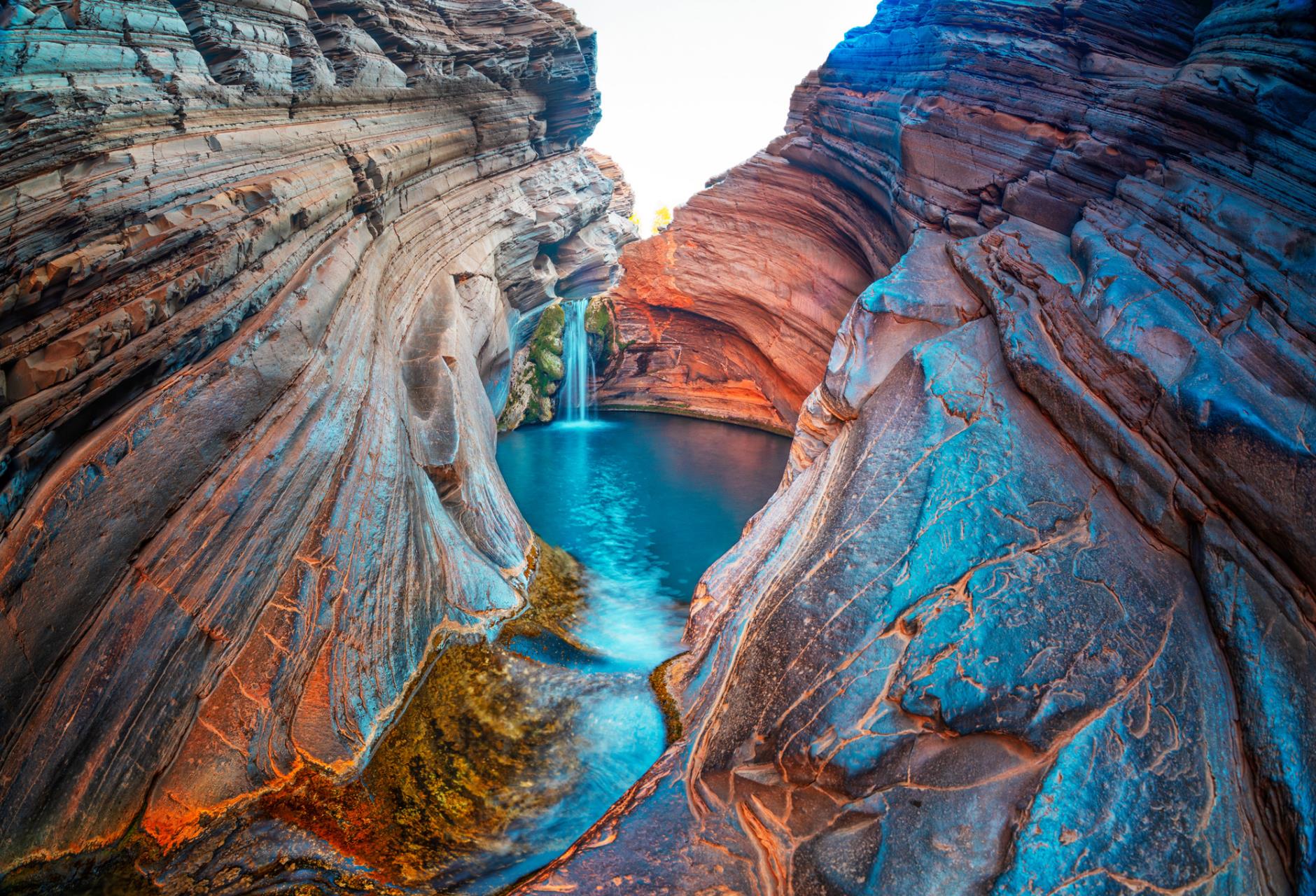
Karijini National Park
Introduction
Deep in the heart of the rugged Pilbara, Karijini National Park stands as one of Australia's most spectacular natural treasures. Known as Australia's Ancient Red Gorges, this extraordinary national park is famous for its billion-year-old landscapes, dramatic red rock canyons, crystal-clear swimming holes, cascading waterfalls, and breathtaking hiking trails. While destinations like the Great Barrier Reef and Uluru attract millions of visitors, Karijini remains one of Australia's best-kept secrets, offering unforgettable adventures in one of the oldest landscapes on Earth.
Covering more than 627,000 hectares, Karijini National Park is Western Australia's second-largest national park and showcases some of the country's most remarkable geological formations. Towering iron-rich cliffs, narrow slot canyons, emerald pools, and ancient rock layers tell a story that dates back over 2.5 billion years, making the park one of the oldest surviving landscapes on the planet.
Whether you're swimming beneath waterfalls in hidden gorges, hiking through narrow rock passages, photographing fiery red cliffs, or discovering Aboriginal heritage that spans tens of thousands of years, Karijini offers an adventure unlike anywhere else in Australia.
This Karijini National Park travel guide explores everything you need to know before visiting one of Australia's most extraordinary natural wonders.
Where Is Karijini National Park? Geography and Ancient Landscape
Karijini National Park is located in the Pilbara region of Western Australia, approximately 1,400 kilometers north of Perth and about 100 kilometers east of Tom Price.
The park lies on the Hamersley Plateau and is renowned for its ancient banded iron formations, deep gorges, rugged mountain ranges, seasonal waterfalls, and natural freshwater pools.
The dramatic red landscapes were carved over millions of years by rivers cutting through some of Earth's oldest exposed rocks.
Towering cliffs rise over 100 meters above narrow gorges, while crystal-clear streams create refreshing pools hidden deep within the canyons.
The contrast between vibrant red rock, lush green vegetation, and turquoise water makes Karijini one of Australia's most photogenic national parks.
Why Is Karijini National Park Famous?
Karijini National Park is internationally recognized for its incredible geology and adventure experiences.
The park is famous for:
- Ancient red gorges over 2.5 billion years old
- Spectacular natural swimming holes
- Towering waterfalls
- Narrow slot canyons
- Adventure hiking trails
- Stunning photography locations
- Aboriginal cultural heritage
- Crystal-clear freshwater pools
- Incredible stargazing
- One of Australia's most beautiful national parks
Its unique combination of geological history, adventure, and natural beauty makes Karijini one of Australia's must-visit destinations.
History and Natural Significance
Karijini National Park protects one of the oldest landscapes on Earth.
The rocks that form today's dramatic gorges were created more than 2.5 billion years ago, long before complex life existed.
Over millions of years, rivers gradually carved deep canyons into the ancient iron-rich plateau, creating the spectacular landscapes seen today.
For more than 20,000 years, the park has been the traditional homeland of the Banjima people, Yinhawangka people, and Kurrama people.
Their cultural stories, sacred sites, and deep spiritual connection to the land remain an important part of Karijini's identity.
Today, the park is jointly managed with Traditional Owners to preserve both its natural and cultural heritage for future generations.
Top Attractions in Karijini National Park
Hancock Gorge - The Ultimate Adventure Hike
Hancock Gorge is one of the park's most famous attractions.
Visitors climb over boulders, wade through cool water, and squeeze between towering canyon walls before reaching the legendary Kermit's Pool, a crystal-clear natural swimming hole surrounded by smooth red rock.
The famous "Spider Walk," where hikers brace themselves against the canyon walls, provides one of Australia's most exciting hiking experiences.
Weano Gorge
Located beside Hancock Gorge, Weano Gorge offers dramatic rock formations and adventurous hiking routes.
The narrow passages, deep pools, and towering cliffs create an unforgettable canyon adventure.
Sunlight filtering into the gorge produces incredible shades of orange and crimson, making it a favorite destination for photographers.
Dales Gorge
Dales Gorge is one of the easiest and most rewarding areas to explore.
The gorge features spectacular walking trails leading to Fortescue Falls, Fern Pool, and Circular Pool.
Its combination of waterfalls, swimming holes, and lush vegetation makes it perfect for families and first-time visitors.
Fortescue Falls
Unlike many waterfalls in Western Australia, Fortescue Falls flows throughout the year.
Visitors can descend a staircase to reach the refreshing pool beneath the waterfall, making it one of the park's most popular swimming spots.
The surrounding cliffs create spectacular scenery throughout the day.
Fern Pool
Often described as Karijini's most beautiful location, Fern Pool is a peaceful oasis surrounded by lush ferns and towering rock walls.
A gentle waterfall feeds the emerald-green pool, creating one of Australia's most picturesque natural swimming locations.
It is also considered a culturally significant site by Traditional Owners.
Wildlife and Natural Environment
Despite its rugged appearance, Karijini supports diverse wildlife.
Visitors may encounter:
- Red Kangaroo
- Euro
- Black-footed Rock-wallaby
- Peregrine Falcon
- Australian Bustard
- Dingoes
- Numerous reptiles
- Native frogs
- More than 800 plant species
Wildflowers bloom after seasonal rains, adding vibrant colors to the ancient landscape.
Best Things to Do in Karijini National Park
Karijini offers unforgettable outdoor adventures.
Popular activities include:
- Hiking through slot canyons
- Swimming in natural pools
- Waterfall photography
- Wildlife watching
- Camping beneath star-filled skies
- Exploring Aboriginal heritage
- Scenic road trips
- Sunrise and sunset photography
- Birdwatching
- Nature walks
Every gorge reveals a different side of this incredible national park.
Local Culture and Aboriginal Heritage
Karijini is deeply connected to the traditions of the Banjima, Yinhawangka, and Kurrama peoples.
Visitors can learn about Dreamtime stories, sacred sites, traditional knowledge, and the cultural importance of waterholes and gorges through interpretive displays and guided experiences.
Respecting culturally significant areas helps preserve one of Australia's oldest living cultures.
Supporting Indigenous tourism initiatives also contributes to local communities and cultural conservation.
Sustainable Tourism and Conservation
Karijini National Park is carefully managed to protect its fragile ecosystems and Aboriginal heritage.
Visitors are encouraged to remain on marked trails, avoid climbing on sensitive rock formations, take all rubbish away, and respect wildlife.
Swimming is permitted only in designated areas to help protect delicate aquatic habitats.
Responsible tourism ensures this ancient landscape remains preserved for future generations.
Best Time to Visit Karijini National Park (Month-by-Month Guide)
The best time to visit is during the Australian winter from April to September.
Cooler temperatures provide comfortable conditions for hiking, canyon exploration, and camping.
The summer months from October to March can be extremely hot, with temperatures often exceeding 40°C, making strenuous hiking challenging.
After seasonal rains, waterfalls flow more strongly, and the landscape becomes greener.
How to Get to Karijini National Park
Most visitors travel from Perth by flying to Paraburdoo or **Tom Price>, followed by a scenic drive to the park.
Many travelers also include Karijini as part of an extended Western Australia road trip.
A four-wheel-drive vehicle is recommended for accessing some remote areas, although many major attractions are reachable via sealed or well-maintained roads.
Essential Travel Tips for Visiting Karijini National Park
Preparation is essential for a safe adventure.
- Carry plenty of drinking water.
- Wear sturdy hiking shoes with good grip.
- Start hikes early to avoid midday heat.
- Pack sunscreen, a hat, and lightweight clothing.
- Check weather and gorge conditions before hiking.
- Swim only in designated pools.
- Respect Aboriginal cultural sites and park regulations.
Proper planning will help you enjoy one of Australia's greatest outdoor destinations.
Why Visit Karijini National Park?
Karijini National Park offers one of Australia's most rewarding adventure experiences. From hiking through narrow red gorges and swimming beneath waterfalls to discovering ancient Aboriginal culture and witnessing landscapes billions of years old, every moment feels extraordinary.
Unlike many crowded tourist attractions, Karijini remains peaceful, wild, and remarkably untouched, allowing visitors to experience Australia's Outback at its most spectacular.
For hikers, photographers, geology enthusiasts, wildlife lovers, and adventure travelers, Karijini National Park is an unforgettable destination.
Conclusion
Karijini National Park is far more than a collection of beautiful gorges - it is one of Earth's oldest and most extraordinary landscapes. Its ancient red canyons, crystal-clear swimming holes, spectacular waterfalls, rich Aboriginal heritage, and remarkable biodiversity create an adventure unlike anywhere else in Australia.
Whether you're exploring Hancock Gorge, relaxing in Fern Pool, photographing Fortescue Falls, or hiking through billion-year-old rock formations, every experience reveals the timeless beauty of Western Australia's rugged interior.
For travelers seeking breathtaking scenery and unforgettable outdoor adventures, Karijini National Park truly lives up to its reputation as Australia's Ancient Red Gorges.
00 Comments
No comments yet.
Leave a Comment