

Gros Morne National Park
Introduction
On the rugged western coast of Newfoundland, where towering cliffs meet the Atlantic Ocean and ancient mountains rise above deep fjords, lies one of Canada’s most extraordinary natural treasures—Gros Morne National Park. Renowned for its dramatic landscapes, unique geological formations, and rich biodiversity, this UNESCO World Heritage Site offers visitors a rare opportunity to witness the forces that shaped our planet.
Often described as a living textbook of Earth’s geological history, Gros Morne National Park is far more than a scenic destination. It is one of the few places in the world where visitors can walk across rocks that originated deep within the Earth’s mantle, providing direct evidence of the geological processes responsible for the formation of continents and oceans.
From breathtaking fjords and ancient mountains to coastal villages and abundant wildlife, Gros Morne National Park combines scientific significance with natural beauty, making it one of the most fascinating destinations in North America.
Geography and Environment
Located on the west coast of Newfoundland, Gros Morne National Park covers approximately 1,805 square kilometers of protected wilderness.
The park encompasses a diverse range of landscapes, including rugged mountains, coastal cliffs, freshwater lakes, forests, wetlands, and deep fjords carved by ancient glaciers.
The region's dramatic scenery was shaped over hundreds of millions of years through tectonic activity, volcanic processes, glaciation, and erosion.
Its location along the Gulf of St. Lawrence creates a unique climate influenced by both marine and continental weather systems.
This combination of geological diversity and varied ecosystems has earned Gros Morne international recognition as one of the world's most important geological sites.
A UNESCO World Heritage Site
Gros Morne National Park was designated a UNESCO World Heritage Site because of its exceptional geological significance.
The park provides one of the clearest examples of the theory of plate tectonics, which explains how Earth’s continents and oceans were formed and continue to evolve.
Scientists study the park's unique rock formations to better understand the processes that shaped the planet hundreds of millions of years ago.
Unlike many geological sites that require interpretation through diagrams and models, Gros Morne allows visitors to observe these processes directly in the landscape.
Its UNESCO designation recognizes both its scientific importance and its outstanding natural beauty.
The Tablelands – Walking on Earth’s Mantle
One of the park’s most remarkable attractions is the The Tablelands.
This unusual landscape consists of orange and rust-colored rocks that originated deep within the Earth’s mantle and were pushed to the surface through tectonic activity hundreds of millions of years ago.
Normally, mantle rock lies far beneath Earth’s crust and is inaccessible to humans.
At the Tablelands, visitors can literally walk on material that once existed deep below the planet’s surface.
The harsh chemical composition of these rocks creates a barren environment where few plants can survive, giving the area an almost Martian appearance.
The Tablelands represent one of the most significant geological features in North America and attract scientists and travelers from around the world.
Gros Morne Mountain and Ancient Highlands
The park takes its name from Gros Morne Mountain, the second-highest peak in Newfoundland.
Rising above the surrounding landscape, the mountain offers spectacular views of fjords, valleys, forests, and the Atlantic coastline.
The mountain and surrounding highlands are remnants of an ancient mountain range formed hundreds of millions of years ago during continental collisions.
Today, hiking trails allow visitors to explore alpine terrain, rocky plateaus, and dramatic viewpoints that showcase the region’s geological history.
For hikers, reaching the summit of Gros Morne Mountain is one of the park’s most rewarding experiences.
Western Brook Pond – The Fjord of Newfoundland
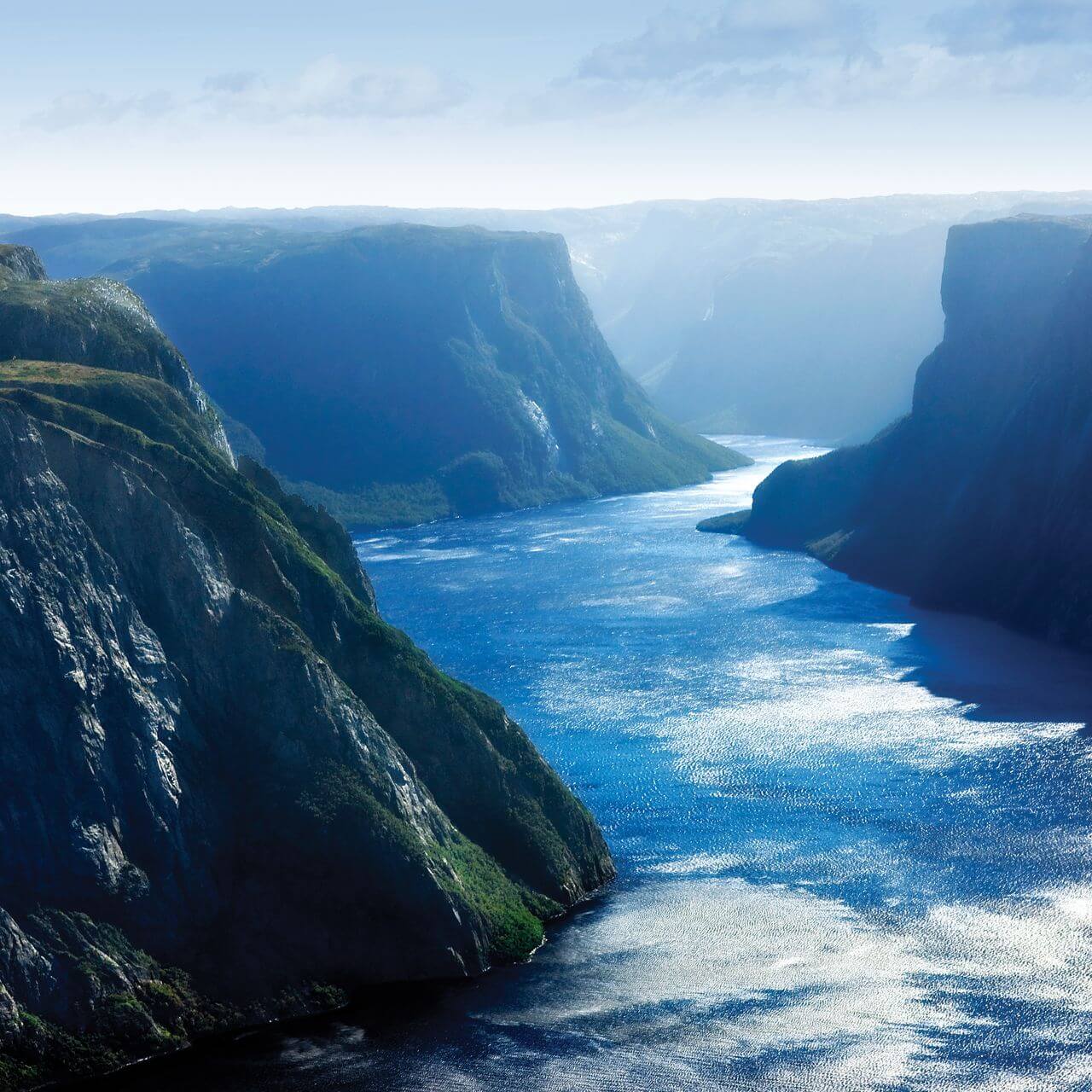
Perhaps the park’s most iconic landscape is Western Brook Pond, a stunning freshwater fjord surrounded by towering cliffs.
Although called a pond, it is actually a landlocked fjord carved by glaciers during the last Ice Age.
Cliffs rise nearly 700 meters above the water, creating one of the most dramatic natural settings in Canada.
Boat tours through the fjord provide close-up views of waterfalls, rock formations, and sheer cliff faces that seem almost untouched by human presence.
The scenery rivals that of Norway’s famous fjords and is often considered the highlight of a visit to Gros Morne National Park.
Wildlife and Biodiversity
Gros Morne National Park supports a rich variety of wildlife adapted to its diverse habitats.
Large mammals such as Moose, Black Bear, and caribou roam through forests and valleys.
The coastal waters surrounding the park attract marine life including whales, seals, and seabirds.
Birdwatchers may encounter bald eagles, osprey, puffins, and numerous migratory species.
The park’s ecosystems range from boreal forests and alpine tundra to wetlands and coastal environments, creating habitats for an impressive variety of plants and animals.
This biodiversity enhances the park’s ecological importance and visitor experience.
Coastal Culture and Newfoundland Heritage
Beyond its geological wonders, Gros Morne offers rich cultural experiences rooted in Newfoundland’s history.
Traditional fishing villages such as Rocky Harbour and Norris Point provide insight into the region’s maritime heritage.
Colorful houses, fishing boats, and friendly local communities reflect centuries of life along the North Atlantic coast.
Visitors can enjoy traditional Newfoundland music, seafood cuisine, storytelling, and cultural festivals throughout the region.
The blend of natural beauty and local culture makes Gros Morne a uniquely rewarding destination.
Adventure and Outdoor Activities
Gros Morne National Park is a paradise for outdoor enthusiasts.
Hiking trails range from easy coastal walks to challenging mountain ascents.
Kayaking allows visitors to explore fjords, lakes, and sheltered coastal waters from a unique perspective.
Boat tours, wildlife watching, camping, photography, and fishing are also popular activities.
The park’s diverse landscapes ensure that every visitor can find an adventure suited to their interests and abilities.
For nature lovers, Gros Morne offers some of the finest outdoor experiences in eastern Canada.
Sustainability and Conservation
Protecting Gros Morne’s geological and ecological heritage is a top priority.
As a national park and UNESCO World Heritage Site, the region benefits from comprehensive conservation programs aimed at preserving landscapes, wildlife habitats, and cultural resources.
Visitors are encouraged to follow Leave No Trace principles, remain on designated trails, and respect wildlife.
Sustainable tourism helps ensure that the park’s natural wonders remain protected for future generations.
These efforts maintain the balance between accessibility and conservation.
Best Time to Visit Gros Morne National Park
The best time to visit Gros Morne is between June and September.
Summer offers comfortable temperatures, accessible hiking trails, boat tours, and abundant wildlife activity.
Autumn transforms the forests into brilliant shades of red, orange, and gold, creating exceptional photography opportunities.
Spring brings blooming wildflowers and migrating birds, while winter offers snow-covered landscapes and outdoor recreation for adventurous travelers.
Each season reveals a different aspect of the park’s beauty.
How to Reach Gros Morne National Park
Most visitors arrive via Deer Lake, which serves as the primary transportation hub for the region.
The park is accessible by road from various parts of Newfoundland and is often included in broader Atlantic Canada travel itineraries.
Rental vehicles provide the greatest flexibility for exploring the park’s many viewpoints, trails, and coastal communities.
The scenic drive to Gros Morne is an attraction in itself, offering stunning views of mountains, forests, and coastline.
Why Visit Gros Morne National Park?
Gros Morne National Park offers a unique combination of geological significance, breathtaking scenery, outdoor adventure, and cultural heritage.
Visitors can walk on Earth’s mantle, explore glacier-carved fjords, hike ancient mountains, and encounter diverse wildlife all within a single destination.
Few places in the world offer such an extraordinary opportunity to experience both the beauty and history of our planet.
For travelers seeking landscapes that inspire wonder and curiosity, Gros Morne is an unforgettable destination.
Conclusion
Gros Morne National Park stands as one of Canada’s most remarkable natural wonders. Its ancient rocks, towering mountains, dramatic fjords, and rich ecosystems tell a story that spans hundreds of millions of years.
From the surreal landscapes of the Tablelands and the majestic cliffs of Western Brook Pond to the charm of Newfoundland’s coastal communities, every part of the park offers something extraordinary.
For nature enthusiasts, adventure travelers, photographers, and anyone fascinated by Earth’s history, Gros Morne National Park truly deserves its reputation as a Geological Wonder.
00 Comments
No comments yet.
Leave a Comment