

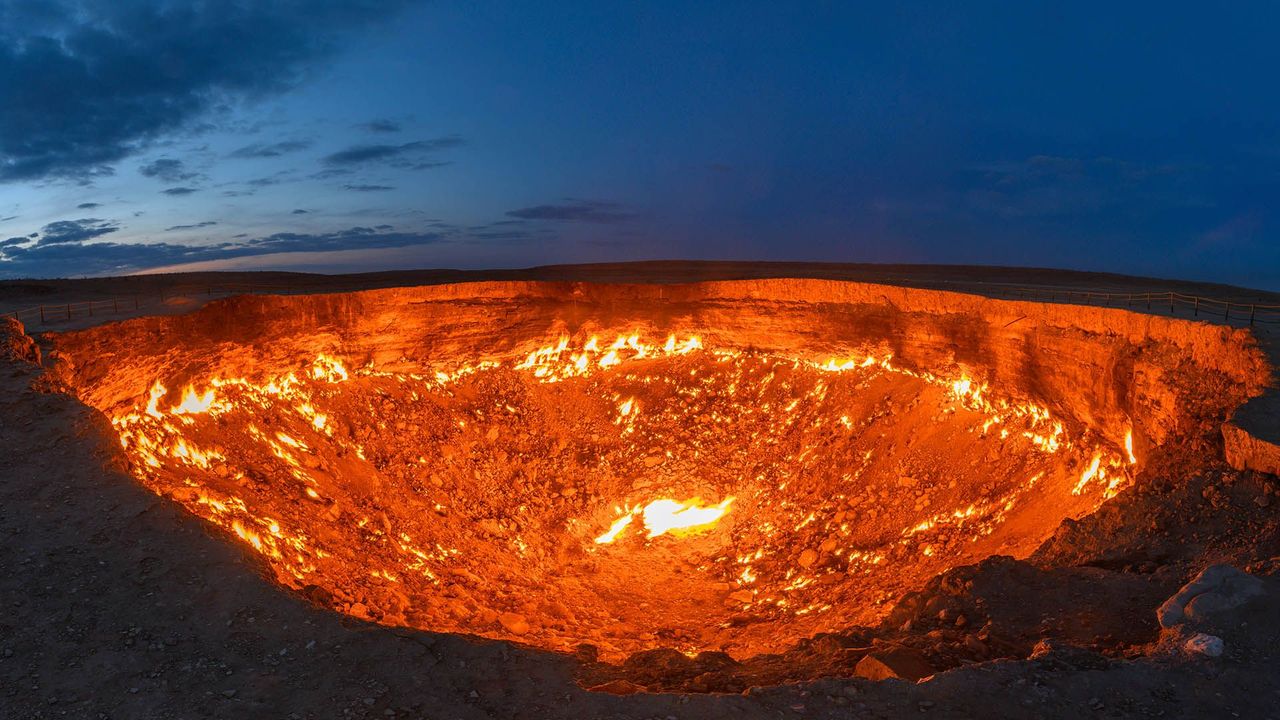
Door to Hell
Introduction
Deep in the heart of the Karakum Desert in Turkmenistan lies one of the most astonishing and eerie sights on Earth—the Door to Hell, officially known as the Darvaza Gas Crater. This massive, fiery pit has been burning continuously for decades, earning its dramatic nickname due to its otherworldly appearance and intense flames. Glowing day and night against the barren desert landscape, the Door to Hell is a rare blend of natural gas, human error, and raw geological power.
For adventurous travelers and curious minds, the Door to Hell represents one of the most extreme and unforgettable destinations in the world. Its haunting beauty, scientific intrigue, and isolation make it a unique attraction unlike anything else on the planet.
Geographical Location and Setting
The Door to Hell is located near the small village of Derweze (Darvaza), approximately 260 kilometers (160 miles) north of Ashgabat, the capital of Turkmenistan. The crater lies in the Karakum Desert, which covers nearly 70% of the country and is one of the driest and most inhospitable deserts in Central Asia.
The surrounding landscape is vast and empty, characterized by rolling sand dunes, rocky terrain, and sparse vegetation. At night, the darkness of the desert amplifies the fiery glow of the crater, making it visible from miles away. This dramatic contrast between fire and sand enhances the crater’s mythical reputation.
Origins of the Door to Hell
The story of how the Door to Hell was created dates back to 1971, during the Soviet era. Soviet geologists were drilling in the area while searching for natural gas reserves when their drilling platform accidentally collapsed into an underground cavern filled with gas. This collapse formed a large crater approximately 70 meters wide (230 feet) and 30 meters deep (98 feet).
Concerned that the escaping methane gas could be harmful to nearby communities and wildlife, scientists made a critical decision: they set the gas on fire, believing it would burn out within a few days. Instead, the crater has been burning continuously for over 50 years, becoming one of the longest-burning gas fires in the world.
The Science Behind the Eternal Flames
The persistent fire of the Door to Hell is fueled by vast underground reserves of natural gas, primarily methane. As gas seeps up from below, it ignites at the surface, creating an ongoing combustion cycle. The intense heat prevents the flames from extinguishing, while the crater’s structure allows gas to escape steadily.
Temperatures inside the crater can reach extremely high levels, making it impossible to approach the edge without caution. Despite its dramatic appearance, the phenomenon offers scientists valuable insight into combustion, gas seepage, and geological formations in desert environments.
Why Is It Called the Door to Hell?
The nickname “Door to Hell” was given by locals who were struck by the crater’s terrifying appearance. Flames leap from the pit, accompanied by roaring sounds and waves of heat, especially at night. The glowing orange fire illuminating the desert darkness creates a scene reminiscent of mythological depictions of hell.
Though unofficial, the name has become globally recognized and plays a major role in the crater’s growing fame as a tourist attraction.
Environmental and Economic Impact
The Door to Hell represents both a scientific curiosity and an environmental concern. Continuous methane combustion contributes to greenhouse gas emissions, raising questions about sustainability and energy waste. Turkmenistan holds some of the world’s largest natural gas reserves, and the burning crater symbolizes lost energy potential.
In recent years, Turkmen authorities have discussed efforts to extinguish or reduce the flames, balancing environmental responsibility with the site’s tourism value. Any attempt to close the crater would require complex engineering and significant investment.
Tourism at the Door to Hell
Despite its remote location, the Door to Hell has become one of Turkmenistan’s most visited landmarks. Adventurous travelers, photographers, and geology enthusiasts are drawn to the site’s surreal atmosphere.
Visitors typically reach the crater via guided desert tours from Ashgabat, often traveling by 4x4 vehicles across rough terrain. Many tours include overnight camping, allowing visitors to witness the crater both at sunset and under a star-filled sky.
Safety precautions are essential, as the crater’s edges can be unstable, and the heat is intense. Tour guides ensure visitors maintain a safe distance while still enjoying unobstructed views.
Best Time to Visit
The ideal time to visit the Door to Hell is during the spring (March to May) and autumn (September to November) seasons, when desert temperatures are more manageable. Summer temperatures in the Karakum Desert can exceed 45°C (113°F), making travel uncomfortable and potentially dangerous.
Nighttime visits are particularly popular, as the flames are most dramatic after dark. Cooler evening temperatures also make exploration more enjoyable.
Cultural Significance and Local Life
While the crater itself is a modern phenomenon, the surrounding region has long been home to nomadic communities. Traditional Turkmen culture emphasizes hospitality, craftsmanship, and a deep connection to the land.
Local herders often graze livestock in the surrounding desert, and camel caravans are still a common sight. The Door to Hell has become a symbol of Turkmenistan’s unique blend of ancient traditions and modern geological intrigue.
Photography and Adventure Opportunities
The Door to Hell is a dream destination for photographers. Long-exposure shots capture the movement of flames, while drone photography (where permitted) reveals the crater’s full scale. The stark desert landscape, combined with the intense glow of fire, creates dramatic compositions unmatched anywhere else in the world.
Adventure travelers can also explore nearby gas craters, desert dunes, and remote villages, making the visit a broader exploration of Turkmenistan’s wild heart.
Future of the Door to Hell
The future of the Door to Hell remains uncertain. Government discussions about extinguishing the flames continue, driven by environmental concerns and energy conservation goals. If successful, such an effort would mark the end of one of the world’s most unusual landmarks.
Until then, the crater continues to burn, drawing visitors from around the globe and standing as a reminder of humanity’s complex relationship with natural resources.
Why the Door to Hell Belongs on Your Bucket List
The Door to Hell is not just a tourist attraction—it is a once-in-a-lifetime experience. Its haunting beauty, scientific significance, and sheer scale make it one of the most surreal places on Earth. For travelers seeking destinations that defy expectations, few places compare to standing at the edge of a crater that has burned for decades.
Conclusion
The Door to Hell in Turkmenistan is a powerful symbol of nature, science, and human decision-making. From its accidental creation to its ongoing flames, the Darvaza Gas Crater captivates the imagination and challenges our understanding of natural phenomena. Whether viewed as a cautionary tale or a mesmerizing wonder, the Door to Hell remains one of the most unforgettable sights on the planet—an inferno blazing in the silence of the desert.
00 Comments
No comments yet.
Leave a Comment