

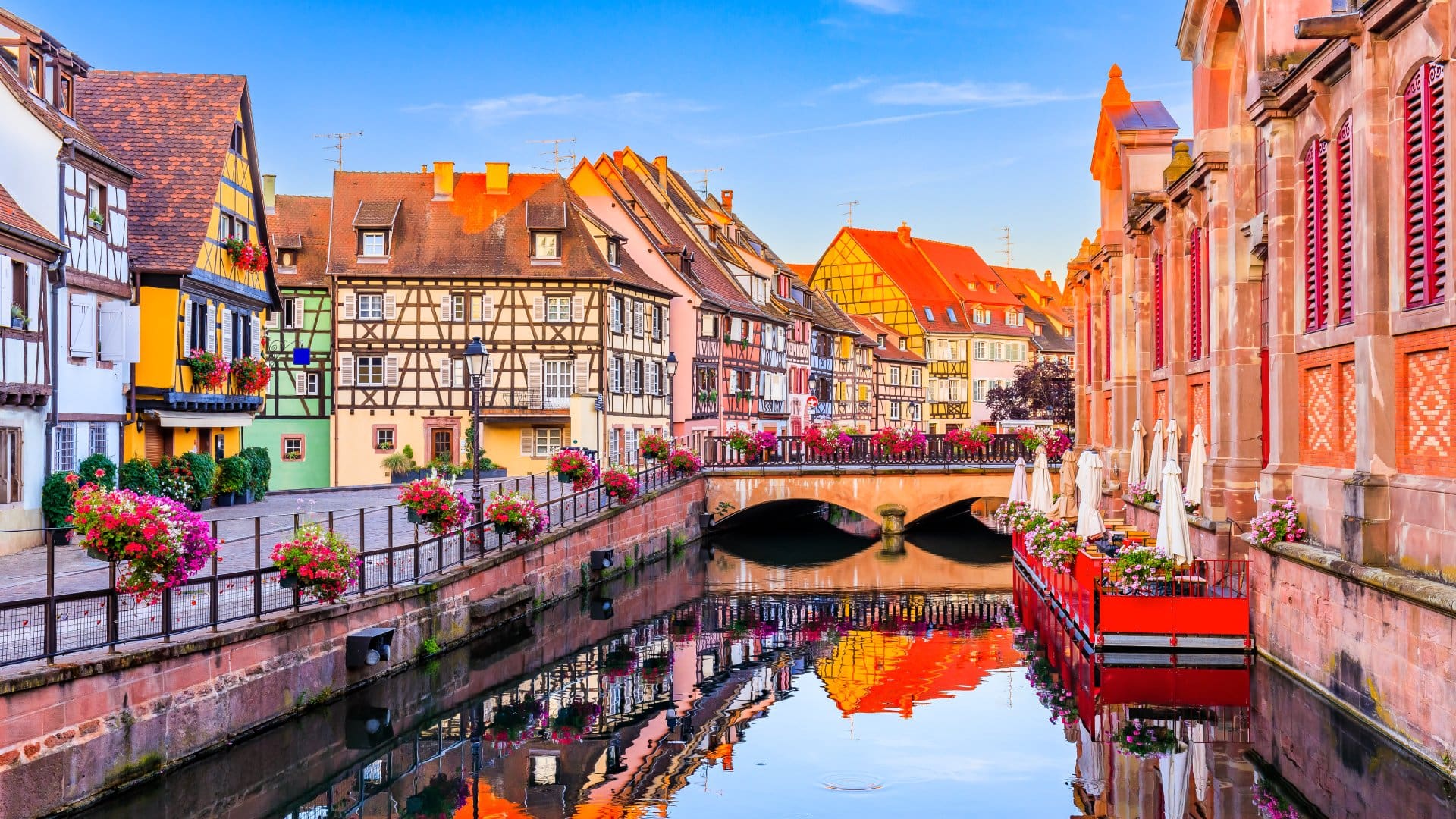
Colmar
Introduction
Nestled in the heart of the Alsace region in northeastern France, Colmar is one of Europe’s most picturesque towns. Known for its colorful half-timbered houses, flower-filled canals, and charming cobbled streets, Colmar has earned the nickname “Little Venice.” This enchanting destination combines medieval architecture, French elegance, and Germanic cultural influences, creating a unique atmosphere unlike anywhere else in Europe.
Often considered one of the most beautiful towns in France, Colmar attracts travelers seeking a romantic and authentic Alsatian experience. The town’s historic center feels like a living postcard, where brightly painted houses reflect in calm canals and centuries-old buildings tell stories of the region’s past.
For visitors exploring the Alsace wine region or traveling through eastern France, Colmar offers a magical blend of history, culture, and scenic beauty. Its fairytale-like streets and vibrant traditions make it a perfect destination for travelers searching for charm and character in France.
Geography and Environment
Colmar is located in the Alsace region near the German border, positioned between the Vosges Mountains and the Rhine River. This strategic location has influenced the town’s culture, architecture, and cuisine for centuries, blending French and German traditions.
The town lies along the Lauch River, whose canals wind through the historic district known as Little Venice. These waterways contribute to Colmar’s distinctive charm and scenic appeal.
Colmar enjoys one of the sunniest climates in France due to the rain shadow created by the Vosges Mountains. Warm summers and relatively dry weather make it an ideal destination for exploring the Alsace wine route and surrounding countryside.
The surrounding region is known for vineyards, rolling hills, and picturesque villages that form part of the famous Alsace Wine Route. This setting enhances Colmar’s reputation as both a cultural and culinary destination.
Landscapes and Heritage
Colmar’s historic center is one of the best-preserved medieval areas in Europe. Narrow streets lined with colorful houses and decorated balconies create a vibrant and welcoming atmosphere.
The most iconic area is Little Venice Colmar, where traditional Alsatian houses stand beside quiet canals filled with reflections of flowers and pastel facades. Small boats sometimes glide through the waterways, offering visitors a peaceful way to experience the town.
Another major landmark is Saint Martin's Church, a magnificent Gothic church that dominates the town’s skyline. Built between the 13th and 14th centuries, its impressive architecture and stained-glass windows highlight Colmar’s religious and artistic heritage.
Colmar is also home to Unterlinden Museum, one of the most important museums in eastern France. The museum houses the famous Isenheim Altarpiece, a masterpiece of Renaissance art that attracts art enthusiasts from around the world.
Walking through Colmar feels like stepping back in time, where every street corner reveals historic buildings, artisan shops, and cozy cafés.
Cultural Identity and Alsatian Traditions
Colmar’s culture reflects the rich history of the Alsace region, which has alternated between French and German control throughout centuries. As a result, the town blends both influences in language, architecture, and customs.
Traditional half-timbered houses showcase colorful facades and intricate wooden structures typical of Alsatian architecture. Many of these buildings date back to the 16th and 17th centuries and have been carefully preserved.
Colmar also hosts vibrant festivals throughout the year. Its Christmas markets are among the most famous in Europe, transforming the town into a magical winter destination filled with lights, decorations, and festive stalls.
Art and history also play important roles in Colmar’s identity. The town was the birthplace of the renowned sculptor Frédéric Auguste Bartholdi, who created the Statue of Liberty. His legacy is celebrated in museums and monuments across the city.
Cuisine and Alsatian Gastronomy
Colmar is an excellent destination for food lovers. The region’s cuisine reflects the blend of French and German culinary traditions that define Alsace.
Traditional dishes include choucroute garnie, a hearty meal of sauerkraut served with sausages and meats, as well as tarte flambée (flammekueche), a thin flatbread topped with cream, onions, and bacon.
The region is also famous for its wines, particularly aromatic white varieties such as Riesling, Gewürztraminer, and Pinot Gris. Many vineyards surround Colmar, making it an important stop along the Alsace Wine Route.
Local bakeries serve delicious pastries and desserts, including kougelhopf, a sweet cake baked in a distinctive mold. Dining in Colmar often takes place in traditional “winstubs,” cozy restaurants that showcase regional cuisine and hospitality.
Adventure and Exploration
Although Colmar itself is compact, it serves as an excellent base for exploring the surrounding Alsace countryside. Visitors can rent bicycles to travel along the Alsace Wine Route, discovering nearby villages and vineyards.
Boat rides through the canals of Little Venice offer a relaxing way to admire the historic houses and scenic views. Guided walking tours provide insight into Colmar’s architecture and history.
Nature lovers can explore the nearby Vosges Mountains, where hiking trails lead through forests and scenic viewpoints overlooking the Rhine Valley.
The combination of cultural exploration and outdoor adventure makes Colmar a versatile destination for travelers seeking both relaxation and discovery.
Sustainability and Responsible Tourism
Colmar places strong emphasis on preserving its historical heritage and maintaining the beauty of its town center. Restoration projects ensure that historic buildings remain protected while adapting them for modern use.
Local authorities encourage sustainable tourism by promoting walking and cycling within the historic district. Pedestrian-friendly streets help reduce traffic and preserve the peaceful atmosphere of the town.
Regional initiatives also support local farmers, winemakers, and artisans. By choosing locally produced goods and dining in traditional restaurants, visitors contribute directly to the local economy and cultural preservation.
These efforts ensure that Colmar’s unique character remains intact for future generations.
Best Time to Visit Colmar
Colmar is beautiful throughout the year, though each season offers a different experience.
Spring (April to June) brings blooming flowers and pleasant weather, making it ideal for exploring the town and surrounding vineyards.
Summer (July to August) is lively and warm, with outdoor cafés and festivals filling the streets.
Autumn (September to October) is harvest season in the Alsace wine region, offering scenic vineyard landscapes and wine festivals.
Winter (November to December) transforms Colmar into a magical Christmas destination. The town’s famous Christmas markets attract visitors from around the world with festive decorations and traditional holiday treats.
Transport and Accessibility
Colmar is easily accessible by train from major French cities such as Strasbourg and Paris. High-speed rail connections make it convenient for travelers exploring the Alsace region.
The town is also well connected to nearby Germany and Switzerland, making it a popular stop on European travel itineraries.
Once in Colmar, most attractions are within walking distance. The compact historic center is pedestrian-friendly, allowing visitors to explore its charming streets at a relaxed pace.
Bicycles and local buses provide additional options for exploring nearby villages and vineyards.
Why Visit Colmar?
Colmar stands out as one of the most charming towns in France. Its colorful houses, peaceful canals, and vibrant cultural traditions create an atmosphere that feels both romantic and welcoming.
Unlike larger cities, Colmar offers a slower and more intimate travel experience. Visitors can wander through historic streets, enjoy local cuisine, and admire centuries-old architecture without the crowds found in major tourist destinations.
Its location in the Alsace wine region also makes it an excellent base for exploring nearby villages, vineyards, and scenic landscapes.
For travelers searching for an authentic European town filled with beauty and history, Colmar delivers an unforgettable experience.
Conclusion
Colmar perfectly captures the charm and cultural richness of the Alsace region. With its picturesque canals, colorful houses, and vibrant traditions, the town offers one of the most enchanting travel experiences in France.
From the romantic waterways of Little Venice to the historic churches and lively markets, every corner of Colmar tells a story of heritage and artistry. Combined with delicious regional cuisine and world-class wines, the town provides a complete and memorable destination.
For those exploring eastern France or the Alsace wine route, Colmar stands as a true gem—an idyllic village where history, culture, and beauty come together in perfect harmony.

00 Comments
No comments yet.
Leave a Comment