

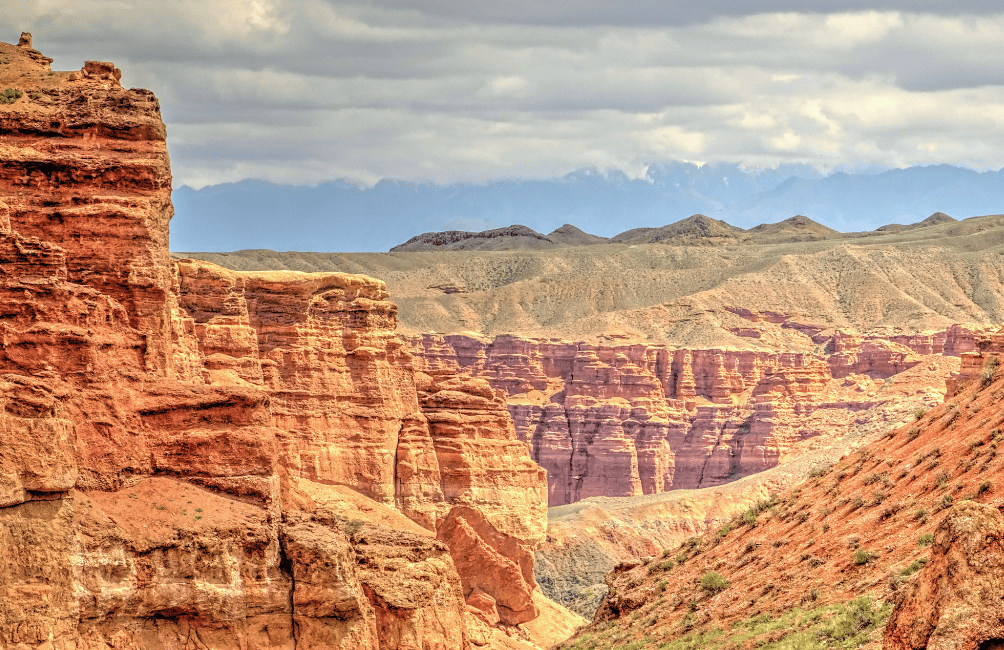
Charyn Canyon
Introduction
On the southeastern edge of Kazakhstan, where the vast plains of Central Asia meet the dramatic foothills of the Tian Shan, an immense canyon cuts through the landscape in a spectacular display of red, orange, and ochre rock. Charyn Canyon is one of Kazakhstan's most remarkable natural landmarks and one of the country's most compelling destinations for adventure travelers, photographers, hikers, and anyone fascinated by unusual geological landscapes.
Located roughly 195 kilometers east of Almaty, Charyn Canyon stretches for about 154 kilometers along the Charyn River. Its towering walls, sculpted cliffs, narrow gorges, and strange rock formations have earned it comparisons with the famous Grand Canyon of the United States. Although considerably smaller, Charyn possesses a character of its own, particularly in the celebrated Valley of Castles, where erosion has carved the sedimentary rock into shapes resembling medieval towers, fortresses, and enormous stone walls.
Yet Charyn is more than a spectacular canyon. It forms the heart of Charyn National Park, a protected landscape containing rare plants, wildlife, relic forests, river ecosystems, archaeological traces, and several distinct canyon systems. The park covers approximately 127,050 hectares and is part of UNESCO's World Network of Biosphere Reserves.
For travelers looking beyond the familiar destinations of Europe and North America, Charyn Canyon provides an extraordinary introduction to Kazakhstan's natural heritage - a place where ancient geology, Central Asian wilderness, and modern ecotourism meet.
Geographical and Environmental Significance
Charyn Canyon is situated in southeastern Kazakhstan's Almaty Region, within the broader landscape of the Tian Shan mountain system. The Charyn River has played a major role in shaping the canyon, cutting through layers of sedimentary rock over immense periods of geological time.
Government tourism sources describe the exposed sedimentary formations as being around 12 million years old, while other official Kazakh sources refer to geological formations in the wider canyon landscape dating back tens of millions of years. The exact ages vary according to the geological formation being discussed, but the essential story is clear: Charyn is the product of extremely long periods of erosion and geological change.
The canyon walls reach roughly 150 to 300 meters in many sections, with some official sources giving heights of up to around 370 meters for the broader canyon landscape. Water, wind, temperature changes, and erosion have gradually transformed the sedimentary layers into cliffs, pillars, gullies, arches, and isolated formations.
The surrounding environment is surprisingly diverse for such an arid-looking region. Charyn National Park contains semi-desert landscapes, steppe, river valleys, forests, and rugged canyon terrain. More than 1,500 plant species have been reported in the canyon area, illustrating how dramatically the environment changes between exposed rock and sheltered river habitats.
One of the park's greatest ecological treasures is the Charyn Ash Grove, where a relic species of ash tree has survived through major climatic changes. The Sogdian ash forest is considered an exceptionally rare ecosystem, and the area has been protected as a natural monument for decades. Turanga, an Asian poplar, also forms distinctive groves along parts of the river.
Wildlife is equally significant. Official information from Kazakhstan lists dozens of mammal species, reptiles, amphibians, and hundreds of bird species within the national park. Rare species recorded in the area include goitered gazelle, Turkestan lynx, Pallas's cat, and the Central Asian otter.
This mixture of dramatic geology and rare riverine ecosystems makes Charyn important not only as a tourist destination but also as a center for ecological research and conservation.
Landscapes or Heritage
The most famous section of Charyn Canyon is the Valley of Castles, a spectacular corridor approximately 2 kilometers long and around 20 to 80 meters wide. Its walls rise dramatically on either side, while erosion has sculpted the rock into formations that resemble towers, fortifications, and ruined castles.
Walking through the Valley of Castles is one of the defining experiences of visiting Charyn. From the rim, the formations appear like an enormous stone city spread across the canyon floor. As the trail descends, the scale of the cliffs becomes increasingly impressive, with narrow passages opening into wider sections of the valley.
The colors change throughout the day. Early morning light emphasizes the shadows and textures of the cliffs, while afternoon sunlight brings out shades of orange, red, brown, and gold. Near sunset, the sedimentary walls can take on particularly intense colors, creating some of the most memorable photographic conditions in the canyon.
The Valley of Castles is only one part of the larger Charyn landscape. Temirlik Canyon contains another important natural environment, including a relic ash grove. Uzunbulak Canyon, sometimes known as Moon Canyon, and Kurtogay Canyon offer additional geological landscapes and provide alternatives to the busiest sections of the main canyon.
The Charyn River itself is central to the landscape. While the upper canyon walls can appear dry and almost desert-like, vegetation becomes increasingly visible near the water. Groves of ash, poplar, and other plants create striking green corridors within the otherwise red and brown terrain.
Charyn also possesses an archaeological dimension. Ancient rock carvings have been documented in the canyon region, with images representing animals and other subjects. These traces add another layer to the landscape, demonstrating that the canyon has attracted and supported human activity for thousands of years.
The result is a destination where geological history, biodiversity, and human heritage are intertwined.
Culture
Charyn Canyon lies within a region deeply connected to the cultural history of the Kazakh steppe. For centuries, communities across southeastern Kazakhstan have adapted to a landscape shaped by mountains, grasslands, deserts, and rivers.
Traditional nomadic culture remains an important part of Kazakhstan's national identity, and the wider Almaty Region provides opportunities to experience elements of this heritage through traditional food, horseback culture, yurts, handicrafts, and rural hospitality.
The landscape surrounding Charyn also reflects the historic importance of seasonal movement and pastoral life. Beyond the canyon itself, travelers moving through the region may encounter open pastures, horses, sheep, and traditional yurts, particularly during warmer months. Kazakhstan's official tourism information highlights the continued presence of summer pasture landscapes and nomadic-style yurts in the wider Almaty region.
The canyon has increasingly become part of Kazakhstan's modern ecotourism identity. As the country promotes its national parks and natural heritage, Charyn has emerged as one of the most recognizable destinations associated with southeastern Kazakhstan.
Modern tourism infrastructure is gradually being developed while efforts are being made to preserve the character of the protected landscape. In recent years, visitor services have expanded through new facilities, guided experiences, designated routes, and environmental education.
This combination of ancient landscape and modern conservation makes Charyn an important symbol of Kazakhstan's growing interest in nature-based tourism.
Cuisine
Food in the Charyn region reflects the broader culinary traditions of Kazakhstan, where Central Asian pastoral heritage meets influences from neighboring cultures.
Traditional Kazakh cuisine places a strong emphasis on meat, dairy products, grains, and hearty dishes suited to the country's historically mobile pastoral lifestyle. Beshbarmak, one of Kazakhstan's best-known dishes, combines boiled meat with broad noodles and onions. Horse meat and lamb are also important in traditional cuisine.
Travelers may encounter baursaki, small pieces of fried dough often served with meals or tea, as well as fermented dairy drinks such as kumis and traditional tea served with milk.
Around Almaty and the wider southeastern region, the food culture is more diverse than the classic image of steppe cuisine might suggest. Uyghur, Dungan, Russian, Uzbek, and other culinary influences have become part of the region's food identity.
Visitors staying in Almaty before or after a trip to Charyn can therefore experience a wide range of Central Asian cuisine. In rural areas, meals served by guesthouses or local families may provide a more traditional experience, sometimes accompanied by tea and homemade dairy products.
For travelers exploring the canyon, however, practical food planning is important. Facilities inside the protected landscape remain limited compared with urban destinations, so carrying water and appropriate food is essential, particularly during warmer months.
Sustainability
The environmental importance of Charyn Canyon makes sustainable tourism essential. Charyn National Park was established in 2004 to protect natural complexes of ecological, scientific, historical, and aesthetic value. Today, the park is part of UNESCO's World Network of Biosphere Reserves.
Tourism infrastructure is increasingly being developed around the principle of ecological protection. A modern Sharyn visitor center has opened, providing visitor services and guided experiences. Golf-cart transportation is also available in some areas, while the park has introduced waste-separation systems, recycling initiatives, biodegradable bags, and environmental information for visitors.
The park currently has four tourist routes operating throughout the year, covering attractions such as the Charyn Ash Grove, the Valley of Castles, archaeological and burial sites, and Temirlik's smaller canyon landscapes. These designated routes help concentrate visitor activity and reduce unnecessary pressure on sensitive environments.
Responsible travel is particularly important in the canyon itself. Sedimentary formations can be fragile, and vegetation around river valleys and relic forests requires protection. Visitors should remain on authorized paths, avoid climbing delicate rock formations, never remove rocks or plants, and carry waste back to designated collection points.
The increasing popularity of Charyn demonstrates why sustainable management matters. Kazakhstan's national parks received millions of visitors in recent years, and Charyn is among the most popular protected areas in the Almaty region. Continued growth in tourism makes conservation infrastructure and responsible visitor behavior increasingly important.
Best Time to Visit
Spring and autumn are generally the most comfortable seasons for exploring Charyn Canyon. Kazakhstan's official tourism information specifically recommends visiting before the intense summer heat, noting that the exposed rocks can become extremely hot during the warmest period.
Spring brings milder temperatures and changing vegetation, particularly around the river valleys. The contrast between fresh greenery and the red canyon walls can be especially striking.
Autumn is another excellent period, particularly for photographers. Cooler temperatures make walking more comfortable, while vegetation around the river can take on golden and reddish tones. The lower angle of the autumn sun also creates strong shadows across the canyon walls.
Summer can be very hot, especially in the exposed Valley of Castles. Visitors traveling during this season should start early, carry plenty of water, use sun protection, and avoid prolonged exposure during the hottest part of the afternoon.
Winter brings a completely different atmosphere. Snow can occasionally cover the canyon and surrounding landscape, creating a dramatic contrast between white surfaces and red rock. However, cold temperatures and changing conditions can make hiking more challenging.
Regardless of season, the canyon is best experienced with sufficient water, sturdy footwear, sun protection, and awareness of changing weather conditions.
Transport
Charyn Canyon is most commonly visited from Almaty, the largest city in southeastern Kazakhstan and the main gateway to the region. The canyon is approximately 195 kilometers east of Almaty.
The journey by road usually takes several hours depending on traffic, route, and stopping points. Rental cars provide the greatest flexibility, particularly for travelers who want to combine Charyn with other destinations such as Kolsai Lakes, Kaindy Lake, or Altyn-Emel National Park.
Organized day tours from Almaty are another popular option. These can be convenient for travelers who do not want to drive independently and often combine several natural attractions in southeastern Kazakhstan.
Private transfers and guided excursions are particularly useful for visitors interested in photography, hiking, geology, or wildlife, as guides can provide context about the landscape and help navigate the different sections of the park.
Once inside the national park, visitors follow designated roads and trails. The Valley of Castles can be explored on foot, while newer visitor infrastructure includes golf-cart services in some areas. The park's four official tourist routes provide access to its principal natural and cultural attractions.
Because the canyon is relatively remote, travelers should prepare before leaving Almaty. Water, food, sun protection, suitable footwear, and offline navigation can all be valuable.
Why Visit
Charyn Canyon is one of those places that challenges expectations about Kazakhstan. The country is often imagined as an endless expanse of steppe, but Charyn reveals a landscape of extraordinary geological complexity.
The Valley of Castles is the obvious highlight, yet the real attraction is the variety surrounding it. Visitors can move from immense red cliffs to river forests, from dry canyon walls to green vegetation, and from geological formations to archaeological traces within a single protected landscape.
Its proximity to Almaty also makes Charyn an accessible introduction to Kazakhstan's wild landscapes. A trip can easily be combined with the turquoise mountain lakes of Kolsai and Kaindy or the extraordinary desert scenery of Altyn-Emel, creating a journey through several completely different environments.
For photographers, the canyon provides changing colors and shadows throughout the day. For hikers, its winding trails offer a chance to descend into the heart of the formations. For nature lovers, the relic forests and wildlife reveal an ecological side that is easy to overlook when focusing only on the dramatic cliffs.
Most importantly, Charyn provides a sense of scale and remoteness that is increasingly difficult to find in heavily visited destinations. Standing beneath the enormous walls of the Valley of Castles, it becomes easy to understand why this landscape has become one of Central Asia's most recognizable natural wonders.
Conclusion
Charyn Canyon is a spectacular testament to the power of time, water, wind, and erosion. Its red and ochre cliffs rise dramatically from the southeastern Kazakhstan landscape, forming towers, ravines, walls, and natural sculptures that have made the Valley of Castles famous far beyond the country.
But the canyon's importance extends beyond its appearance. Charyn National Park protects rare ecosystems, relic forests, diverse wildlife, archaeological traces, and a landscape with enormous scientific and educational value. Its inclusion in UNESCO's World Network of Biosphere Reserves further reflects the importance of conserving this exceptional environment.
For travelers searching for unique places to visit in Kazakhstan, Charyn Canyon offers a remarkable combination of adventure, geology, wildlife, and Central Asian culture. It may be smaller than America's Grand Canyon, but it possesses a visual identity entirely its own.
Among the great natural landscapes of Central Asia, Charyn stands as a place where ancient rocks tell a story millions of years in the making - a vast, colorful canyon carved into the heart of the Kazakh steppe.
00 Comments
No comments yet.
Leave a Comment