

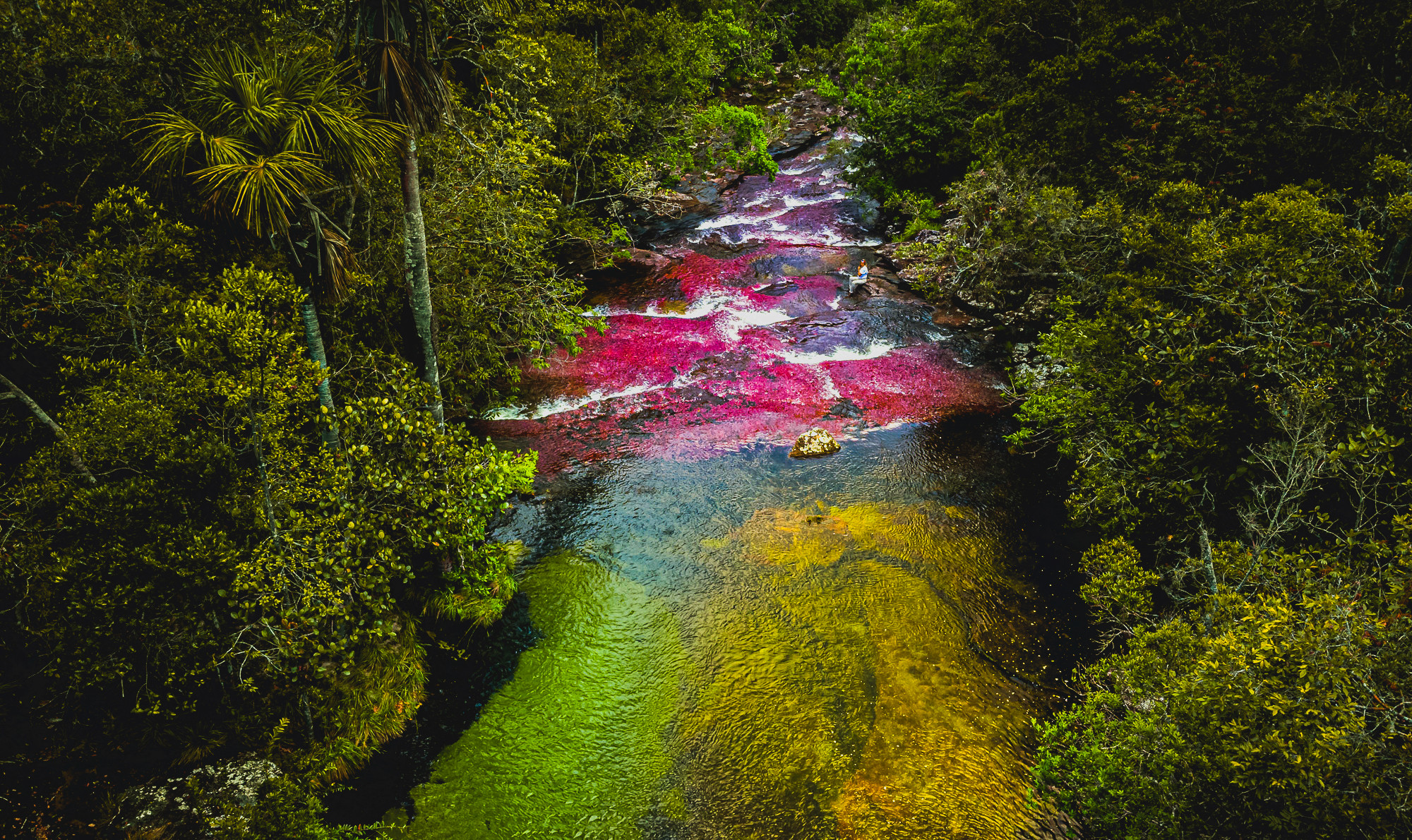
Caño Cristales
Introduction
Hidden deep within the remote wilderness of central Colombia lies one of the most extraordinary rivers on Earth—Caño Cristales. Often called the "River of Five Colors", the "Liquid Rainbow", or even the "Most Beautiful River in the World," this natural wonder captivates visitors with its vibrant display of red, yellow, green, blue, and black hues that transform the river into a living work of art.
Located within the stunning Serranía de la Macarena National Natural Park, Caño Cristales is unlike any river found elsewhere on the planet. Its remarkable colors are not the result of pollution, minerals, or optical illusions, but rather a unique aquatic plant that flourishes under perfect environmental conditions.
For travelers seeking unique destinations, untouched nature, and breathtaking photography opportunities, Caño Cristales offers one of the most unforgettable experiences in South America.
Geography and Environment
Caño Cristales is located in the Serranía de la Macarena, an isolated mountain region situated between the Andes, the Amazon Rainforest, and the Orinoco Basin.
This strategic location creates an extraordinary meeting point of ecosystems, resulting in exceptional biodiversity and unique landscapes.
The river stretches for approximately 100 kilometers through ancient rock formations that date back more than one billion years.
Unlike many large rivers, Caño Cristales has no significant fish population due to its unique geological structure. Instead, its beauty comes from crystal-clear waters flowing over colorful aquatic vegetation and ancient stone formations.
The surrounding wilderness remains largely untouched, contributing to the river's pristine condition and ecological importance.
The Secret Behind the Five Colors
The phenomenon that makes Caño Cristales famous worldwide is the aquatic plant Macarenia clavigera.
This rare endemic plant grows on the riverbed and changes color depending on sunlight levels, water depth, and seasonal conditions.
During the ideal months of the year, the plant turns a brilliant red, while surrounding elements create additional colors:
- Red from Macarenia clavigera
- Yellow from sand and vegetation
- Green from algae and moss
- Blue from reflected sky and water
- Black from ancient rocks and shadows
The combination creates a dazzling natural palette that appears almost surreal.
Few places on Earth display such vivid natural coloration in a flowing river system.
Ancient Landscapes Older Than the Andes
The geology surrounding Caño Cristales is among the oldest on Earth.
The rocky formations belong to the Guiana Shield, one of the planet's oldest geological structures.
Some rocks in the region are estimated to be over one billion years old, predating the formation of the Andes Mountains.
These ancient formations create natural pools, waterfalls, channels, and stone terraces that shape the river's distinctive appearance.
The combination of colorful water and prehistoric landscapes gives visitors the sensation of exploring a lost world.
Crystal-Clear Waters and Natural Pools
Caño Cristales is renowned for its exceptional water clarity.
The river contains very few sediments because it flows across hard rock surfaces rather than through soil-rich landscapes.
As a result, visitors can easily see colorful plants, underwater rock formations, and intricate details beneath the surface.
Natural pools carved into the rock create ideal locations for relaxation and photography.
Many pools resemble giant natural bathtubs filled with crystal-clear water.
The transparency of the river enhances the brilliance of its famous colors and contributes significantly to its worldwide reputation.
Waterfalls, Rapids, and Rock Formations
The river's journey across ancient plateaus has created numerous waterfalls and rapids.
Small cascades tumble over colorful rock formations, producing constantly changing patterns of water and light.
Natural features such as potholes, channels, and smooth stone basins add visual diversity to the landscape.
Among the most photographed sections are areas where flowing water passes directly over bright red aquatic vegetation, creating scenes that appear digitally enhanced despite being entirely natural.
Every bend in the river reveals a new composition of colors and geological formations.
Biodiversity and Ecological Importance
Although Caño Cristales is famous for its colors, the surrounding region is equally important for biodiversity.
The Serranía de la Macarena serves as a biological crossroads connecting multiple ecosystems.
Visitors may encounter:
- Exotic birds
- Monkeys
- Butterflies
- Reptiles
- Unique plant species
- Rare amphibians
The region supports both Amazonian and Andean wildlife, creating exceptional ecological diversity.
Scientists consider the area one of Colombia's most valuable conservation zones due to its unique combination of habitats.
A Conservation Success Story
For many years, the remote location of Caño Cristales limited tourism.
Political instability in parts of Colombia also restricted access to the region.
Today, improved conservation efforts and sustainable tourism initiatives have transformed the river into one of Colombia’s premier ecotourism destinations.
Strict visitor regulations help protect the fragile ecosystem.
Tourist numbers are carefully managed, and visitors must be accompanied by authorized guides.
These measures ensure that the river's extraordinary beauty remains preserved for future generations.
Adventure and Outdoor Experiences
Visiting Caño Cristales involves much more than simply viewing a colorful river.
Travelers typically enjoy guided hikes through tropical landscapes, river crossings, wildlife observation, and visits to scenic viewpoints.
Exploring the area often feels like participating in a nature expedition rather than a conventional sightseeing trip.
Photographers find endless opportunities to capture unique compositions of water, rock, and color.
The remote setting enhances the sense of discovery and adventure.
For many visitors, reaching the river becomes part of the overall experience.
Best Time to Visit Caño Cristales
Timing is crucial when planning a visit.
The river displays its most spectacular colors between June and November.
During this period, water levels and sunlight conditions are ideal for the growth of Macarenia clavigera.
Outside this season, the famous colors may be less visible or absent altogether.
July, August, September, and October are generally considered the peak months for witnessing the river at its most vibrant.
Travelers should plan carefully to maximize the experience.
How to Reach Caño Cristales
The gateway to the river is the small town of La Macarena.
Most visitors reach La Macarena via domestic flights from major Colombian cities such as Bogotá.
From there, guided tours transport travelers by boat, vehicle, and hiking trails into the protected area.
Access restrictions help preserve the fragile environment while ensuring visitor safety.
Although reaching Caño Cristales requires effort, the reward is one of the world's most unique natural spectacles.
Why Visit Caño Cristales?
Caño Cristales offers an experience unlike any other destination on Earth. Its vibrant colors, ancient landscapes, crystal-clear waters, and remarkable biodiversity combine to create a natural wonder that defies expectations.
Visitors can witness a river transformed into a living rainbow, explore ancient geological formations, and discover one of South America's most remarkable ecosystems.
For photographers, adventurers, nature lovers, and travelers seeking truly unique destinations, Caño Cristales is a dream destination.
Few places in the world offer such a perfect combination of beauty, rarity, and ecological significance.
Conclusion
Caño Cristales stands among the most extraordinary natural wonders on the planet. Flowing through ancient landscapes and illuminated by vibrant aquatic plants, the River of Five Colors creates a spectacle found nowhere else on Earth.
From its brilliant red riverbeds and crystal-clear pools to its remote wilderness setting and ecological importance, every aspect of Caño Cristales inspires awe and admiration.
For travelers searching for unique destinations beyond the ordinary, Caño Cristales truly deserves its reputation as the world's most colorful river and one of South America's greatest hidden treasures.
00 Comments
No comments yet.
Leave a Comment