

Bucovina
Introduction
Hidden among the forested hills of northeastern Romania, Bucovina is a region where medieval art, spiritual traditions, and beautiful natural landscapes come together. Located in the historical region of Moldavia, near the eastern slopes of the Carpathian Mountains, this enchanting destination is famous for its extraordinary painted monasteries, traditional villages, rolling countryside, and centuries-old cultural heritage. It is one of Romania's most distinctive destinations, offering travellers an experience that goes far beyond conventional sightseeing.
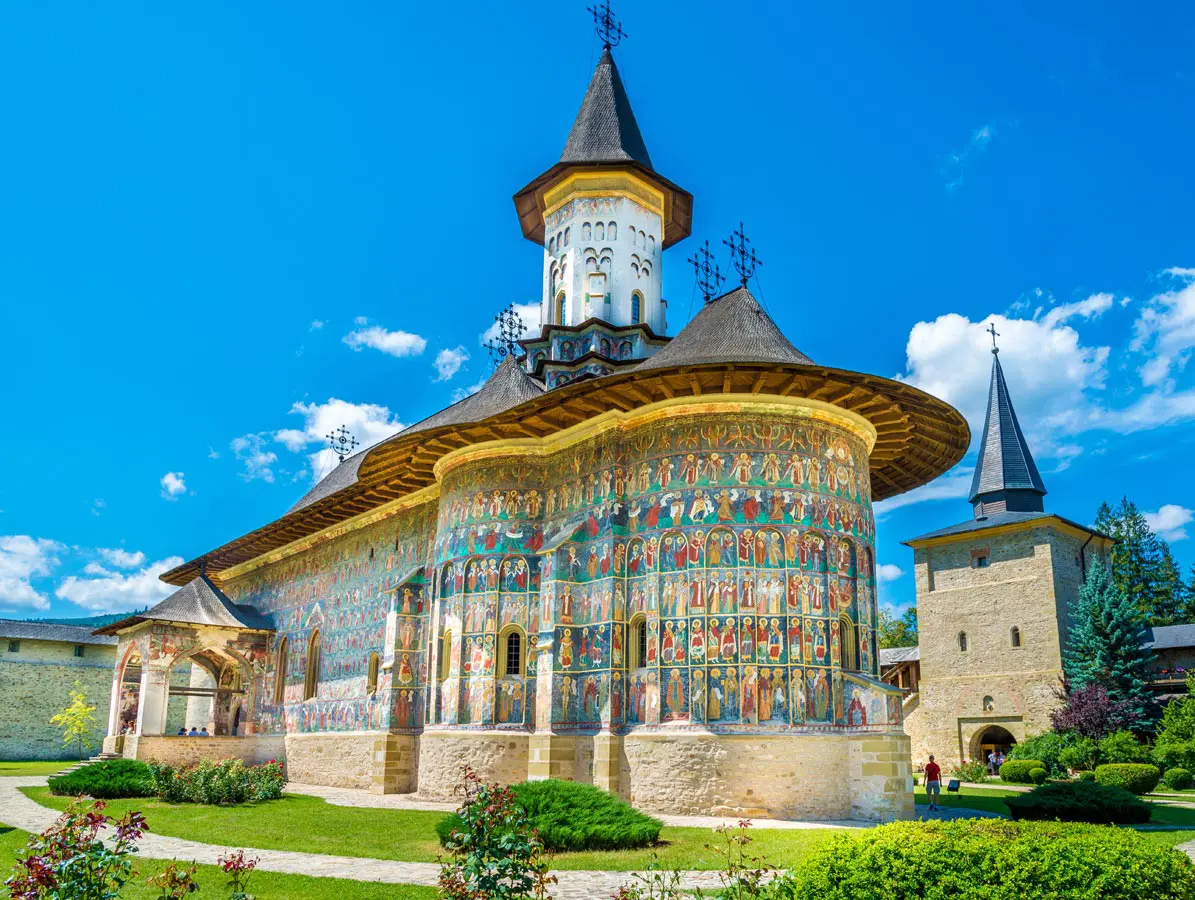
Bucovina's greatest treasures are its remarkable monasteries, many of which date from the 15th and 16th centuries. Their exterior walls are covered with elaborate religious frescoes depicting biblical stories, saints, angels, historical events, and scenes representing heaven and hell. These colourful paintings were created in a period when religious art played an important role in communicating spiritual teachings to communities. Remarkably preserved through centuries of changing weather and political history, they remain among Europe's most impressive examples of medieval Byzantine-influenced art.
The monasteries of Voroneț, Sucevița, Moldovița, Humor, and Arbore are particularly celebrated for their artistic character. Their distinctive colours, detailed compositions, and architectural settings make them unforgettable landmarks. Several of these churches form part of the UNESCO World Heritage property known as the Churches of Moldavia, recognised for their exceptional exterior paintings.
Yet Bucovina is not only about religious monuments. The region is surrounded by the natural beauty of the Carpathians, with beech and fir forests, peaceful valleys, mountain pastures, and traditional settlements. The Rarău Mountains, the Călimani Mountains, and the landscapes around Vatra Dornei offer opportunities for hiking, photography, and outdoor exploration. Small villages preserve traditional crafts, decorated Easter eggs, folk costumes, and local culinary customs that have been passed down through generations.
For travellers searching for unique places to visit in Romania, Bucovina offers a fascinating combination of architecture, history, nature, and authentic rural experiences. Its monasteries tell stories through their painted walls, while its countryside reveals a slower way of life shaped by faith, agriculture, and the mountains. Whether exploring medieval churches, tasting homemade regional food, or travelling through peaceful villages, visitors discover a destination where the past remains remarkably present.
Geographical and Environmental Significance
Bucovina lies in northeastern Romania, primarily within Suceava County, along the eastern side of the Carpathian Mountains. Its geographical position has shaped both its natural environment and cultural history. The region forms a transition between the mountainous landscapes of the Carpathians and the gentler hills and plains of Moldavia, creating a varied countryside of forests, river valleys, meadows, and agricultural land.
The western part of Bucovina is dominated by the Eastern Carpathians, where mountain ridges rise above deep valleys and wooded slopes. The Rarău and Călimani Mountains are among the most recognisable natural areas. These mountains contain a mixture of coniferous forests, broadleaf woodland, alpine and subalpine vegetation, and rocky formations that create distinctive scenery.
The Rarău Mountains are particularly famous for Pietrele Doamnei, a group of impressive limestone rock formations rising above the surrounding forest. Their unusual shapes and elevated position make them a popular destination for hikers and photographers. The surrounding trails offer panoramic views across the mountain landscape, especially during clear weather.
The Călimani Mountains contain one of the most remarkable volcanic landscapes in Romania. Their geological history is associated with an ancient volcanic complex, including a large volcanic caldera. Today, Călimani National Park protects forests, mountain habitats, peat bogs, and unusual geological features. Its landscape offers a different experience from the monastery valleys, with more remote trails and a stronger wilderness atmosphere.
Forests are an essential part of Bucovina's environmental identity. Beech, fir, spruce, and mixed woodland communities cover large areas of the mountains and foothills. Some old-growth beech forests in the wider Carpathian region are part of the UNESCO World Heritage property Ancient and Primeval Beech Forests of the Carpathians and Other Regions of Europe. These forests are important habitats for brown bears, wolves, lynx, deer, and numerous bird species.
Rivers and streams flow through the region, creating fertile valleys and supporting local agriculture. The Moldova, Suceava, and Bistrița river systems contribute to the area's varied landscapes. Their valleys are dotted with villages, orchards, farmland, and forested slopes, making road journeys through Bucovina particularly scenic.
The region's natural environment also influences its climate. Winters can be cold and snowy, especially in higher mountain areas, while summers are generally warm and suitable for outdoor activities. Spring and autumn bring changing colours to the forests and countryside, creating particularly attractive conditions for photography.
Bucovina's combination of mountain ecosystems, forest habitats, and traditional agricultural landscapes makes it an important region for both nature conservation and sustainable tourism. Its beauty lies in the close relationship between the natural environment and the human settlements that have developed within it.
Landscapes or Heritage
Bucovina's most celebrated heritage is its collection of painted monasteries, remarkable religious buildings whose exterior walls preserve some of Europe's finest medieval frescoes. Created primarily during the 15th and 16th centuries, these paintings combine Byzantine artistic traditions with local Moldavian influences. Their detailed compositions transformed church exteriors into visual narratives, allowing religious stories to be understood through images as well as written texts.
The most famous of these landmarks is Voroneț Monastery, often nicknamed the "Sistine Chapel of the East". Founded in 1488 under the patronage of Stephen the Great, it is particularly celebrated for the brilliant blue background of its exterior frescoes. Known as Voroneț blue, this distinctive colour dominates the western wall, where the enormous Last Judgment composition presents an elaborate depiction of Christian beliefs about salvation and the afterlife. The monastery's setting near Gura Humorului adds to its appeal, with green hills and woodland surrounding the historic complex.
Sucevița Monastery is another extraordinary example of Bucovina's religious architecture. Built in the late 16th century, it resembles a fortified religious complex, with defensive walls and towers enclosing the church. Its exterior paintings are dominated by green tones, and one of its most famous compositions is the Ladder of Divine Ascent, depicting the spiritual journey towards salvation. The monastery also preserves valuable religious objects, manuscripts, and embroidered works.
Moldovița Monastery stands in a beautiful valley surrounded by forested hills. Its frescoes are especially known for their yellow and blue colours, along with detailed scenes from religious history. One of its most striking compositions depicts the Siege of Constantinople, presenting a dramatic historical and religious narrative across the church wall. The combination of artistic detail and peaceful surroundings makes Moldovița one of the region's most memorable sites.
Humor Monastery offers a different artistic atmosphere. Its exterior paintings are recognised for their reddish tones and expressive compositions. Built in the 16th century, the church is relatively compact but contains an impressive collection of religious scenes. Its location near Gura Humorului makes it easy to include in a wider monastery circuit.
Arbore Church is another important monument, admired for its refined frescoes and distinctive green tones. Smaller than some of the better-known monasteries, it offers a quieter experience and demonstrates the artistic diversity of the Bucovina painting tradition.
The UNESCO-listed Churches of Moldavia include eight component monuments: Arbore, Humor, Moldovița, Pătrăuți, Probota, Suceava's Church of Saint George at the Monastery of Saint John the New, Sucevița, and Voroneț. Each contributes to the exceptional artistic and historical value of the region. Putna Monastery is also an important historical and spiritual destination associated with Stephen the Great, although it is not one of the eight component churches of this UNESCO property.
Beyond the monasteries, Bucovina's natural scenery is equally impressive. The Rarău Mountains provide excellent hiking opportunities, with Pietrele Doamnei offering dramatic rock formations and panoramic views. The area around Vatra Dornei combines mountain scenery with a traditional spa-town atmosphere, while the Călimani Mountains attract visitors interested in geological landscapes and remote wilderness.
The region also has a rich tradition of decorated Easter eggs. These intricate works of folk art are created using wax-resist techniques and carefully applied colours, often featuring geometric patterns, flowers, crosses, and symbolic designs. Museums and workshops in villages such as Vama and Vatra Moldoviței offer opportunities to understand this craft and appreciate the skill involved.
Traditional wooden houses, old village churches, roadside shrines, and rural landscapes complete Bucovina's heritage. Exploring the region slowly reveals how architecture, religion, craftsmanship, and nature have remained connected across generations.
Culture
Bucovina's culture reflects centuries of religious devotion, regional identity, and artistic creativity. Its historical position within the Principality of Moldavia helped shape a distinctive cultural tradition influenced by Eastern Orthodox Christianity, Byzantine art, local craftsmanship, and the wider cultural exchanges of Eastern Europe.
The region's monasteries have played an important role in preserving this identity. During the reign of Stephen the Great and his successors, religious buildings became centres of spiritual life, education, artistic production, and historical memory. Their painted walls were designed not simply as decoration but as carefully organised religious narratives. Scenes from the Bible, the lives of saints, and important events in Christian history helped communicate spiritual ideas to the wider community.
Monastic life continues to influence the atmosphere of Bucovina. Monks and nuns maintain religious communities, preserve traditions, and care for historic buildings. Visitors may encounter prayer services, church rituals, and daily activities that continue according to long-established customs. Respectful clothing and quiet behaviour are important when visiting active religious sites, particularly during services.
Traditional craftsmanship is another essential part of Bucovina's cultural heritage. The region is particularly famous for its decorated Easter eggs, known as ouă încondeiate. Artisans use fine tools and melted wax to draw intricate patterns onto eggs before applying layers of colour. Once the wax is removed, the finished designs reveal detailed geometric patterns and symbolic motifs. Each village and artisan may have distinctive techniques and decorative styles.
The villages of Marginea are known for traditional black pottery, produced using techniques that give the ceramics their distinctive dark finish. Pottery, weaving, embroidery, woodcarving, and painted household objects are also part of the region's craft traditions. Visiting local workshops allows travellers to observe artisans at work and understand how these skills are preserved.
Folk music and traditional costumes remain important elements of community celebrations. Local festivals often feature dancing, regional songs, colourful clothing, and seasonal customs. Winter is especially lively, with groups of performers wearing elaborate masks and costumes during traditional New Year celebrations. The Bear Dance, Goat Dance, and other masked performances are among the region's most distinctive customs.
Hospitality is central to the Bucovina experience. Family-run guesthouses often provide opportunities to experience local food, learn about village traditions, and interact with residents. These stays can offer a more personal understanding of the region than visiting monuments alone.
Bucovina's culture is best appreciated through a combination of historic sites and everyday encounters. Spend time in local villages, visit craft workshops, attend a traditional event when possible, and explore the monasteries with an appreciation for their continuing religious importance. These experiences reveal why Bucovina remains one of Romania's most culturally distinctive regions.
Cuisine
Bucovina's cuisine is one of the most memorable aspects of visiting the region. Influenced by Moldavian traditions, rural agriculture, seasonal ingredients, and mountain cooking, its food is generous, comforting, and closely connected to local hospitality. Many traditional meals are prepared using ingredients from family gardens, nearby farms, forests, and local dairy producers.
One of the region's best-known dishes is ciorbă rădăuțeană, a creamy chicken soup associated with the town of Rădăuți. It is traditionally prepared with chicken, vegetables, sour cream, garlic, and vinegar, creating a rich yet refreshing flavour. It has become one of Bucovina's most recognisable culinary specialities and is widely served in regional restaurants.
Another popular dish is sarmale, cabbage rolls filled with a mixture of minced meat and rice, slowly cooked with herbs and seasonings. They are commonly served with polenta, sour cream, and sometimes smoked meat. This hearty preparation is especially popular during celebrations and family gatherings.
Polenta, known locally as mămăligă, is a staple of traditional Romanian cooking. Made from cornmeal, it can accompany cheese, sour cream, stews, meat dishes, or vegetables. One particularly traditional preparation is balmoș, a rich dish made with polenta and dairy products, including cheese and butter or cream.
Bucovina is also known for its homemade pies. These may be filled with sweet cheese, apples, cabbage, potatoes, or other seasonal ingredients. Baked in traditional ovens, they are common in village households and guesthouses. Their flavours vary depending on family recipes and local produce.
Mushrooms are an important ingredient in the region's mountain cuisine. Forests provide a variety of edible mushrooms, which may appear in soups, sauces, stews, and savoury pastries. Visitors travelling during autumn may find seasonal mushroom dishes on restaurant menus.
Fresh trout is another regional favourite, particularly around mountain resorts and river valleys. It is often grilled or baked and served with potatoes, vegetables, or traditional sauces. Local dairy products, smoked meats, and homemade preserves also feature prominently in rural meals.
For dessert, papanăși are a popular Romanian treat. These fried or boiled cheese doughnuts are typically served with sour cream and fruit jam, often made from blueberries or other forest berries. Bucovina's traditional sweet breads and cakes, including walnut-filled cozonac, are also worth trying.
A meal in a traditional guesthouse can be one of the best ways to experience Bucovina's cuisine. Hosts often prepare homemade dishes using local ingredients, offering generous portions and a welcoming atmosphere. Travellers should take the opportunity to try regional specialities rather than relying only on familiar restaurant options.
Food in Bucovina is not simply a practical part of travel. It reflects the region's agricultural traditions, family customs, and connection to the surrounding countryside. Each meal offers another way to understand the character of this remarkable part of Romania.
Sustainability
Sustainability is important to Bucovina because its appeal depends on preserving both its natural environment and its extraordinary cultural heritage. The region's forests, mountain habitats, historic monasteries, traditional villages, and craft traditions are valuable resources that require careful protection. As tourism grows, responsible travel can help local communities benefit economically while reducing pressure on these sensitive landscapes.
The painted monasteries are among the most important heritage sites in Romania. Their frescoes have survived for centuries, but exposure to weather, humidity, pollution, and human activity creates ongoing conservation challenges. Visitors should follow the rules established by monastery authorities, avoid touching painted surfaces, and respect restrictions on photography and access to interior spaces.
Responsible tourism also means understanding that many monasteries remain active religious communities. Visitors should dress modestly, speak quietly, and avoid interrupting religious services. Photography should only take place where permitted, and sacred objects should never be handled without permission.
The natural landscapes around Bucovina also deserve protection. Mountain forests, rivers, meadows, and wildlife habitats can be affected by litter, uncontrolled development, and poorly managed outdoor activities. Travellers should stay on marked trails, carry rubbish back to appropriate disposal points, and avoid disturbing animals or collecting protected plants.
The forests of the Carpathians are particularly valuable for biodiversity. Brown bears, wolves, lynx, and other wildlife depend on connected habitats and relatively undisturbed woodland. Visitors should observe animals from a safe distance and never feed wildlife. Hiking with a knowledgeable local guide can provide a better understanding of the ecosystem while helping visitors avoid sensitive areas.
Supporting local businesses is one of the most effective ways to make tourism beneficial to the region. Family-run guesthouses, local restaurants, craft workshops, and small agricultural producers help keep visitor spending within rural communities. Buying locally made decorated eggs, pottery, textiles, and food products can contribute to preserving traditional skills and livelihoods.
Travellers can also reduce their environmental footprint by planning a longer stay instead of making a rushed visit to several monasteries in one day. Staying in Gura Humorului, Vama, or another village allows visitors to explore the surrounding countryside at a slower pace and spend more time with local communities.
Transport choices matter as well. Sharing a vehicle or arranging a local guided tour can reduce the number of separate journeys between distant monasteries. Where practical, use train connections to reach regional towns before arranging local transfers.
Sustainable tourism in Bucovina is ultimately about respecting the balance between heritage, nature, and everyday life. By protecting historic frescoes, supporting local craftspeople, and travelling responsibly through the Carpathian landscape, visitors help ensure that the region's cultural and natural treasures remain meaningful for future generations.
Best Time to Visit
Bucovina is a year-round destination, but the best time to visit depends on whether you are interested in monastery architecture, mountain scenery, traditional festivals, or seasonal landscapes. Each season offers a different perspective on the region.
Spring, from April to May, brings fresh greenery to the valleys and forests. Orchards begin to blossom, village landscapes become colourful, and temperatures gradually become more comfortable for exploring. This season is particularly interesting around Easter, when traditional decorated eggs and religious customs take centre stage. Visitors may also experience local Easter celebrations and special church services, although dates vary according to the religious calendar.
Summer, from June to September, is generally the most convenient period for visiting Bucovina. The weather is usually suitable for exploring monasteries, travelling through mountain villages, and hiking in the Rarău and Călimani Mountains. The forests are lush, mountain roads are generally easier to navigate, and many local tourism services operate on extended schedules. This is an excellent season for combining cultural visits with outdoor activities.
Autumn, especially September and October, is one of the most beautiful times to experience the region's countryside. Beech and mixed forests turn golden, orange, and red, creating impressive scenery across the Carpathian foothills. The harvest season also brings local produce, including apples, mushrooms, and other seasonal ingredients. Photographers often find autumn particularly rewarding because of the warm light and colourful landscapes.
Winter, from December to February, gives Bucovina a quieter and more atmospheric character. Snow-covered monasteries, frozen countryside, and traditional wooden villages create beautiful winter scenes. December is particularly special because of the region's New Year customs, which include masked processions, folk music, and traditional performances in several villages. Visitors should prepare for cold temperatures and possible snow-related transport delays.
For travellers primarily interested in the painted monasteries and mountain scenery, June to September is usually the most practical choice. Those interested in autumn colours may prefer late September and October, while December is ideal for experiencing traditional winter celebrations.
Whatever season you choose, allow enough time to explore the region without rushing. Monasteries, villages, mountain viewpoints, and local workshops are spread across a wide area, and a slower itinerary often produces a more rewarding experience.
Transport
Reaching Bucovina is relatively straightforward, although exploring its monasteries and mountain landscapes requires some additional planning. The main regional gateway is Suceava, which connects the area with other Romanian cities through air, rail, and road transport.
Suceava is served by Ștefan cel Mare International Airport, with flight connections depending on the current airline schedule. Travellers arriving from Bucharest or other European cities can also consider flying into a larger Romanian airport and continuing by train or road.
Rail travel is another practical way to reach the region. Trains connect Bucharest with Suceava, while regional services link Suceava with destinations such as Gura Humorului and Vatra Dornei. Train journeys provide an opportunity to enjoy Romania's changing landscapes, particularly as the route approaches the Carpathian foothills.
Gura Humorului is one of the most convenient bases for visiting the painted monasteries. It provides access to Voroneț and Humor, while other important monasteries can be reached through regional roads. The town also offers hotels, guesthouses, restaurants, and services for travellers.
For exploring the wider monastery circuit, renting a car is often the most flexible option. Voroneț, Humor, Moldovița, Sucevița, and Arbore are spread across the region, and reaching several sites in one day can be difficult using public transport alone. Roads are generally suitable for ordinary vehicles, but mountain routes can be winding, especially around forested passes.
The route between Moldovița and Sucevița is particularly scenic, passing through the forested Ciumârna Pass. The surrounding hills and mountain views make the drive an attraction in itself. Travellers should allow extra time for photographs and stops along the way.
Visitors who prefer not to drive can arrange guided monastery tours from Suceava or Gura Humorului. Local tour operators may offer one-day or multi-day circuits covering the major painted churches. Taxis and local transfers are also possible, although prices and availability should be confirmed in advance.
For a more relaxed visit, plan at least two or three days in Bucovina. This allows time to explore the principal monasteries, visit traditional villages, discover local craft workshops, and enjoy the surrounding mountain scenery. Accommodation ranges from family-run guesthouses to hotels and rural pensions, many of which provide traditional meals.
Visitors should check monastery opening hours, entrance arrangements, and photography rules before travelling, as these may vary by site and season. Since the monasteries are active religious institutions, access to certain areas may also be restricted during services or special events.
Why Visit
Bucovina is worth visiting because it offers one of Europe's most extraordinary combinations of medieval religious art, traditional culture, and natural beauty. Its painted monasteries are unlike almost any other collection of historic buildings on the continent, while its mountain landscapes and villages provide an inviting setting for slower, more meaningful travel.
For history and architecture enthusiasts, the monasteries are the main attraction. The exterior frescoes of Voroneț, Sucevița, Moldovița, Humor, and Arbore preserve centuries-old religious narratives in remarkable detail. Each monastery has its own artistic character, from Voroneț's famous blue to Sucevița's fortified architecture and Moldovița's colourful historical scenes.
Art lovers will appreciate the way the paintings combine religious symbolism, historical references, and local artistic traditions. The frescoes are not simply decorative features; they represent a remarkable medieval visual language that has survived for generations.
Nature enthusiasts will find plenty to explore beyond the monasteries. The Rarău Mountains, Călimani National Park, and the landscapes around Vatra Dornei offer hiking opportunities, forest scenery, and panoramic viewpoints. The region's rivers, valleys, and traditional countryside are ideal for road trips and photography.
Bucovina is also an excellent destination for travellers interested in living cultural traditions. Decorated Easter eggs, black pottery, traditional weaving, folk music, and seasonal festivals reveal the creativity and continuity of rural life. Visiting local artisans gives travellers an opportunity to support crafts that might otherwise struggle to compete with mass-produced goods.
Food provides another reason to visit. Traditional soups, cabbage rolls, homemade pies, polenta dishes, trout, and regional desserts make the region particularly rewarding for travellers who enjoy discovering local cuisine. Family-run guesthouses often provide the most authentic dining experiences.
Perhaps the greatest attraction of Bucovina is its atmosphere. Unlike some of Europe's busiest heritage destinations, many parts of the region retain a peaceful rural character. The monasteries sit within green valleys, villages remain connected to agricultural traditions, and mountain forests create a natural backdrop for the region's historic landmarks.
For travellers searching for unique places to visit in Romania, Bucovina offers something genuinely distinctive. It combines art, spirituality, food, craftsmanship, and mountain scenery in a way that few destinations can match. A journey here is not simply about seeing beautiful buildings; it is about understanding the history and traditions that have shaped an entire region.
Conclusion
Bucovina is one of Romania's most remarkable destinations, where medieval religious art, Carpathian landscapes, and living cultural traditions come together. Its painted monasteries preserve extraordinary frescoes that have survived for centuries, while its forests, mountain valleys, and traditional villages reveal a quieter and equally captivating side of the country.
From the brilliant blue of Voroneț to the fortified beauty of Sucevița, every monastery tells a different story. Beyond these historic landmarks, the Rarău and Călimani Mountains offer opportunities for outdoor exploration, while local craft traditions and regional cuisine provide a deeper connection to everyday life.
The best time to visit depends on the experience you seek. Summer is ideal for exploring monasteries and hiking, autumn offers beautiful forest colours, spring brings Easter traditions and blossoming countryside, and winter reveals a peaceful landscape filled with seasonal celebrations.
For anyone planning a Romania travel guide or searching for unique places to visit in the Carpathians, Bucovina deserves a place on the itinerary. It is a destination where history remains visible on church walls, culture lives in village workshops, and nature surrounds every journey. More than a collection of beautiful monuments, Bucovina is a place where art, faith, and the timeless beauty of the Carpathians create an unforgettable travel experience.
00 Comments
No comments yet.
Leave a Comment