

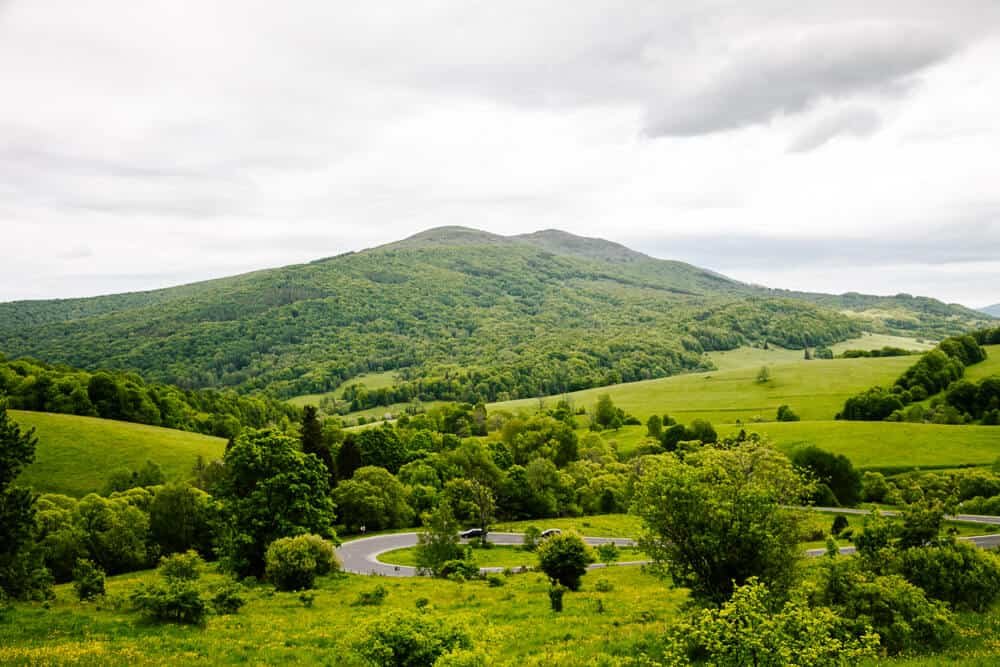
Bieszczady Mountains
Introduction
In the southeastern corner of Poland, where the Carpathian Mountains stretch towards Slovakia and Ukraine, lies one of Central Europe's most peaceful mountain landscapes. The Bieszczady Mountains are a world of rolling green ridges, ancient beech forests, remote valleys, wooden villages, and vast open grasslands where the horizon seems to extend endlessly. Far from the crowded resorts and busy hiking routes of Europe's better-known mountain destinations, this region offers a quieter experience shaped by nature, history, and traditional rural life.
Often described as Europe's forgotten mountain wilderness, Bieszczady has a special atmosphere that distinguishes it from the dramatic alpine scenery found elsewhere on the continent. Its rounded summits and broad mountain meadows, known locally as połoniny, create landscapes that feel both wild and welcoming. During summer, these high grasslands turn green with wildflowers, while autumn transforms the surrounding forests into a spectacular display of gold, orange, and red.
The region's natural heart is Bieszczady National Park, established in 1973 to protect some of the most valuable mountain habitats in Poland. Its forests provide shelter for brown bears, wolves, lynx, red deer, and European bison, while its open ridges support rare plants and offer panoramic views across the Eastern Carpathians. The wider region is also part of the UNESCO East Carpathians Biosphere Reserve, which connects protected landscapes across Poland, Slovakia, and Ukraine.
Yet Bieszczady is more than a destination for hikers and wildlife enthusiasts. Its villages preserve traces of a complicated past, including traditional wooden architecture, old Orthodox churches, abandoned settlements, and stories of communities displaced during the twentieth century. Today, these historical layers form an important part of the region's identity.
For travellers searching for unique places to visit in Poland, the Bieszczady Mountains offer an appealing alternative to the country's more familiar cities and mountain resorts. Whether exploring forest trails, watching wildlife, discovering historic villages, or simply enjoying the silence of a remote mountain meadow, visitors can experience a side of Poland where nature still sets the rhythm of everyday life.
Geographical and Environmental Significance
The Bieszczady Mountains form part of the Eastern Carpathians in southeastern Poland, close to the borders with Slovakia and Ukraine. They belong to a wider mountain system that extends across several Central and Eastern European countries. The Polish section is especially known for its gentle mountain profiles, extensive forests, and open grass-covered ridges.
Bieszczady National Park protects approximately 29,200 hectares, making it one of Poland's largest national parks. Its landscape is characterised by a mixture of mountain forests, river valleys, steep slopes, and high meadows. Unlike the rocky peaks of the Tatras, the Bieszczady ridges are generally rounded, creating long walking routes with wide views across the surrounding countryside.
One of the region's most distinctive geographical features is the połoniny. These open mountain meadows occur above much of the forest zone and are among the most recognisable landscapes of the Bieszczady. Their ecological importance comes from the variety of grasses, flowers, and other plants that thrive in the exposed mountain environment. During warmer months, the meadows attract insects and birds, while their open slopes provide excellent viewpoints for visitors.
Forests cover a large proportion of the national park, with beech trees forming the dominant woodland communities. Fir, sycamore, spruce, and other species also occur throughout the landscape. Some forest sections have a particularly natural character, with old trees, fallen trunks, and dense vegetation creating habitats for numerous plants, fungi, and animals.
The Bieszczady ecosystem is especially valuable because it supports many of Europe's large forest mammals. Brown bears, grey wolves, Eurasian lynx, red deer, and European bison are among the animals found in the wider region. The park is also home to a rich bird population, including birds of prey and several forest species. These animals depend on connected habitats and relatively undisturbed woodland, making conservation essential.
The region's rivers and streams add to its ecological diversity. Watercourses descend from mountain slopes through forested valleys, supporting aquatic habitats and shaping the surrounding terrain. Wetlands and peat bogs provide further ecological value, particularly for specialised plants and wildlife.
Bieszczady's conservation importance extends beyond the boundaries of the national park. Together with protected areas in neighbouring Slovakia and Ukraine, it forms part of the East Carpathians Biosphere Reserve. This international designation recognises the importance of protecting connected mountain ecosystems across national borders.
The combination of extensive forests, open meadows, wildlife habitats, and traditional rural landscapes makes Bieszczady one of Poland's most important natural regions. It is a place where conservation and responsible tourism can help maintain the character of a mountain wilderness that remains relatively little known internationally.
Landscapes or Heritage
The Bieszczady Mountains are best experienced through their changing landscapes. Their beauty is not concentrated in one famous summit or a single dramatic viewpoint. Instead, it unfolds across long ridgelines, forest paths, hidden valleys, and quiet villages that reveal a different atmosphere in every season.
The połoniny are the region's most iconic natural landscapes. These high mountain meadows create broad, open spaces above the forests, allowing hikers to enjoy sweeping views across the Eastern Carpathians. Połonina Wetlińska and Połonina Caryńska are among the best-known examples. Their grassy slopes and undulating ridges are especially beautiful in summer, when wildflowers add colour to the landscape.
Połonina Wetlińska is famous for its expansive mountain panoramas and the mountain shelter known as Chatka Puchatka. The route across the ridge offers a memorable combination of forest walking and open mountain scenery. Połonina Caryńska provides another rewarding hike, with views stretching towards neighbouring peaks and valleys. On clear days, the sense of space can be extraordinary.
Tarnica, rising to 1,346 metres, is the highest peak of the Polish Bieszczady Mountains. Its summit is a popular objective for hikers and offers impressive views across the surrounding mountain landscape. The trail from Wołosate is a classic route, passing through forest and open terrain before reaching the upper slopes. The summit is particularly rewarding in clear weather, although conditions can change quickly in the mountains.
Another striking area is Bukowe Berdo, a long mountain ridge known for its distinctive shape and scenic viewpoints. Its slopes combine forest sections with open grassy areas, creating a varied hiking experience. The surrounding landscape feels remote, particularly outside the busiest summer weekends.
Beyond the high ridges, the valleys of Bieszczady reveal a quieter side of the region. Small settlements, wooden houses, streams, meadows, and forest roads create a rural atmosphere that feels far removed from modern urban life. Some valleys also contain traces of villages that disappeared during the forced population movements of the twentieth century.
Historic wooden churches are among the most meaningful cultural landmarks in the region. Traditional Greek Catholic and Orthodox architecture reflects the area's former multicultural communities, particularly the presence of Boyko and Lemko populations. These buildings often feature wooden construction, distinctive roofs, and carefully crafted interiors. They are reminders of a cultural landscape that changed dramatically after the Second World War.
The Solina Lake area offers a different kind of scenery. Created by a dam on the San River, this large reservoir is surrounded by wooded hills and small holiday settlements. It provides opportunities for boating, lakeside relaxation, and scenic drives. Although it has a more developed tourism atmosphere than the national park, it makes an attractive addition to a wider Bieszczady itinerary.
The region's heritage is also visible in abandoned village sites, old cemeteries, roadside crosses, and remnants of former agricultural settlements. Exploring these places gives visitors a deeper understanding of how people once lived in the mountains and how historical events transformed the region.
Culture
The cultural identity of Bieszczady is shaped by its position at the meeting point of different communities and traditions. Polish, Ukrainian, Boyko, and Lemko influences have all contributed to the region's historical character. Before the dramatic population changes of the twentieth century, many valleys were home to communities with distinct languages, religious practices, architecture, and agricultural customs.
The Boykos were one of the most important historical communities of the Bieszczady region. Their traditional way of life was closely connected to mountain farming, livestock, forestry, and small rural settlements. Wooden houses, churches, household objects, and local customs reflected a culture adapted to the mountain environment.
The Second World War and its aftermath transformed this cultural landscape. Fighting, political changes, and forced population resettlements led to the disappearance of many villages and the displacement of their inhabitants. Some settlements were never rebuilt, leaving behind cemeteries, church ruins, foundations, and old field boundaries. These remains are now important reminders of the region's complex history.
Wooden religious architecture is one of the most visible expressions of this heritage. Historic churches and former Orthodox buildings can be found in villages throughout the wider Bieszczady region. Their architecture reflects local craftsmanship and the religious diversity that once characterised the Eastern Carpathians. Some churches form part of the broader Wooden Architecture Route of the Podkarpackie region.
Modern Bieszczady has developed a distinctive identity around nature, simplicity, and rural hospitality. Small guesthouses, family-run restaurants, local farms, and mountain shelters create a welcoming environment for visitors. Many establishments reflect a relaxed approach to tourism, encouraging travellers to spend time outdoors and enjoy the region at a slower pace.
The mountain shelter culture is also part of the Bieszczady experience. Places such as Chatka Puchatka have become familiar landmarks for hikers, offering opportunities to rest and enjoy the mountain atmosphere. These shelters are not simply places to eat or sleep; they are social meeting points where travellers exchange stories and experiences.
Local festivals, folk music, traditional crafts, and regional food continue to preserve aspects of the area's cultural heritage. Visitors may encounter local events celebrating music, seasonal traditions, and rural life, although programmes vary throughout the year.
The best way to understand Bieszczady's culture is to explore beyond its hiking trails. Visit historic churches, spend time in small villages, learn about the region's former communities, and support local businesses. These experiences reveal that the mountains are not an empty wilderness but a landscape shaped by generations of human history.
Cuisine
The cuisine of Bieszczady reflects the agricultural traditions and multicultural history of southeastern Poland. Its food is generally hearty and comforting, with ingredients drawn from forests, farms, gardens, and mountain villages. Traditional dishes often combine potatoes, grains, vegetables, dairy products, meat, and wild mushrooms.
One of the region's most interesting culinary influences comes from the former Boyko and Lemko communities. Their food traditions developed around simple ingredients and seasonal availability. Dishes were often designed to be filling and practical for people living in remote mountain settlements, where farming and livestock were central to everyday life.
Pierogi are among Poland's best-known foods and are widely available throughout the region. These dumplings may be filled with potatoes and cheese, cabbage, mushrooms, meat, or seasonal ingredients. They are commonly boiled and sometimes fried before serving, creating a satisfying meal after a day of hiking.
Another popular dish is kwaśnica, a traditional sour cabbage soup that is particularly associated with the Polish mountain regions. Recipes vary, but the soup often includes sauerkraut, potatoes, and meat, producing a rich and warming flavour. It is especially enjoyable during colder months.
Potato-based dishes are also common in southeastern Poland. Visitors may encounter potato pancakes, baked potato preparations, and regional variations of dumplings. Forest mushrooms are another important ingredient, particularly during autumn when local markets and restaurant menus may feature mushroom soups, sauces, and other seasonal dishes.
Local cheeses and dairy products add another dimension to the region's cuisine. Traditional Polish oscypek is most strongly associated with the Podhale region, but mountain-inspired cheese dishes and smoked cheeses can also be found in parts of southern Poland. Travellers should look for locally produced foods rather than assuming every mountain cheese is made using the same traditional methods.
The area around Solina and other lakeside settlements offers additional food options, including grilled fish, freshwater dishes, and casual summer meals. Restaurants in larger villages and tourist centres provide a wider choice, while small guesthouses often serve homemade Polish food.
For dessert, visitors can try Polish cakes, fruit pastries, and seasonal preparations made with apples, berries, or plums. A warm slice of homemade cake with tea or coffee is a pleasant way to end a meal after exploring the mountains.
Food in Bieszczady is best enjoyed without rushing. Choose family-run restaurants, try seasonal dishes, and ask about regional specialities. Local cuisine provides another way to experience the region's heritage, connecting the flavours of the present with the agricultural traditions of its past.
Sustainability
Sustainability is especially important in the Bieszczady Mountains because the region's appeal depends on the preservation of its forests, grasslands, wildlife, and traditional landscapes. Although tourism supports local communities, increasing visitor numbers can place pressure on trails, parking areas, wildlife habitats, and sensitive mountain environments.
Bieszczady National Park plays a central role in protecting the region's natural heritage. Its marked trails and conservation rules help direct visitors away from particularly sensitive areas. Hikers should remain on designated paths, follow signs, and respect seasonal restrictions. Going off-trail can damage fragile vegetation and disturb wildlife, particularly in remote forest and meadow habitats.
Wildlife protection is another important responsibility. Brown bears, wolves, and lynx are naturally cautious animals, but visitors should still behave carefully in their habitats. Never feed wild animals, approach them for photographs, or leave food waste along trails. Keep a respectful distance from any wildlife encounter and follow the advice of park authorities.
The region's forests are particularly valuable. Beech woodland supports a wide variety of plants, fungi, birds, and mammals, while older forest stands provide habitats that cannot be quickly recreated. Responsible tourism should avoid damaging trees, collecting protected plants, or disturbing fallen wood and other natural materials that support forest ecosystems.
Waste management is essential on popular hiking routes. Carry rubbish back to designated bins or disposal points, use reusable bottles, and avoid leaving food packaging or tissues behind. Even small amounts of litter can affect wildlife and reduce the quality of natural habitats.
Choosing local accommodation and services can make tourism more beneficial to mountain communities. Family-run guesthouses, regional restaurants, local guides, and small businesses help keep visitor spending within the area. Travellers can also explore lesser-known villages and attractions outside the busiest periods, helping distribute tourism more evenly.
Responsible transport choices can reduce pressure on the mountain roads. Where practical, use shared transport, organised transfers, or public connections between larger towns and tourist centres. During busy summer and autumn weekends, popular trailheads can become crowded, so starting early and checking parking arrangements can make visits more manageable.
The region's cultural heritage also deserves protection. Historic wooden churches, abandoned cemeteries, and former village sites should be treated respectfully. Visitors should not remove objects, disturb graves, or enter unsafe structures. Supporting local heritage initiatives and visiting recognised cultural sites helps maintain the area's historical identity.
Sustainable travel in Bieszczady is ultimately about balance. Enjoy the mountain scenery, support local communities, and respect the wildlife and cultural heritage that make the region special. The goal is to ensure that future visitors can experience the same sense of quiet wilderness that defines the Bieszczady Mountains today.
Best Time to Visit
The Bieszczady Mountains can be visited throughout the year, but each season offers a different experience. The best time depends on whether you prefer hiking through green meadows, enjoying autumn colours, watching wildlife, or exploring snowy mountain landscapes.
Spring, from April to May, brings fresh growth to the forests and mountain valleys. Snow gradually retreats from lower elevations, streams become more active, and wildflowers begin to appear. The season can be unpredictable, with muddy trails and changing weather, particularly on higher ridges. It is a good time for visitors who enjoy quieter conditions and the first signs of the mountain landscape awakening.
Summer, from June to August, is the most popular period for hiking. The połoniny become lush and colourful, mountain trails are generally more accessible, and longer daylight hours allow visitors to explore several routes. Temperatures are usually comfortable for walking, although thunderstorms and sudden weather changes are possible. Popular trailheads and accommodation can become busy during weekends and holiday periods, so advance planning is recommended.
Autumn, especially September and October, is often considered the most beautiful season in Bieszczady. Beech forests turn golden, orange, and red, while the open mountain meadows take on warm brown and yellow tones. The combination of colourful woodland and open ridgelines creates outstanding photography opportunities. October is also associated with the red deer rutting season, when the calls of stags can sometimes be heard across the forests. Wildlife observation should always be done quietly and from appropriate locations.
Winter, from December to February, transforms the mountains into a quieter landscape of snow-covered forests and white ridges. The region offers opportunities for winter hiking, snowshoeing, and ski touring when conditions allow. Snow and ice can make routes more demanding, and visitors need suitable clothing, footwear, and equipment. Some roads and trails may be affected by severe weather.
For most travellers, June to September is the easiest period for general hiking and outdoor exploration. However, October is particularly rewarding for those who want to experience the famous autumn scenery. Spring and winter appeal to travellers who prefer quieter conditions and are prepared for more variable weather.
Whatever season you choose, check the weather forecast and current national park notices before setting out. Conditions on exposed ridges can differ significantly from those in the valleys, and mountain weather may change rapidly.
Transport
Reaching the Bieszczady Mountains requires a journey into southeastern Poland, but the region is accessible through a combination of road and rail connections followed by local transport. Because many of its most attractive landscapes lie in small villages and protected mountain areas, planning the final part of the journey is especially important.
Rzeszów is one of the main gateways to the region. The city has an airport and railway connections with other parts of Poland, making it a practical starting point for international and domestic visitors. From Rzeszów, travellers can continue towards the Bieszczady by bus, rental car, or private transfer.
Sanok is another useful base for exploring the wider region. It is located outside the highest mountain area and provides access to the roads leading towards Lesko, Cisna, Wetlina, and Ustrzyki Górne. The journey from Sanok towards the mountain villages passes through scenic countryside, with forests, river valleys, and small settlements along the way.
Ustrzyki Dolne is an important town in the Bieszczady region and a useful centre for accommodation, supplies, and onward travel. It is also connected to the wider road network and offers access to attractions around the Solina Lake area.
For travellers who want to explore multiple trailheads and remote villages, renting a car is often the most convenient option. A car provides flexibility when visiting places such as Wołosate, Wetlina, Muczne, and the surrounding valleys. However, some mountain roads are narrow or winding, and parking near popular hiking routes can fill up during busy periods.
Public transport options are more limited in the mountain villages, particularly outside the main tourist season. Local buses and regional connections may operate between larger settlements, but schedules can be infrequent. Check current timetables and avoid planning a demanding hike around an uncertain return service.
The most popular hiking routes begin near established villages and road access points. Wołosate is a starting point for the classic Tarnica ascent, while Wetlina and Brzegi Górne provide access to several routes across the high mountain meadows. Ustrzyki Górne is another important base for exploring the national park.
Visitors should remember that Bieszczady National Park has its own access regulations. Entry tickets are required for its hiking trails, and visitors must remain on designated routes. The park generally makes its trails available from sunrise to sunset, so overnight hiking should not be assumed to be permitted. Check the latest official regulations before travelling.
Accommodation ranges from rural guesthouses and mountain shelters to hotels and lakeside resorts. Booking ahead is sensible during summer holidays, long weekends, and the autumn foliage season.
Why Visit
The Bieszczady Mountains are worth visiting because they offer one of the most peaceful and distinctive mountain experiences in Poland. Their appeal comes from a combination of open ridgelines, ancient forests, abundant wildlife, historic villages, and a slower pace of life that is increasingly difficult to find in Europe's more crowded mountain destinations.
For hikers, the region provides a wonderful variety of routes. The open meadows of Połonina Wetlińska and Połonina Caryńska offer memorable panoramic walks, while Tarnica presents the challenge of reaching the highest summit in the Polish Bieszczady. Forest paths and quieter valleys provide alternatives for visitors who prefer less demanding excursions.
Nature enthusiasts will appreciate the region's wildlife. The possibility of living alongside bears, wolves, lynx, bison, and numerous bird species makes Bieszczady one of Poland's most important natural areas. Although sightings are never guaranteed, the knowledge that such animals inhabit the surrounding forests adds a special atmosphere to every walk.
Photographers will find opportunities in every season. Summer offers green meadows and dramatic mountain skies, while autumn creates some of the most beautiful woodland colours in Central Europe. Winter brings snow-covered ridges and peaceful forest scenes, and spring reveals wildflowers and fresh vegetation.
The region is also ideal for travellers interested in history and cultural heritage. Wooden churches, old cemeteries, abandoned settlements, and traditional villages provide a deeper perspective on the area's past. These sites reveal how communities once lived in the mountains and how historical events reshaped the landscape.
For visitors seeking relaxation, the area around Solina Lake offers a more leisurely atmosphere. Boating, lakeside walks, and scenic viewpoints provide a pleasant contrast to the hiking routes of the national park. Rural guesthouses and local restaurants also make it easy to enjoy a slower holiday.
Perhaps the greatest reason to visit Bieszczady is its atmosphere of space and solitude. Unlike heavily developed mountain resorts, much of the region remains quiet and rural. There are long stretches of forest, remote valleys, and open mountain ridges where the landscape becomes the main attraction.
For anyone looking beyond Poland's familiar tourist destinations, Bieszczady offers a rewarding combination of adventure, nature, history, and tranquillity. It is a place to walk slowly, observe carefully, and rediscover the pleasure of travelling without a crowded schedule.
Conclusion
The Bieszczady Mountains are one of Poland's most captivating natural regions, offering a rare combination of open mountain meadows, ancient beech forests, rich wildlife, and cultural landscapes shaped by centuries of history. Their rounded ridges and peaceful valleys create a distinctive character that sets them apart from the dramatic alpine scenery found elsewhere in Europe.
From the panoramic trails of Połonina Wetlińska and Połonina Caryńska to the summit of Tarnica, the region offers memorable experiences for hikers and nature lovers. Its forests provide refuge for some of Europe's most impressive wildlife, while historic villages and wooden churches preserve traces of the communities that once shaped the Eastern Carpathians.
The best time to visit depends on the experience you seek. Summer is ideal for hiking, autumn brings spectacular forest colours, spring offers fresh mountain scenery, and winter reveals a quieter world of snow-covered ridges. With thoughtful planning and respect for the national park's regulations, every season can offer something special.
For travellers searching for unique places to visit in Poland, the Bieszczady Mountains deserve a place on the itinerary. They may not have the fame of the Alps or the dramatic peaks of the Tatras, but their quiet beauty is precisely what makes them unforgettable. Here, the mountains invite visitors to leave the crowds behind and discover Europe's forgotten wilderness.
00 Comments
No comments yet.
Leave a Comment