

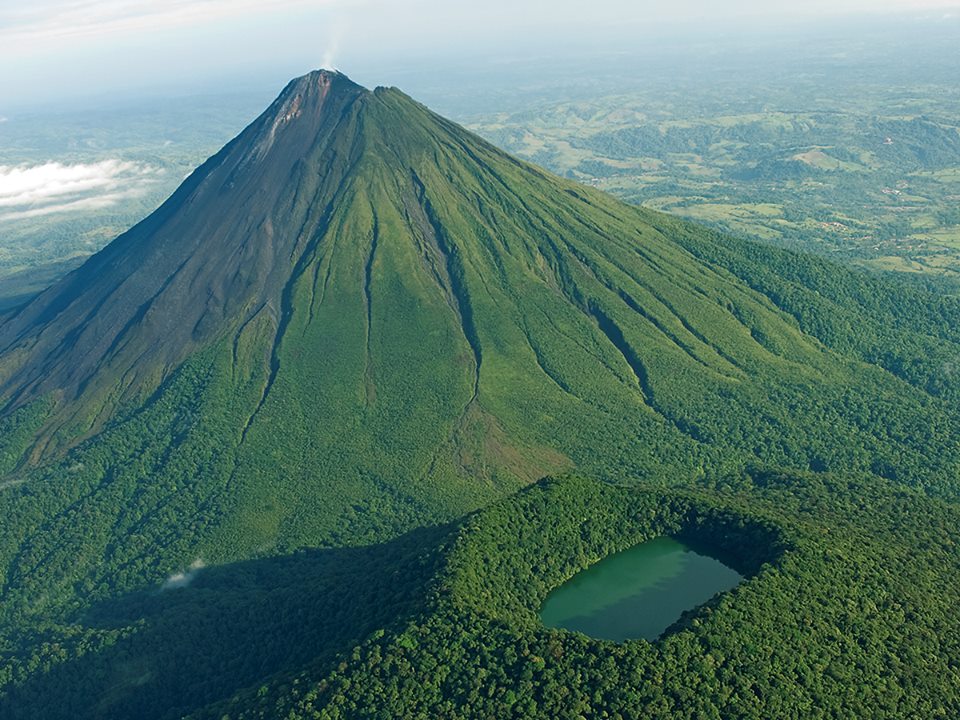
Arenal Volcano
Introduction
Rising dramatically above the tropical forests of northern Costa Rica, Arenal Volcano is one of the country's most recognizable natural landmarks. Its almost perfectly symmetrical cone dominates the landscape around the town of La Fortuna, creating an unforgettable meeting point between volcanic power, rainforest wilderness, and adventure. For generations, the volcano has shaped not only the scenery but also the identity and economy of the surrounding region.
Located between the foothills of the Tilarán Mountain Range and the San Carlos plains, Arenal stands within a landscape of extraordinary biodiversity. The nearby Arenal Volcano National Park protects more than 12,000 hectares of rainforest, lava fields, rivers, and volcanic terrain. Today, travelers come here to hike through forests, walk across ancient lava flows, watch tropical wildlife, soak in geothermal hot springs, and admire the volcano reflected in the waters of Lake Arenal.
Although Arenal is no longer erupting, its presence remains powerful. The combination of volcanic landscapes, lush rainforest, abundant wildlife, and Costa Rica's strong conservation culture makes the Arenal Volcano and La Fortuna region one of the country's defining nature destinations.
Geographical and Environmental Significance
Arenal Volcano lies in the province of Alajuela in northern Costa Rica, close to La Fortuna. The volcano forms part of a larger volcanic and mountainous landscape where the Tilarán highlands descend toward the San Carlos plains. Lake Arenal stretches out near the volcano, adding another major geographical feature to the region and creating striking views from trails and surrounding roads.
The volcano's environment is shaped by the interaction between volcanic geology and an exceptionally wet tropical climate. Rainfall supports dense forests, streams, waterfalls, and an extraordinary variety of plant life. Within the national park, several ecological zones transition across the landscape, including tropical and montane rainforest environments. Palms, heliconias, orchids, bromeliads, ferns, strangler figs, cecropias, and other tropical plants thrive here.
This biological richness extends into the animal kingdom. Arenal's protected forests provide habitat for monkeys, amphibians, reptiles, birds, and numerous mammals. Species documented in the wider national park include white-faced and howler monkeys, spider monkeys, pumas, a wide variety of frogs, colorful reptiles, and many tropical bird species. The park is also recognized as an important area for birdlife in Costa Rica.
The volcano itself has undergone dramatic geological changes throughout its history. Arenal became particularly famous during its long eruptive period, which began in 1968 and continued for decades. Lava flows transformed parts of the surrounding landscape, leaving hardened volcanic formations that can still be explored along designated trails. The park specifically protects and interprets remnants of the lava flows, including those associated with the 1992 eruptions.
Landscapes or Heritage
The defining landscape of Arenal is the volcano's striking cone, rising above an immense green carpet of rainforest. On clear days, its profile is visible from La Fortuna and numerous viewpoints around the region. Clouds frequently gather around the summit, however, giving the volcano an ever-changing appearance.
One of the most rewarding ways to experience this landscape is through the trails of Arenal Volcano National Park. The Heliconias Trail is a relatively short, flat route through vegetation, while the Coladas Trail leads visitors toward hardened lava formations and provides views of the volcano, Lake Arenal, and the Tilarán mountains. The El Ceibo Trail passes through forest and features a huge Ceiba pentandra tree, while designated viewpoints provide opportunities to observe the volcanic cone.
The hardened lava fields are particularly important because they allow visitors to see the physical evidence of Arenal's volcanic history. Dark volcanic rocks contrast sharply with the surrounding vegetation, illustrating how quickly tropical forests can begin reclaiming terrain created by eruptions.
Lake Arenal adds another dimension to the landscape. Its broad waters stretch beneath the volcano and mountains, creating spectacular viewpoints and opportunities for boating and other outdoor activities. The lake is also important beyond tourism, contributing to Costa Rica's hydroelectric system.
Outside the national park, the region around La Fortuna offers waterfalls, rainforest reserves, hanging bridges, horseback-riding routes, canopy experiences, and geothermal attractions. The famous hot springs are a natural consequence of the region's volcanic geology, allowing visitors to experience the landscape in a slower and more relaxing way after hiking.
Culture
The cultural identity of the Arenal region is closely connected to its landscape. La Fortuna developed from a small agricultural community into an internationally recognized tourism center, yet the surrounding area continues to reflect Costa Rica's rural traditions, farming heritage, and close relationship with nature.
The volcano is more than a scenic landmark for local communities. Its presence has influenced agriculture, water systems, tourism, conservation, and regional economic development. The dramatic transformation of the area following Arenal's major 1968 eruption remains an important part of local history.
Costa Rica's broader environmental philosophy is also strongly visible around Arenal. Tourism here is often closely linked with wildlife observation, protected forests, ecological education, and outdoor recreation. Visitors can combine hiking with guided wildlife walks, birdwatching, coffee and chocolate experiences, horseback riding, rafting, and visits to local farms.
La Fortuna has also become a meeting point between traditional rural Costa Rican culture and modern ecotourism. Small restaurants, family-run businesses, guides, farms, lodges, and adventure operators all contribute to the region's character. The result is a destination where the volcano is not isolated from everyday life but remains central to the identity of the surrounding community.
Cuisine
Food around Arenal reflects the traditional flavors of Costa Rica, with meals built around rice, beans, vegetables, meat, fresh fruit, and locally grown ingredients. One of the country's most recognizable dishes is gallo pinto, a combination of rice and beans commonly served for breakfast with eggs, cheese, tortillas, and other accompaniments.
Casado is another classic Costa Rican meal, usually combining rice and beans with meat or fish, salad, vegetables, and plantains. In the La Fortuna region, travelers can also find fresh tropical fruits, locally produced dairy products, coffee, and dishes influenced by the agricultural traditions of northern Costa Rica.
The area is particularly well suited to food experiences that connect cuisine with agriculture. Coffee and chocolate tours allow visitors to learn how local crops are grown and processed, while farms around the region showcase Costa Rica's long-standing agricultural traditions.
For travelers staying in La Fortuna, the food scene ranges from small traditional sodas - local eateries serving affordable Costa Rican meals - to restaurants offering international cuisine. After a day of hiking, rafting, or exploring volcanic trails, a simple plate of rice, beans, plantains, and grilled meat can feel just as memorable as a more elaborate meal.
Sustainability
Arenal's popularity makes sustainable tourism especially important. The volcano and its surrounding ecosystems are protected through Arenal Volcano National Park, which was officially established in 1991 and later expanded. The park protects rainforest, volcanic landscapes, water resources, and wildlife while providing controlled opportunities for visitors to experience the environment.
Conservation is built directly into the visitor experience. The park prohibits climbing the volcanic cone and restricts activities that could damage plants, animals, geological formations, or infrastructure. Removing rocks, disturbing wildlife, littering, smoking, and creating unauthorized activities are prohibited within the protected area.
Entrance fees also contribute to conservation. Costa Rica's National System of Conservation Areas states that revenue from national park admission contributes to the National Parks Fund, supporting protected areas throughout the country.
The surrounding tourism industry also increasingly emphasizes sustainable experiences. Eco-lodges, wildlife tours, hanging bridges, guided hikes, geothermal attractions, and community-based experiences provide ways for travelers to explore the region while supporting businesses connected to the local economy.
Responsible visitors should remain on marked trails, avoid touching wildlife, carry waste out when necessary, follow park regulations, and choose authorized guides and operators. Costa Rica's tourism authority also recommends checking weather conditions and using properly authorized tourism providers for adventure activities.
Best Time to Visit
Arenal Volcano can be visited throughout the year, and the national park currently operates daily from 8 a.m. to 4 p.m.
The drier period, generally from December through April, is often attractive for travelers who want better conditions for hiking and outdoor activities. Clearer weather can also increase the chances of seeing the volcano's distinctive cone without heavy cloud cover, although visibility is never guaranteed in a tropical mountain environment.
The wetter months bring a different experience. Rain can make trails muddy and visibility less predictable, but the rainforest becomes exceptionally lush and waterfalls and streams can be more impressive. Morning visits are often useful for travelers hoping to begin hikes before the day's weather becomes more unsettled.
For photographers, the changing relationship between clouds, sunlight, rainforest, and the volcano is part of Arenal's appeal. A completely clear view is beautiful, but mist drifting around the cone can create an equally dramatic atmosphere.
Transport
La Fortuna is the main base for exploring Arenal Volcano. The national park is located roughly 15 kilometers from the town, making La Fortuna the most convenient place to stay for visitors planning several days of exploration.
From San José, travelers can reach La Fortuna by road, with the journey generally taking around 2.5 hours depending on the route and conditions. Rental cars, private transfers, shared shuttles, and public buses are available. The official Costa Rica tourism information also identifies routes from Monteverde and Liberia, making Arenal an easy stop within a broader Costa Rican itinerary.
Within the La Fortuna region, rental cars provide flexibility, while taxis, shuttles, organized tours, and local buses can make it possible to travel without driving. Many hotels and tour companies also arrange transportation to national park entrances, hot springs, waterfalls, and adventure activities.
Visitors traveling to the national park should check the current access arrangements before setting out. The official entrance is roughly 16 kilometers northwest of central La Fortuna, and the park's trails and visitor facilities are concentrated around designated areas.
Why Visit
Arenal Volcano offers something rare: the opportunity to experience a dramatic volcanic landscape without sacrificing access to rainforest, wildlife, adventure, culture, and comfortable tourism infrastructure.
The volcano itself is the obvious attraction, but Arenal is much more than a viewpoint. Travelers can walk across hardened lava fields, search the forest for tropical birds and monkeys, paddle on Lake Arenal, explore hanging bridges, ride horses through the countryside, raft through rivers, and finish the day in naturally heated waters.
Its variety is one of its greatest strengths. An early morning can begin with a rainforest hike, followed by lunch in La Fortuna, an afternoon adventure, and an evening in a hot spring surrounded by tropical vegetation.
Arenal is also a destination where Costa Rica's environmental philosophy becomes tangible. The protected forest, volcanic geology, wildlife, hydroelectric landscape, and tourism economy are all closely connected. Rather than simply observing nature, visitors become part of a tourism system designed around experiencing and protecting it.
Conclusion
Arenal Volcano is one of Costa Rica's defining landscapes - a near-perfect volcanic cone rising above rainforest, lake, and mountain country. Its dramatic appearance may be what first attracts travelers, but its deeper appeal comes from the extraordinary environment surrounding it.
From lava fields and ancient forest to tropical wildlife, geothermal springs, Lake Arenal, and the lively town of La Fortuna, the region offers an unusually complete nature-travel experience. Its trails reveal the story of volcanic eruptions, while its forests demonstrate how quickly life can return to transformed landscapes.
For anyone searching for a destination that combines adventure, biodiversity, relaxation, and spectacular scenery, Arenal Volcano represents the essence of Costa Rica's natural tourism. It is a place where fire and forest exist side by side, creating one of Central America's most unforgettable landscapes.
00 Comments
No comments yet.
Leave a Comment