

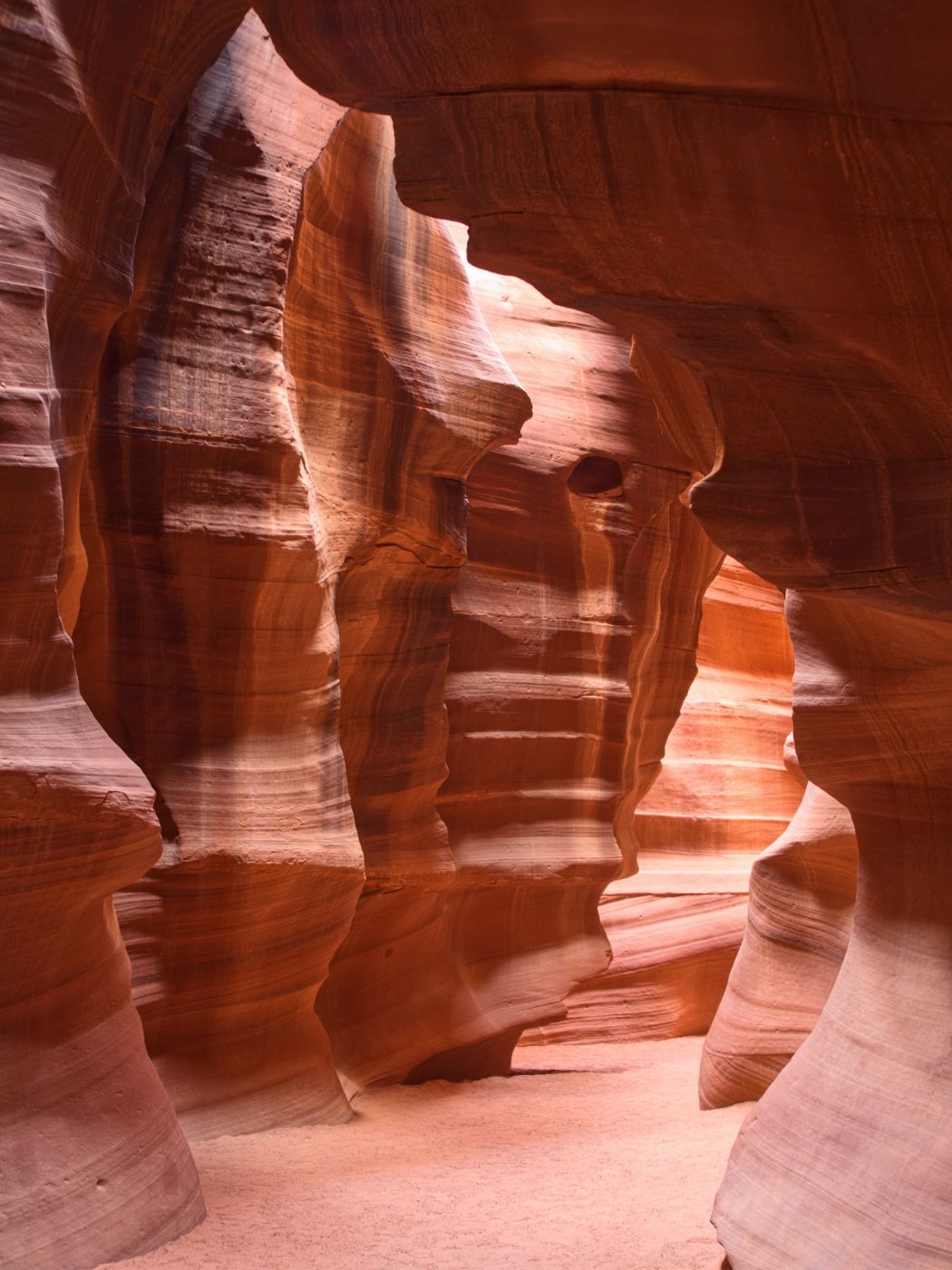
Antelope Canyon
Introduction
Hidden beneath the deserts of the American Southwest lies one of the most mesmerizing natural wonders in the world—Antelope Canyon. Famous for its flowing sandstone walls, magical beams of sunlight, and surreal wave-like formations, this extraordinary slot canyon has become one of the most photographed destinations on Earth.
Located in northern Arizona near the town of Page, Antelope Canyon is a masterpiece sculpted by nature over millions of years. Unlike towering mountain ranges or vast national parks, Antelope Canyon captivates visitors through its intricate beauty hidden within narrow sandstone corridors carved by flash floods and erosion.
Its smooth curves, vibrant colors, and constantly changing light conditions create an almost dreamlike environment that feels more like an art gallery than a natural landscape.
For photographers, adventurers, and nature enthusiasts, Antelope Canyon offers an unforgettable journey into one of the most visually stunning geological formations in North America.
Geography and Environment
Antelope Canyon is located within the Navajo Nation in northern Arizona, close to the Arizona-Utah border.
The canyon is part of a vast desert landscape characterized by sandstone formations, mesas, canyons, and arid plateaus.
Over countless centuries, seasonal flash floods carrying sand and water gradually carved narrow passageways through the sandstone rock.
This process created the canyon's distinctive smooth walls and flowing shapes that appear almost liquid in form.
Today, Antelope Canyon stands as one of the most remarkable examples of erosion and geological artistry in the world.
The Formation of a Natural Masterpiece
The beauty of Antelope Canyon is the result of millions of years of geological processes.
Rainwater from surrounding areas flows into narrow cracks within the sandstone, gradually widening and deepening them over time.
As powerful flash floods moved through the canyon, they polished the walls into elegant curves and sculpted intricate patterns throughout the rock.
The sandstone itself belongs to the Navajo Sandstone formation, an ancient geological layer created from massive desert dunes that existed during the Jurassic period.
The result is a landscape where every wall, curve, and texture tells a story of nature’s creative power.
Upper and Lower Antelope Canyon
Antelope Canyon is divided into two main sections: Upper Antelope Canyon and Lower Antelope Canyon.
Upper Antelope Canyon is the more famous of the two and is known for its iconic light beams that shine through openings in the canyon ceiling.
Its relatively flat terrain makes it accessible to a wide range of visitors.
Lower Antelope Canyon features narrower passageways, staircases, and more adventurous routes that provide a different perspective on the canyon's beauty.
Both sections offer spectacular photographic opportunities and showcase unique geological formations.
Together, they create one of the most extraordinary canyon experiences in the United States.
The Famous Light Beams
One of Antelope Canyon’s most celebrated features is the appearance of dramatic light beams.
During certain times of the year, sunlight enters narrow openings in the canyon roof and creates visible columns of light that illuminate the sandstone walls.
These beams transform the canyon into a magical environment filled with shifting colors and contrasts.
The phenomenon is particularly prominent during late spring and summer when the sun reaches the optimal position overhead.
Photographers from around the world travel to Antelope Canyon specifically to capture these extraordinary moments.
The interaction between light and sandstone creates scenes that have become iconic symbols of the American Southwest.
Colors, Shapes, and Natural Artistry
Perhaps the most striking aspect of Antelope Canyon is its visual beauty.
The canyon walls display a stunning palette of colors ranging from deep reds and oranges to pinks, purples, and golden hues.
As sunlight changes throughout the day, the colors continuously shift, creating new visual experiences every few minutes.
Smooth sandstone surfaces resemble flowing water, draped fabric, or abstract sculptures.
Some formations have acquired nicknames based on their resemblance to animals, faces, or famous landmarks.
The combination of color, texture, and light makes every visit unique and unforgettable.
Navajo Heritage and Cultural Significance
Antelope Canyon holds deep cultural importance for the Navajo Nation, whose ancestral lands encompass the canyon.
The Navajo people know the Upper Canyon as Tsé bighánílíní, meaning "the place where water runs through rocks."
For generations, the canyon has been respected as a sacred place shaped by natural forces and spiritual significance.
Today, access to Antelope Canyon is managed by Navajo guides, who share cultural insights and stories with visitors.
Tourism provides important economic opportunities while helping preserve and protect this unique natural landmark.
Learning about Navajo traditions adds meaningful cultural context to the canyon experience.
Photography Paradise
Antelope Canyon is widely regarded as one of the best photography destinations in the world.
Professional photographers, travel influencers, and nature enthusiasts are drawn to the canyon’s extraordinary lighting conditions and natural compositions.
Every turn reveals new patterns, textures, and perspectives.
Even amateur photographers can capture stunning images due to the canyon’s naturally dramatic environment.
The interplay of shadows and reflected light often creates photographs that appear almost unreal.
As a result, Antelope Canyon consistently ranks among the most photographed natural attractions in North America.
Adventure and Exploration
Although photography is a major attraction, Antelope Canyon also offers a sense of adventure.
Visitors navigate narrow passageways, winding corridors, and sculpted sandstone chambers that reveal new surprises around every corner.
Guided tours ensure safe access while providing valuable information about geology, history, and cultural significance.
Nearby attractions such as Horseshoe Bend and Lake Powell make the region an outstanding destination for outdoor exploration.
The surrounding desert landscape provides additional opportunities for hiking, boating, and sightseeing.
Sustainability and Conservation
Protecting Antelope Canyon is essential due to its fragile geological formations and growing popularity.
Strict visitor management policies help minimize environmental impact while preserving the canyon’s natural beauty.
Guided access limits overcrowding and ensures visitors follow conservation guidelines.
The Navajo Nation continues to balance tourism development with environmental stewardship and cultural preservation.
Responsible travel practices help maintain the canyon’s integrity for future generations.
Best Time to Visit Antelope Canyon
The best time to visit Antelope Canyon depends on individual interests.
For photographers seeking the famous light beams, late spring through early autumn is ideal.
Midday tours often provide the strongest sunlight effects inside Upper Antelope Canyon.
Winter offers fewer crowds and softer lighting conditions that can also create beautiful photographs.
Reservations are strongly recommended throughout the year due to the canyon’s popularity.
How to Reach Antelope Canyon
The nearest town is Page, located in northern Arizona.
Visitors typically reach Page via road trips from destinations such as Las Vegas, Phoenix, or the Grand Canyon National Park.
Because Antelope Canyon is located on Navajo land, visitors must join authorized guided tours.
The combination of accessibility and extraordinary scenery makes it one of the most popular attractions in the American Southwest.
Why Visit Antelope Canyon?
Antelope Canyon offers an experience unlike any other natural destination. Its flowing sandstone walls, magical light beams, vibrant colors, and cultural significance combine to create one of the most extraordinary landscapes on Earth.
Visitors can witness the power of geological processes, explore a sacred cultural site, and capture photographs that seem almost impossible to believe.
Whether you are a nature lover, photographer, adventurer, or cultural traveler, Antelope Canyon delivers an unforgettable journey into one of America’s greatest natural wonders.
Conclusion
Antelope Canyon stands as a testament to the incredible artistry of nature. Carved by water, shaped by time, and illuminated by sunlight, this remarkable slot canyon transforms ordinary sandstone into a breathtaking masterpiece.
From its iconic light beams and vibrant colors to its cultural importance and geological significance, every aspect of Antelope Canyon inspires wonder.
For travelers seeking one of the most beautiful and unique destinations in the United States, Antelope Canyon truly deserves its reputation as Nature’s Sandstone Masterpiece.
00 Comments
No comments yet.
Leave a Comment